



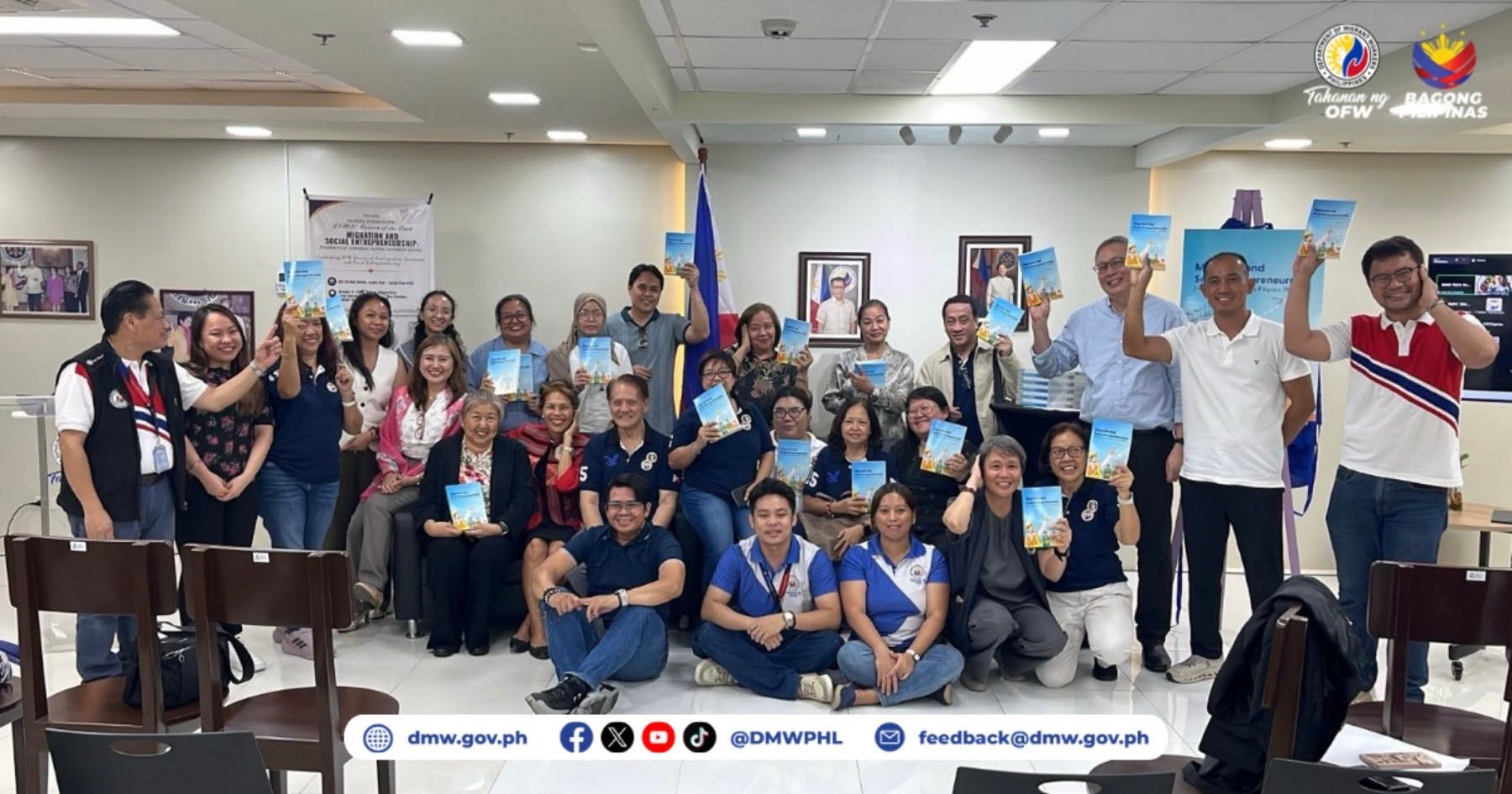

A practical guide built around the experiences of returning overseas Filipino workers who became entrepreneurs is now circulating free of charge, after its release on June 20, 2026 at the Susan V. Ople Labor Migration and Development Resource Center in Makati City.

The volume, Migration and Social Entrepreneurship: Journeys of Overseas Filipino Workers, gathers the accounts of 20 OFWs who turned their years abroad into the foundation for businesses back home. Each of the featured entrepreneurs completed the Ateneo Leadership and Social Entrepreneurship (ALSE) Program’s OF-LIFE track — short for Overseas Filipinos Leadership, Innovation, Financial Literacy, and Social Entrepreneurship — which trains returnees in management, money handling, and the basics of running a venture.
The businesses profiled in the book are framed less as personal wins than as community investments, supporting the families of the owners while generating activity in their local areas.

One of the entrepreneurs featured, Marisol Amihan, credited the mentorship and planning workshops she went through with giving her the footing to start out on her own. An ALSE graduate and a LIKHA Global winner, she went on to enter the LIKHA Global Business Plan Competition. She has no plans to go back overseas. “Hindi na ako babalik ng Qatar. Why leave when opportunity is here?” she said.
The book was produced by the Department of Migrant Workers’ National Reintegration Center for OFWs (NRCO), led by Assistant Secretary Francis Ron De Guzman, together with the Ateneo School of Government and the ALSE Program. Co-author Dr. Philip Arnold P. Tuaño cast the project as something meant to prompt action rather than simply document achievement. “As we launch this today, may it serve not only as a record of remarkable stories but also as a call to action,” he said, pointing to overseas Filipinos as participants in national development.
For the NRCO, the release fits a broader reintegration push that uses returnees who built sustainable livelihoods as proof of what is possible for OFWs weighing whether to come home for good.
