



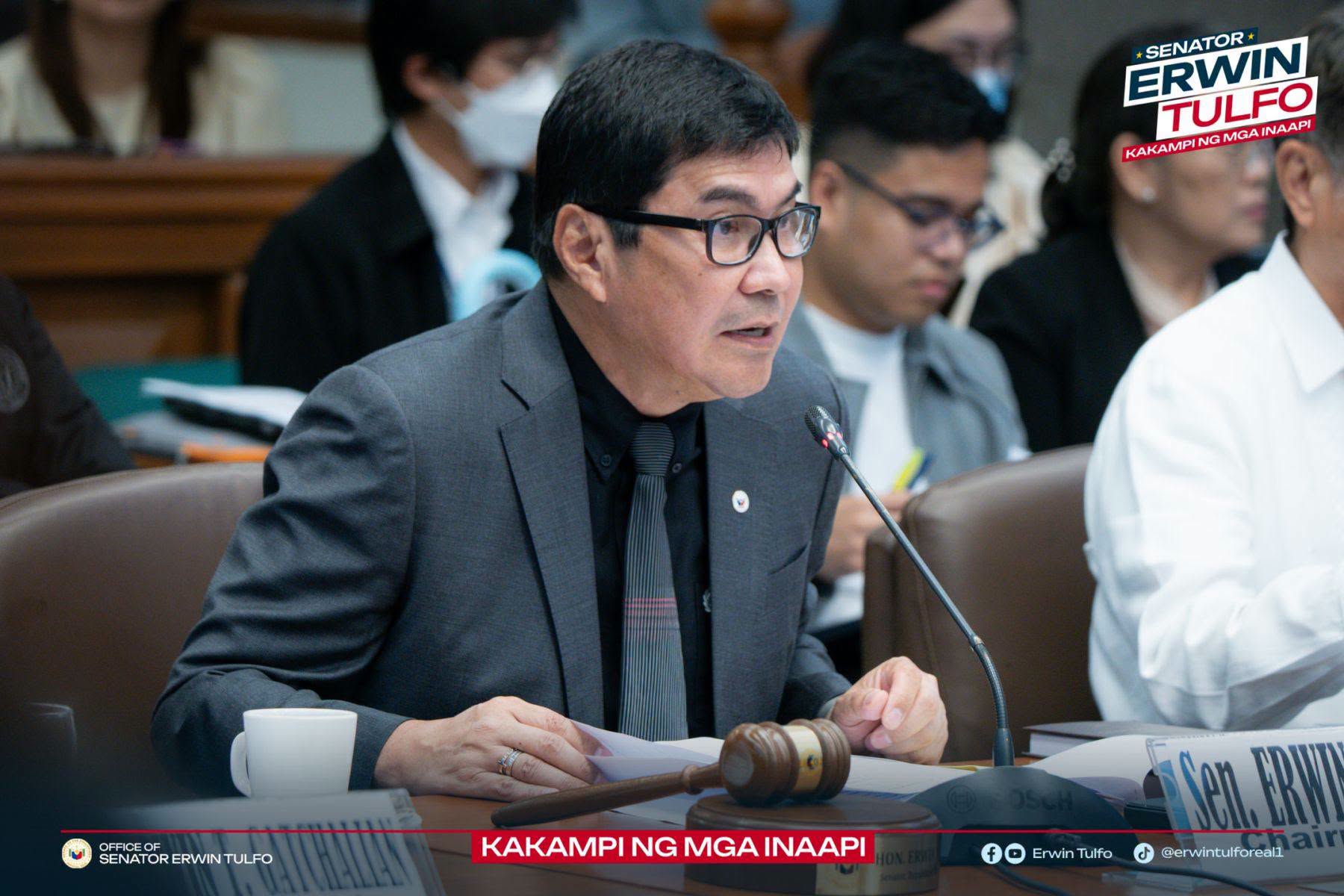

A measure that would have made the government’s emergency cash aid program permanent failed to advance during this week’s special sessions of Congress, with Sen. Erwin Tulfo pointing to House resistance over a clause meant to keep politicians away from aid payouts.

At the heart of the standoff is the bill’s “anti-epal” provision, which would bar elected officials, candidates, political parties and their representatives from influencing, attending or taking part in the actual handing out of assistance under the Assistance to Individuals in Crisis Situations (AICS) program. An exception applies to officials who hold direct administrative authority over the Department of Social Welfare and Development.
Tulfo, who once led the DSWD, said the bill stalled at third reading because his counterparts in the lower chamber would not sign on to the restriction.
“Hindi po nila itong personal na pera. Kaya doon po sa ilang mambabatas sa Mababang Kapulungan, sana po mapag-isipan ninyo na hindi po ninyo pera ‘yan, pera po ng taong bayan,” Tulfo said.
According to Philstar.com, the senator was blunter about the motive he ascribed to the holdouts, telling reporters after closing remarks at the Senate plenary: “Eh kasi hindi nila magagamit for election, wala na sila ‘don eh.”

The senator described the two chambers as deadlocked over the clause. Because the bill did not clear the parallel sessions on Wednesday, June 17, it now heads to a bicameral conference committee, where negotiators will try to reconcile the Senate and House versions.
AICS operates as a stop-gap support program, extending financial, medical, educational, burial and transportation aid to people hit by sudden crises. Critics have long warned that such payouts can be turned into vehicles for political credit-grabbing — the very practice the “epal” label describes.
The dispute is not new for Tulfo, who has pressed for these safeguards on multiple fronts. In January, he called on the DSWD to enforce the anti-epal language already written into the 2026 national budget, and the following month he filed a standalone Anti-Epal Act. The agency itself has repeatedly flagged irregularities in AICS distribution, including instances where local officials allegedly skimmed portions of beneficiaries’ aid.
Even with the AICS measure left hanging, the House said in a statement that it had cleared all the priority bills President Ferdinand Marcos Jr. flagged when he summoned Congress to the special session.
