



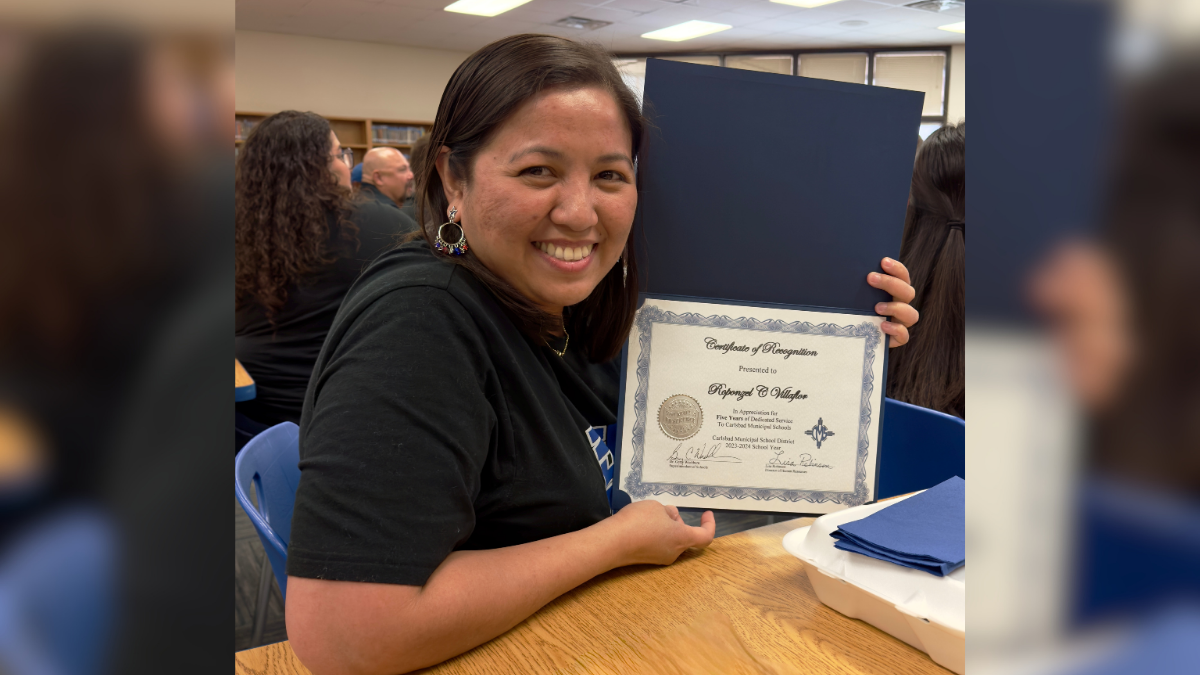

Every weekday, a classroom full of American children logs on to learn from a teacher sitting in the Philippines. They’re in New Mexico, in Indiana, in states most of them couldn’t find on a map of their own country. Their teacher is in Davao. The arrangement belongs to Raponzel C. Villaflor, and at 44 she has made it look almost ordinary — which it is not.

It took a factory job in Taiwan, a lost house, and seventeen years of teaching to get here.
A house lost, a decision made
Her first time abroad had nothing to do with classrooms. In 2004 she took a job as a machine operator at Walsin Technology Corporation in Kaohsiung, Taiwan, and stayed three years. The reason was blunt.
“At that time, my family had lost our home because we were unable to keep up with the mortgage payments,” she says. “I knew I had to make sacrifices to help my family recover financially and provide a more stable future.”
She doesn’t dress up the work. Precision, discipline, long shifts in a country where she knew no one — she gives the factory full credit for teaching her how to adapt. But she’s just as clear that it was never where she wanted to end up. “Although I was successful in the manufacturing industry, I realized that my true passion was education and helping young learners achieve their full potential.”
The money worked. The family recovered. And Villaflor went home to start over in a job that paid less and asked for more.
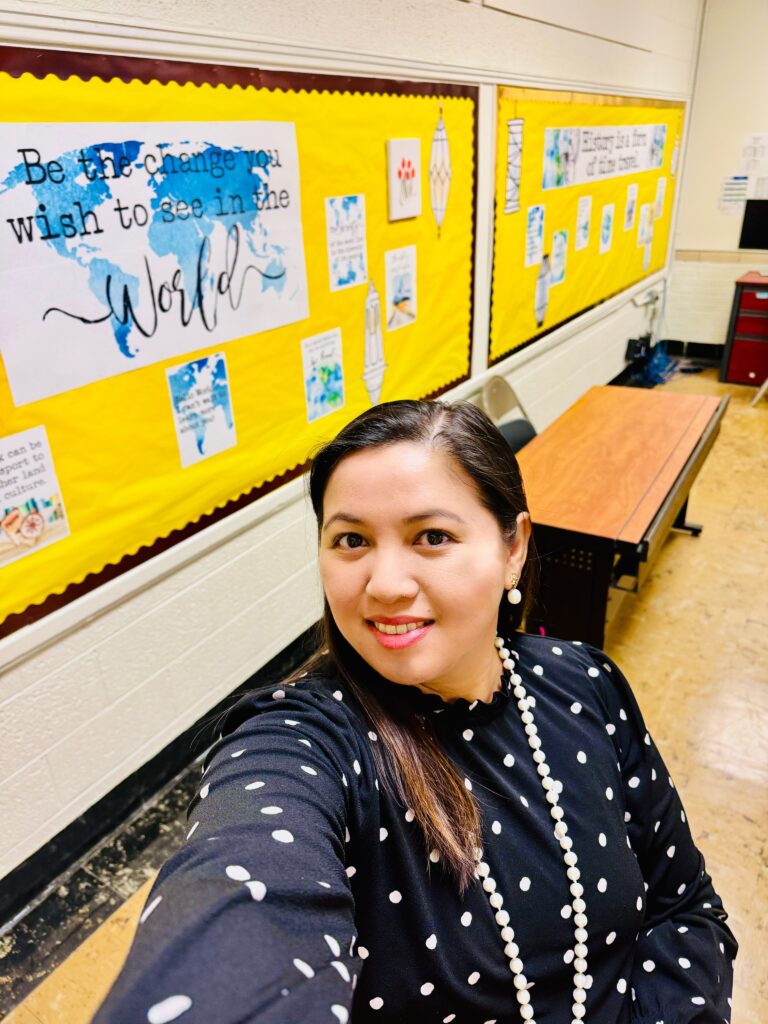
She spent more than eleven years at Jose L. Porras Elementary School in Davao City, teaching Grade 3 and Grade 6 and working with special education inclusion students. Those years were anything but quiet. She coordinated a child-friendly school program, joined technical working groups, presented research at district summits, coached students through academic competitions, and built her own teaching materials. The classroom in Davao was where the factory worker became, unmistakably, a teacher.
The exchange that changed the math
By 2019 she had the credentials and the itch to see how the job was done elsewhere. That October she joined a teacher exchange program and started as an elementary and special education inclusion teacher in Carlsbad, New Mexico. Over the next several years she moved through grade levels and schools — third grade, then fourth, then a stint teaching special education to sixth through eighth graders.
This second departure ran on a different fuel than the first. The Taiwan years had been about survival. New Mexico was about ambition.
“Unlike my first overseas experience, this decision was primarily motivated by professional growth and my desire to expand my impact as an educator,” she says. “I wanted to learn from a different educational system, gain international teaching experience, and further develop my expertise in elementary and special education.”
The American classroom gave her things the Philippine one couldn’t — a different set of standards, deeper special education systems, professional development she’d never had access to. It also gave her a license that still clearly means a great deal to her: a New Mexico Level-Three A instructional leader license with endorsements in special education, elementary education, and reading. In 2026 she published a research article on instructional support materials and learner development in the International Journal of Research and Scientific Innovation.

What the American classroom couldn’t give her was her family. That was the catch in the whole arrangement, the one no endorsement could fix.
Coming home without leaving the job
In June 2024, Villaflor stopped flying. She took a position as a kindergarten-through-eighth-grade online teacher with Tutored by Teachers, a U.S. company that supplies virtual, credentialed teachers to schools across the country. The role let her do something the old OFW model never allowed: keep the American students and the American work while living at home.
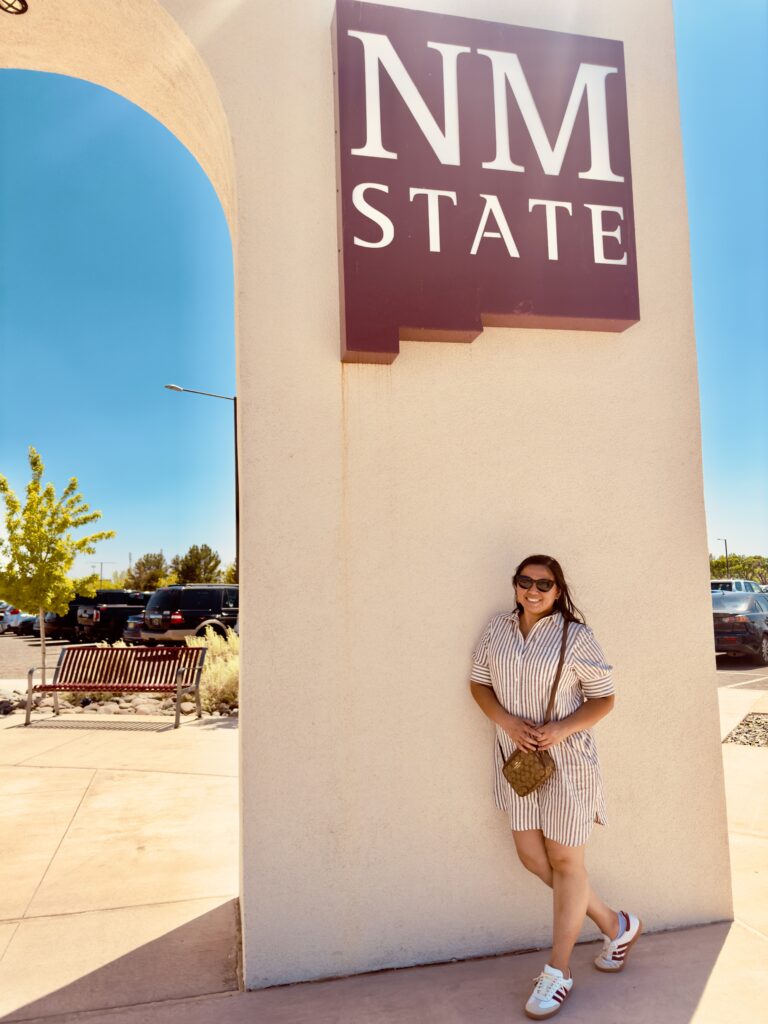
“This role has enabled me to combine the best of both worlds — remaining close to my family while continuing to make a positive impact on the lives of American students,” she says.
The day-to-day is recognizably teaching, just routed through a screen. She designs differentiated lessons, runs formative assessments, builds targeted interventions for students who’ve fallen behind, and keeps in regular contact with families. Tutored by Teachers describes itself as a provider of high-dosage virtual instruction delivered by U.S.-credentialed teachers, and says it consistently produces double-digit academic gains in math and English. Villaflor’s own satisfaction is less about company figures than about the smaller wins.
“The most satisfying part of my work is witnessing students gain confidence, improve their academic skills, and become more engaged learners,” she says. “Whether it is a struggling reader making significant progress, a student mastering an important skill, or a learner developing greater self-confidence — it reminds me why I chose the field of education.”
There’s an irony she’s earned the right to enjoy. The woman who once had to leave the country to keep her family afloat now supports learners thousands of kilometers away without leaving her own living room.
What she tells the ones still deciding
Villaflor’s advice to other Filipinos abroad is shaped by both of her departures — the desperate one and the deliberate one. Stay focused on why you left. Manage the money. Guard your well-being. Hold on to your family. But the part she presses hardest on is the part most overseas workers fear most: coming home.
“Do not be afraid of eventually returning to the Philippines,” she says. “The knowledge, experience, professionalism, and global perspective you gain while working abroad become lifelong assets that can open doors anywhere in the world.”
She offers her own setup as proof rather than theory. “My own journey has shown that it is possible to continue serving students in the United States while based in the Philippines. Your global skills travel with you.”
Her plans now point homeward in a fuller sense. She wants to keep teaching online for now, but eventually to put the international experience back into Philippine education — mentoring teachers, pushing for stronger literacy and special education support, continuing her research.
