



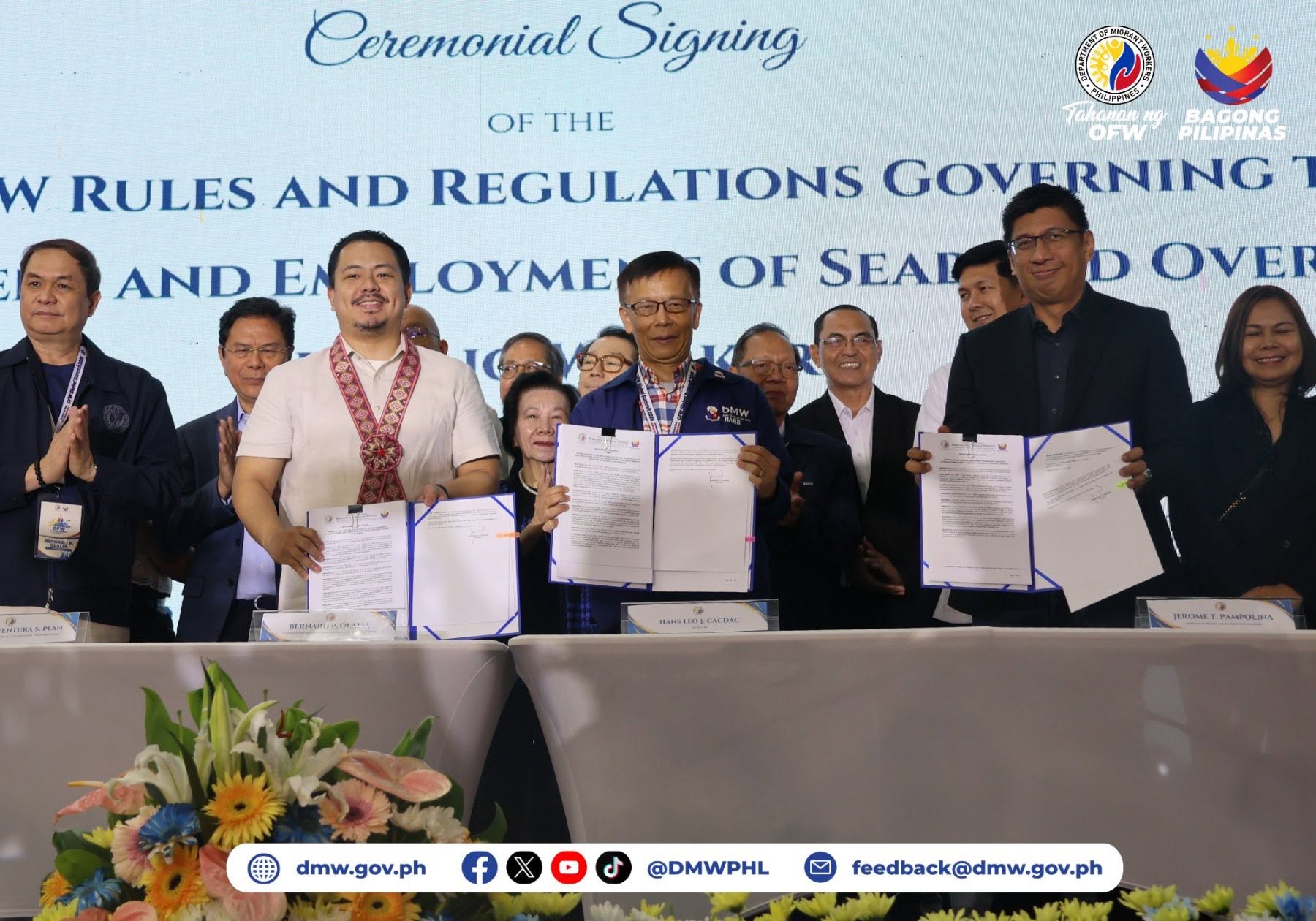

The signing of three policy instruments aimed at safeguarding Filipino seafarers and fishers working abroad anchored the Department of Migrant Workers’ first OFW Global Summit, held Sunday, June 7, 2026, at the QC MICE Center in Quezon City to mark the 31st National Migrant Workers Day.

The documents finalized at the gathering were the 2026 DMW Rules and Regulations Governing the Recruitment and Employment of Sea-based Overseas Filipino Workers, the Standard Employment Contract Governing Overseas Filipino Seafarers, and the Standard Employment Contract Governing Overseas Filipino Fishers.
More than 1,400 overseas Filipino workers and their families turned out for the event, accessing government services and job openings, according to the DMW. The agency staged the summit alongside the Quezon City government under Mayor Joy Belmonte, with agencies belonging to the National Reintegration Network (NRN) and accredited local and overseas recruitment firms taking part in an accompanying job fair. Organizers cast the undertaking as one built “for the OFW, of the OFW, by the OFW,” carrying the theme “Serbisyong Buo at Kalingang Totoo.”

Migrant Workers Secretary Hans Leo J. Cacdac said the NRN, set up under a directive from President Ferdinand R. Marcos Jr. to consolidate state programs for returning workers, has steadily widened its reach. He cited 15 NRN fairs conducted nationwide so far, which the department credits with delivering over 25,000 services, advancing the applications of more than 2,000 people seeking local and overseas work, and distributing upward of P20 million in livelihood aid and start-up capital.
The summit also tracked the government’s response to instability in the Middle East. The DMW said more than 10,000 workers have been brought home since the unrest began, while roughly 14,000 OFWs across various countries received free legal assistance.
Plenary discussions ran through emergency response coordination across government, the rise of Filipino entrepreneurs overseas, warning signs of illegal recruitment and human trafficking, and a Labor Migration Management Plan intended to strengthen worker protection. Participants also weighed proposed legislative reforms to advance the rights of migrant Filipino workers.
