



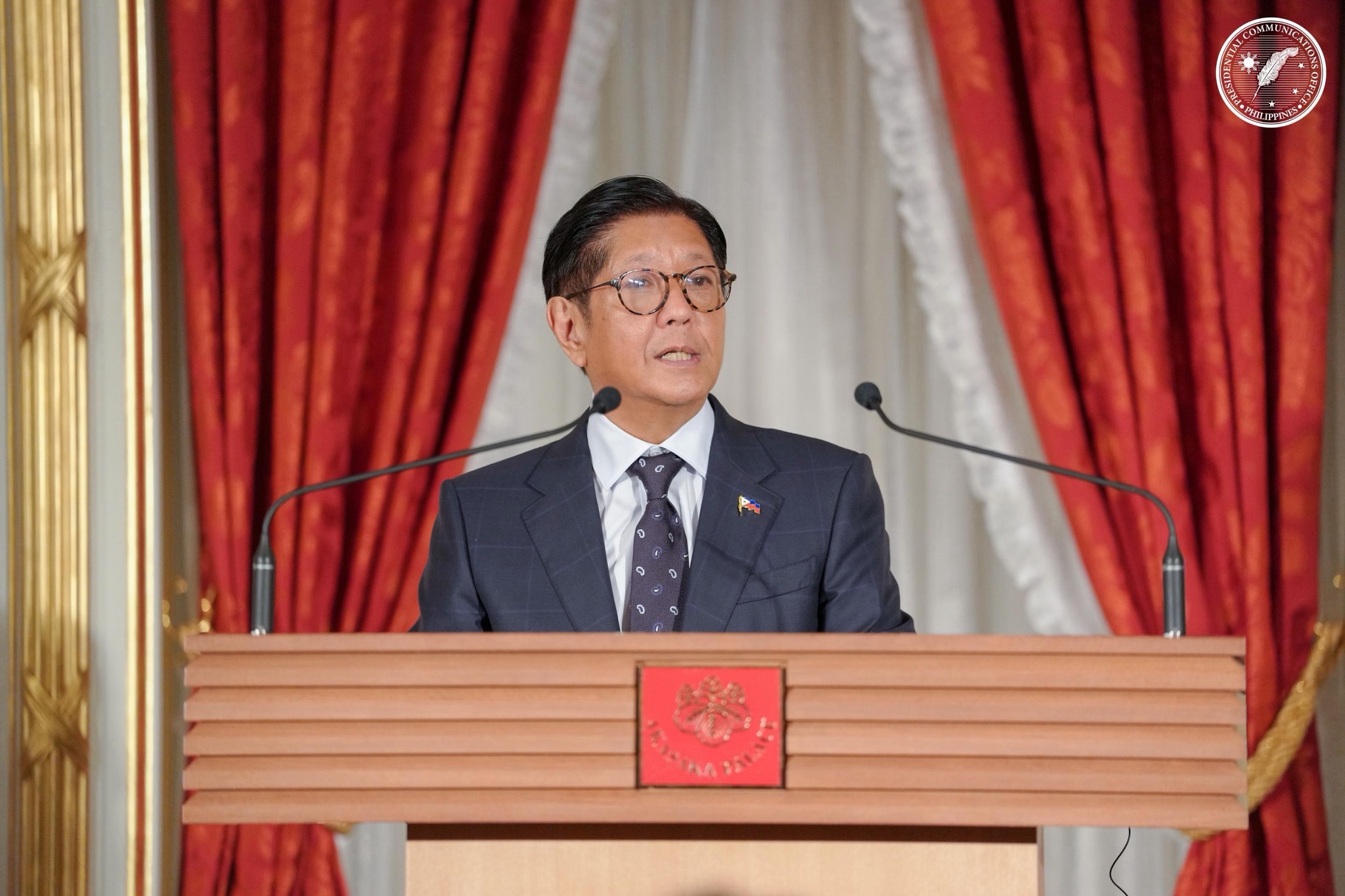

President Ferdinand Marcos Jr. believes future generations will remember him as a leader who placed service, duty and honor above all, even as his family name continues to stir conflicting emotions across the country.

Pressed by Bloomberg Television on the message he hopes endures from his term, Marcos pointed to his guiding principles. “That I served. That I was true to my principles of, again, duty, honor, country,” he said. He argued that distance tends to soften judgment: “History is always kinder than the contemporary. When it’s written, I hope that it shines through. I wanted to serve because it’s my duty and I served with honor and I served my country.”
The President drew a sharp line between the lessons he absorbed from his late father and the way he governs today. While certain values remain fixed in his thinking, he said the mechanics of leadership have changed entirely. “It’s a different time. There are fundamental lessons that I still hold close to my heart. But in terms of the practical things that you do, very few of those things apply any longer.”
That father, the elder Ferdinand Marcos, was removed from power by the 1986 EDSA people power revolt, a military-backed uprising that sent the family into exile in Hawaii. Four decades on, assessments of the dynasty remain bitterly split. Asked to characterize his father’s rule, the younger Marcos credited it with steering the nation forward. “Politics, by its nature, is polarizing. And so there will be those different schools of thought. But if you look at actual governance and performance and when the Philippines progressed into the modern world, I think we can ascribe that period to the time of my father.”

Historians and civil society organizations describe those years very differently, pointing to widespread abuses and large-scale corruption. Amnesty International has said the martial law period under the first Marcos government triggered crimes under international law and serious rights violations, including the arbitrary arrest and detention of tens of thousands, alongside thousands more tortured, disappeared and killed. Supporters of the family, by contrast, frame the era as a “golden age,” citing infrastructure and public discipline.
Marcos also offered a personal portrait of his upbringing, recalling that his parents refused to let their children feel any sense of privilege. “Don’t ever think that they owe you. Nobody owes you anything. And that was a lesson that they hammered into us over and over again.” He distinguished the temperaments of his parents, casting his mother, Imelda Marcos, as the family’s instinctive politician. “My father was an intellect. He was a statesman. We always said that he lived in his head. He was a deep thinker. That’s what I learned. My mother, on the other hand, has this uncanny ability to connect with any kind of person. Any person she runs into in the street. Kings, presidents, anyone.”
On the economy, the President said reaching growth above six percent before he leaves office remains within reach, though an eight-percent expansion would be difficult to achieve. The first quarter delivered a disappointing 2.8 percent, falling short of the government’s five to six-percent goal and weighed down by the Middle East conflict and shaken investor sentiment tied to a massive flood control corruption scandal. Marcos cautioned that regional instability would keep clouding the outlook before easing. “However, with the war in the Middle East, everything has to be redrawn. The uncertainty and lack of stability is going to factor into that. That’s the general risk factor. It’s still there. And that’s not going to diminish immediately. That’s going to taper off.”
