



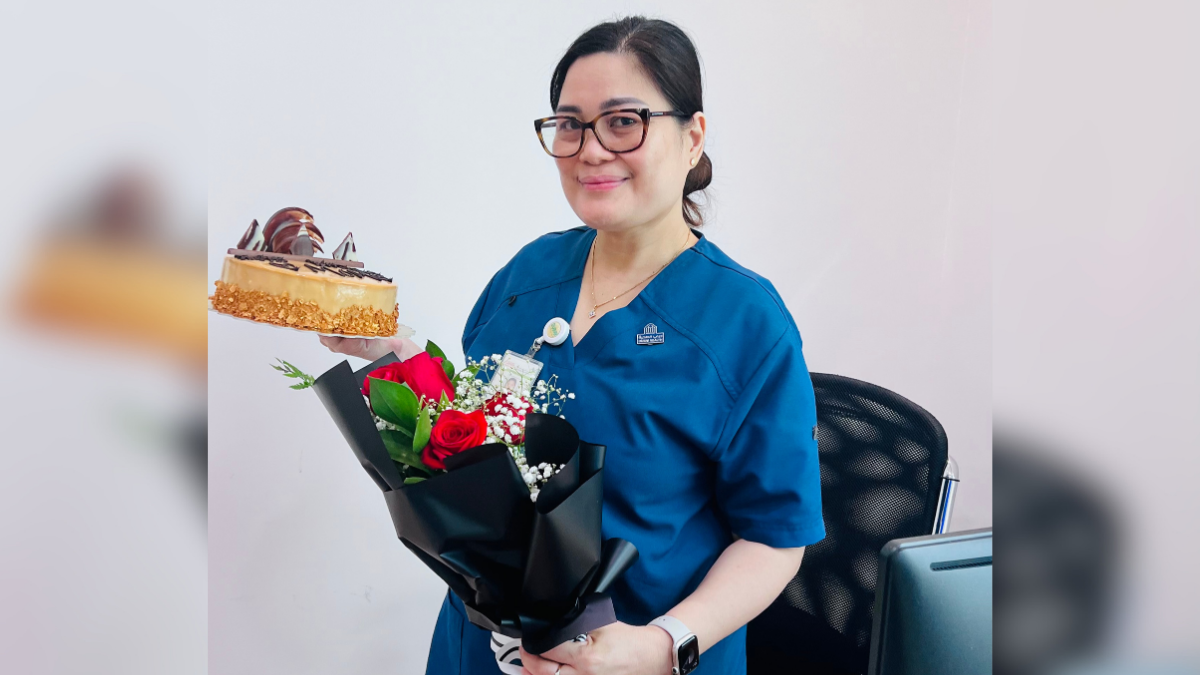

She did not apply for the job of mother. Nobody does, technically — but hers came with a hospital badge, a ward full of children who had been left behind by the world, and a title she did not expect to carry for the rest of her career.

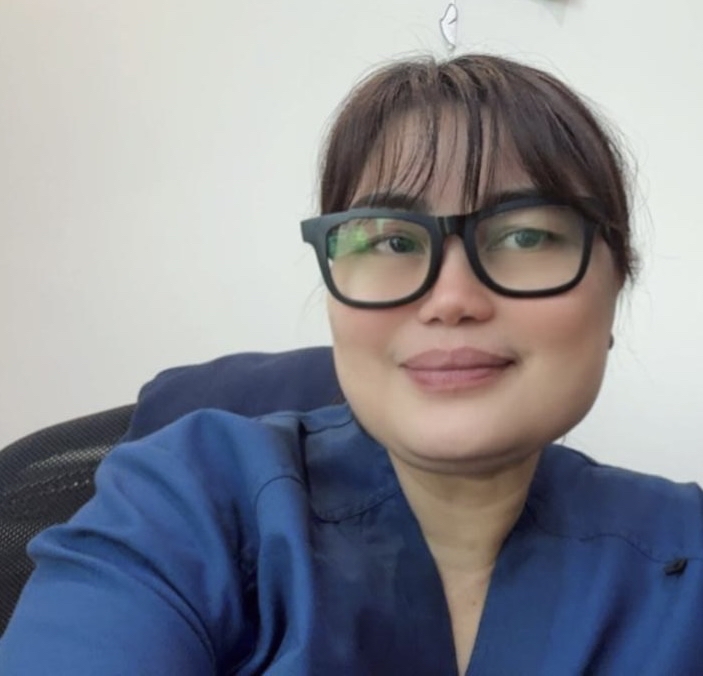
Marites Rufo was 32 when she landed in Dubai on the first day of 2009, hired as a staff nurse at Latifa Hospital’s Pediatric Isolation Unit. Within a year, she was promoted to Unit In-Charge. The children she was assigned to care for were not recovering from surgeries or waiting on test results. They were orphaned — abandoned, unclaimed — and living inside a hospital because they had nowhere else to go.
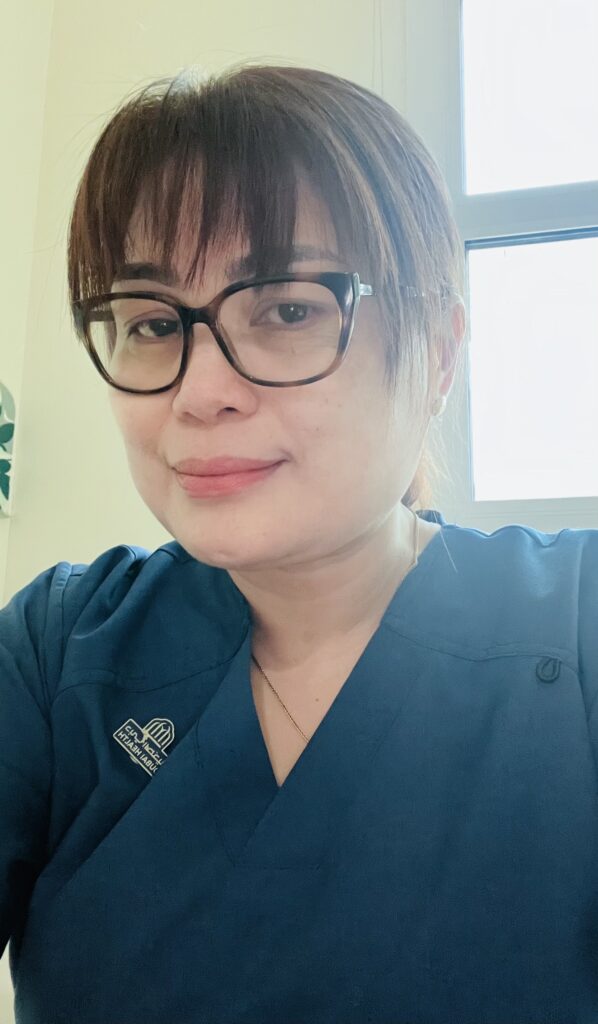
“I was initially concerned that moving into a supervisory role might limit my clinical experience,” she shares with TGFM. What she did not see coming was that the role would ask for something far harder than clinical precision.
When the word “Mama” changes everything
The first time a child called her that, it was probably not dramatic. It rarely is. A small voice, a reflex of need, a word that means safety. But it stayed with her — and then it happened again, from another child, and another, until it became the unofficial measure of everything she had built inside that ward.
Today, Marites is Unit In-Charge of the Family Village Foundation at Dubai Health, where she oversees the care of 25 children. All of them call her Mama.
“For me, they are not just patients — they became like my own children,” she says. “Every smile, every ‘Mama’ they call me, and every moment of trust they show reminds me of the love and responsibility I have for them.”
She describes the feeling carefully, the way someone does when they know the words will fall short. “It gives me a deeply heartfelt and meaningful feeling. It is a simple word, but it carries a powerful sense of connection and fulfilment for me.”
Marites is also a mother in the conventional sense — a single parent to two sons back in the Philippines, whom she has been raising across a distance of thousands of kilometres since she left Capiz in 2009. The weight of that separation has never fully lifted. But somewhere along the way, the two versions of herself — the nurse and the mother — stopped being separate things.
Pilar, Capiz to the wards of Dubai
Before the Gulf, there was the barangay. Marites started her nursing career at the Rural Health Unit in the Municipality of Pilar, Capiz, then moved to Bailan District Hospital — the kind of community-facing posts where the work is unglamorous, the resources are stretched thin, and the learning curve is steep precisely because you cannot hide behind specialisation.

It was exactly the training she needed, even if she did not know it then. Community health teaches a nurse to read people before they speak, to extend care past the clinical into the personal. Those instincts followed her to Dubai, where an entirely different world — new culture, new healthcare system, new expectations — demanded the same adaptability she had been quietly building for years.
She had doubts when the leadership role was first offered. “I feared losing my clinical skills and doubted whether I could handle such a great responsibility,” she admits. But the hesitation did not last. The children’s vulnerability did what no pep talk could: it made retreating feel like the wrong choice.
“Their vulnerability and innocence inspired me to give my best every day.”
That decision — to stay in the role, to grow into it rather than away from it — has now stretched across seventeen years.
What she is going back to build
Marites talks about the Philippines not as an ending but as a next chapter with specific plans already sketched out. She wants to return to healthcare, particularly in areas involving children and community health. She wants to mentor younger nurses — pass forward what was passed to her through years of hard experience. And she wants, most of all, to secure something stable for her two sons: their education, their futures, the things she has been working toward since she first packed her bags.
“I hope to contribute to improving patient care in my community, especially in areas involving childcare, community health, and support for vulnerable children,” she says. She also speaks of advocacies — children’s welfare, healthcare access, emotional support for the abandoned and orphaned — causes that feel less abstract to her now than when she started.
To other Filipinos abroad navigating the same complicated terrain of sacrifice and purpose, her advice is grounded and direct. “Always stay focused on your purpose. Remember why you chose to work abroad — whether it is for your family, your dreams, or a better future. Let that purpose guide you during difficult times.”
She adds: “Challenges are part of the journey, but they also build resilience and character.”
Marites Rufo has spent seventeen years proving both. In a hospital ward in Dubai, surrounded by children the world forgot to claim, she found the purpose she did not know she was looking for — and stayed long enough to become irreplaceable.
