



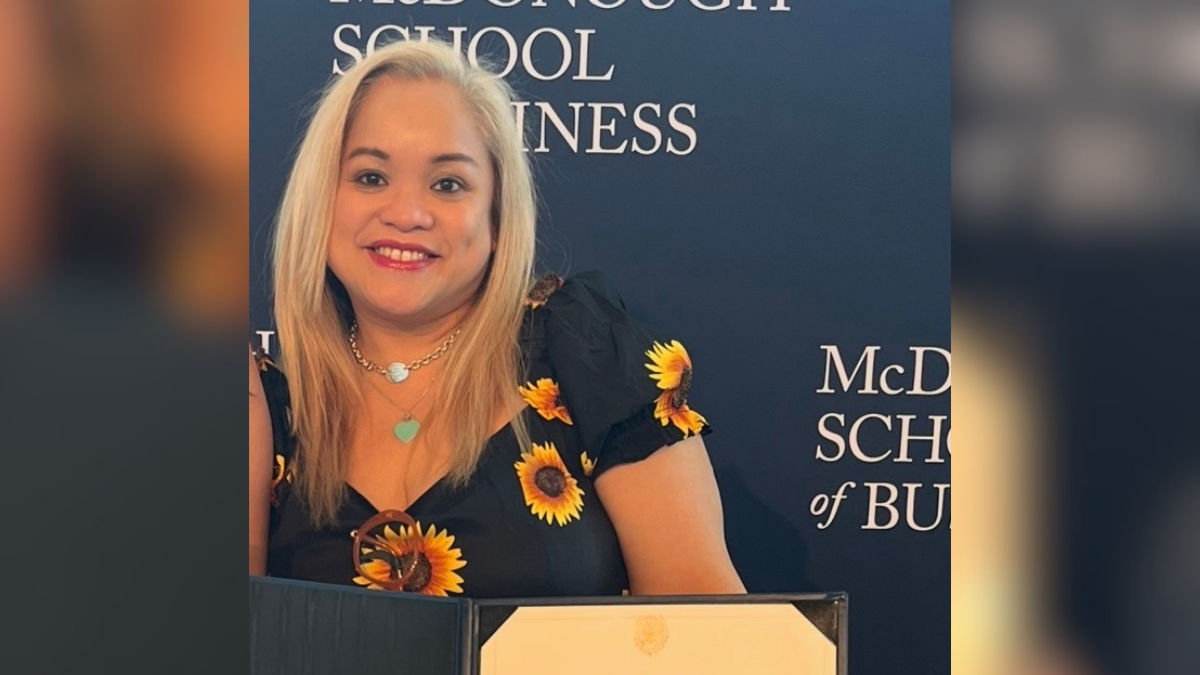

Some people don’t leave their country chasing a dream — they leave because the dream they already built wasn’t enough. Dr. Maria Joie Austria had already run two schools by the time she boarded a plane for the United States. Two decades later, she oversees language education for more than 117 schools in the American capital. She was 31, mid-career by any Philippine standard, and starting over somewhere that had no record of her yet.

The story, as she tells it, does not begin in Washington. It begins in Greenhills.
Building before leaving
Long before Dr. Maria became a director at DC Public Schools, she was a professor at Ateneo de Manila University and, alongside that, an entrepreneur. In 2000, she founded a tutorial center in Greenhills, growing it over five years into an operation that employed roughly 12 teachers and served a broad mix of students. Simultaneously, she ran the Multiple Intelligence Academy, a preschool that operated until 2005. Both ventures were hers — built, managed, and eventually handed off as she prepared to leave for the United States.
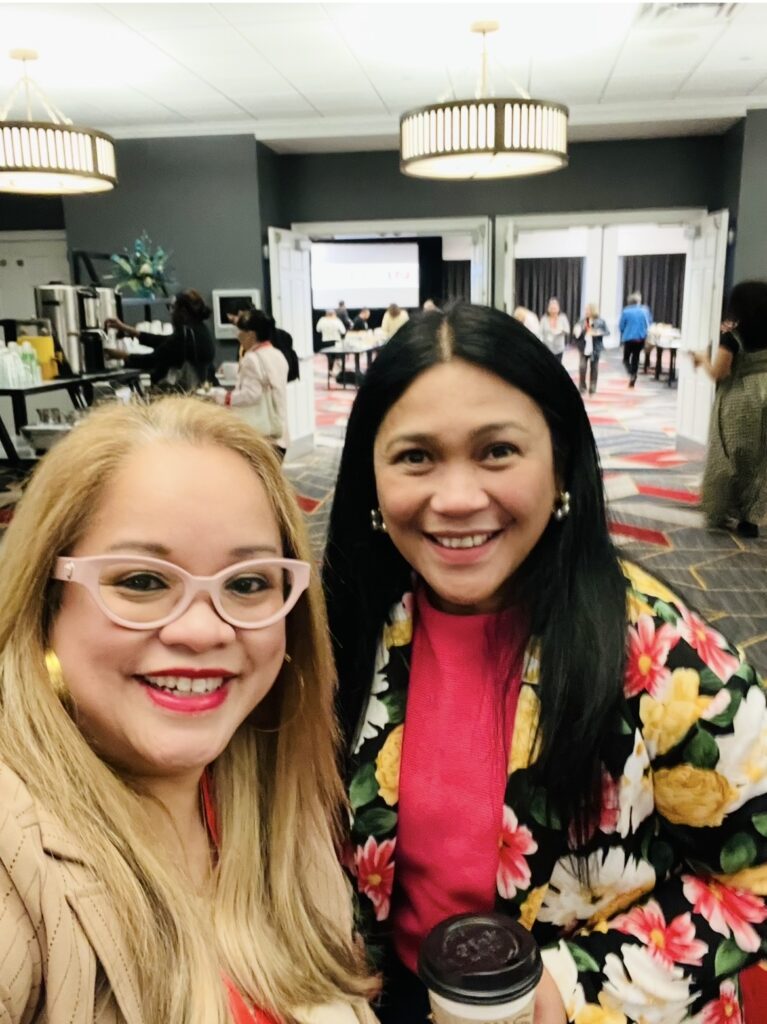
“These experiences not only strengthened my instructional leadership,” she reflects, “but also taught me the importance of building systems, mentoring educators, and responding to the unique needs of learners and their families.”
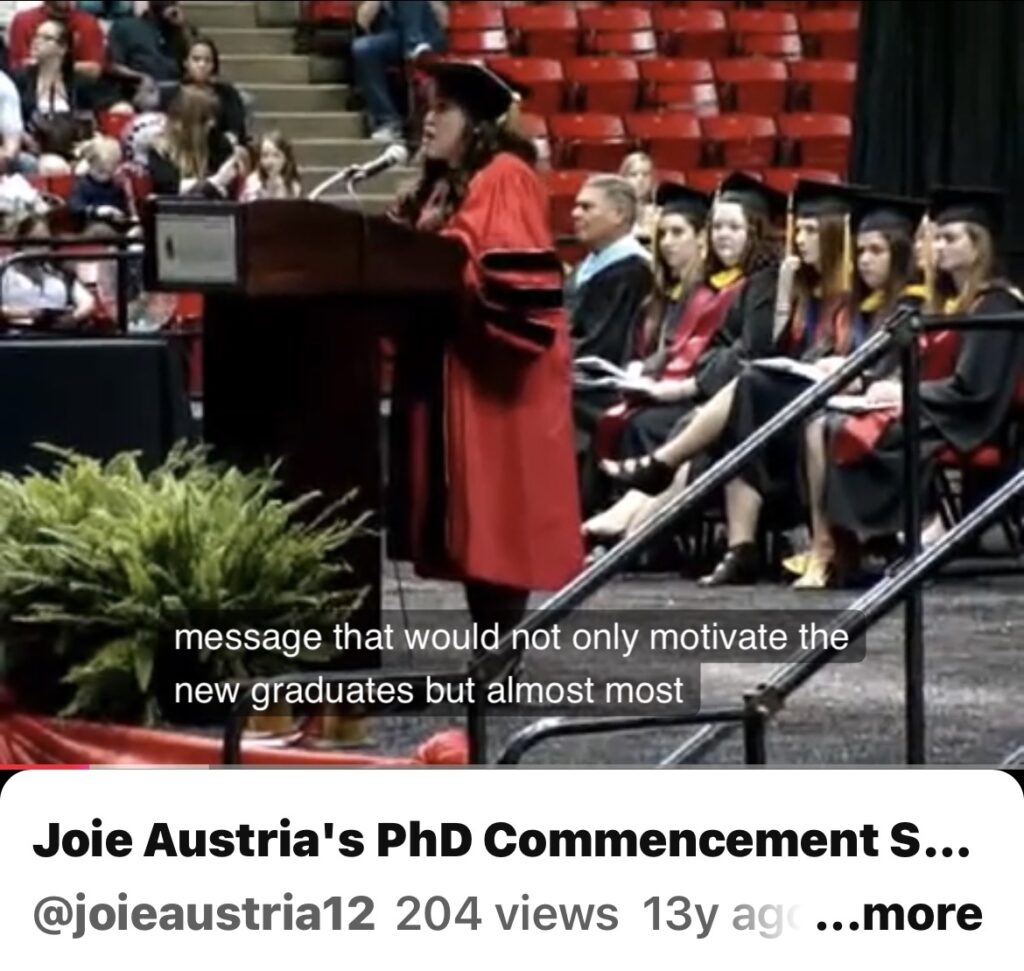
She moved to the US in 2005 to complete her doctoral degree, and the timing required a kind of pragmatic faith: she had to secure a teaching position while finishing her studies, staying connected to classrooms even as she advanced academically. In 2009, she earned her Ph.D. in Curriculum and Instruction, with a focus on Second Language Education and Culture, from the University of Maryland, College Park. The foundation was set.
Her first professional posting in American education was as an ESOL teacher in Prince George’s County Public Schools in Maryland — a classroom role that, for someone who had already run two institutions, might have felt like a step back. It wasn’t. Within a year, she was a department chair. Two years after that, an instructional coach. Then a supervisor for ESOL high schools. Eleven years in Prince George’s County, moving steadily inward and upward through the system.
A school that needed turning around
The sharpest test came in 2016, when Dr. Maria was tapped to serve as principal of the largest elementary ESOL school in Nashville, Tennessee. The school was among the lowest-performing in its district. She spent two years there, and by the time she left, it had become the most improved.
She doesn’t linger on the details of what that transformation required. What she does say is that it demanded working “alongside an incredible school community” — a phrase that, in her telling, is never throwaway. For Dr. Maria, leadership has always been about the people around her, not the title above her name.
She doesn’t stop learning, either. After Nashville, she completed administrative leadership programs at Harvard University, The Catholic University of America, and Trinity University. In 2018, she graduated from the ALAS Superintendent Leadership Academy. In 2024, she finished an MBA at Georgetown University — while serving full-time as a director. That same year, she was elected President of the ALAS DMV affiliate, representing DC, Maryland, and Virginia.
The work that keeps her

Today, Dr. Maria leads a team of managers and instructional coaches supporting multilingual learners across Washington DC’s public school system. She also oversees the district’s Title III federal funding, ensuring resources reach the classrooms and students that need them most.
What keeps her in it is not ambition in the conventional sense. It is something closer to conviction.
“I have always believed in the power of language as both a bridge and a source of identity,” she says, “and I am deeply committed to ensuring that students who are learning English are seen, supported, and empowered to thrive.”
The most fulfilling part of her work, she says, is watching the leaders she supports grow. “When leaders and educators are strengthened, our students are ultimately the ones who benefit most.” It is a logic she has applied at every level — classroom, campus, district — and it has not changed.
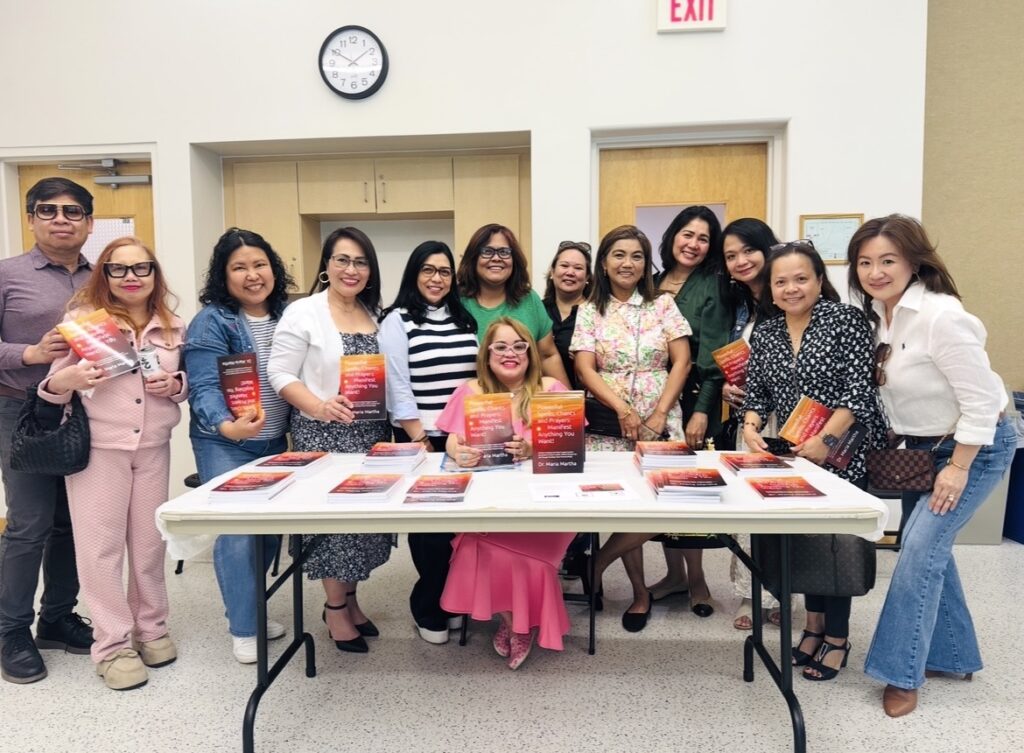
Outside the office, she has channeled a parallel discipline into writing. In 2024, while managing her directorship, she published a book on mindfulness and manifestation, now available on Amazon. A second book — 365 Daily Affirmations: Remove Imposter Syndrome — is scheduled for release around December. “Writing the book required discipline, focus, and purpose,” she says, describing it as a natural extension of her belief that leaders benefit from intentional living, not just institutional achievement.
What she carries forward
The early years abroad were not easy. Dr. Maria is candid about the isolation — the unfamiliar professional terrain, the distance from family, the weight of doctoral studies layered on top of full-time work. “There were moments of uncertainty,” she says, “but I learned to approach these challenges with resilience and intentionality.”
Her husband Ron has been, in her words, a constant source of strength. So has her faith. These are not rhetorical anchors; they appear repeatedly in how she describes surviving the harder stretches of her career.
Her advice to Filipinos navigating similar difficulties is grounded in the same values. “Remain grounded in your values and be patient with your journey,” she says. “Do not forget where you came from — carry with you the values, humility, and resilience that were instilled in you by your parents.”
For Dr. Maria, working abroad was never the destination. It was the means to something larger — a chance to deepen her practice, broaden her perspective, and ultimately return, if not geographically then in purpose, to the mission she has carried since Greenhills. She plans to continue supporting multilingual learners internationally, mentoring future leaders, and writing books she hopes will move others to step into their own potential.
“I see it not as a destination,” she says of her career, “but as part of a larger purpose that continues to unfold.”
