




A formal statement signed by law school deans and professors from across the Philippines is putting the Senate on notice — refusing to convene as an impeachment court is not a legal option, and those who obstruct the process may face criminal liability.

The statement, posted on the Facebook page of San Beda University Graduate School of Law Dean Fr. Ranhilio Callangan Aquino, invokes Article XI, Section 3, paragraphs 3 and 4 of the 1987 Constitution, which the group argues leaves no room for Senate discretion: once at least one-third of the House either votes in affirmance of a Committee Report or files an impeachment complaint, trial proceeds as a matter of course — not at the pleasure of the Senate President.
The academics named that pleasure directly. The statement decried what it called the “Escudero definition” of “forthwith” — a pointed reference to then-Senate President Chiz Escudero’s stance during the 2025 impeachment proceedings, when he maintained the Senate could not start trial until Congress formally reconvened. The group called it an “unfortunate” interpretation that effectively meant the constitutional mandate applied only when the Senate leadership chose to honor it.
The statement also condemned the Senate leadership change that unfolded as the House was voting. While House members were casting their ballots, the Senate voted 13-9 with two abstentions to install Sen. Alan Peter Cayetano as the new Senate president, replacing Sen. Vicente “Tito” Sotto III, who had vowed to begin the impeachment trial “forthwith.” The group characterized the move as a brazen attempt to forestall the trial.

More strikingly, the signatories put specific legal consequences on the table. The statement warns that a public officer’s refusal to perform a constitutionally imposed duty constitutes dereliction — an administratively actionable offense — and that conferring an undue advantage on a person not entitled to it is an indictable criminal offense under Republic Act No. 3019, the Anti-Graft and Corrupt Practices Act. The implication is direct: senators who refuse to sit as an impeachment court may not merely be acting unconstitutionally — they may be committing a crime.
The statement goes beyond the Duterte impeachment. The signatories separately urged law enforcement to cooperate with international legal processes so that, should the Philippine government invoke the relevant provisions of Republic Act No. 9851, Sen. Ronald “Bato” dela Rosa may be brought before the International Criminal Court in The Hague.
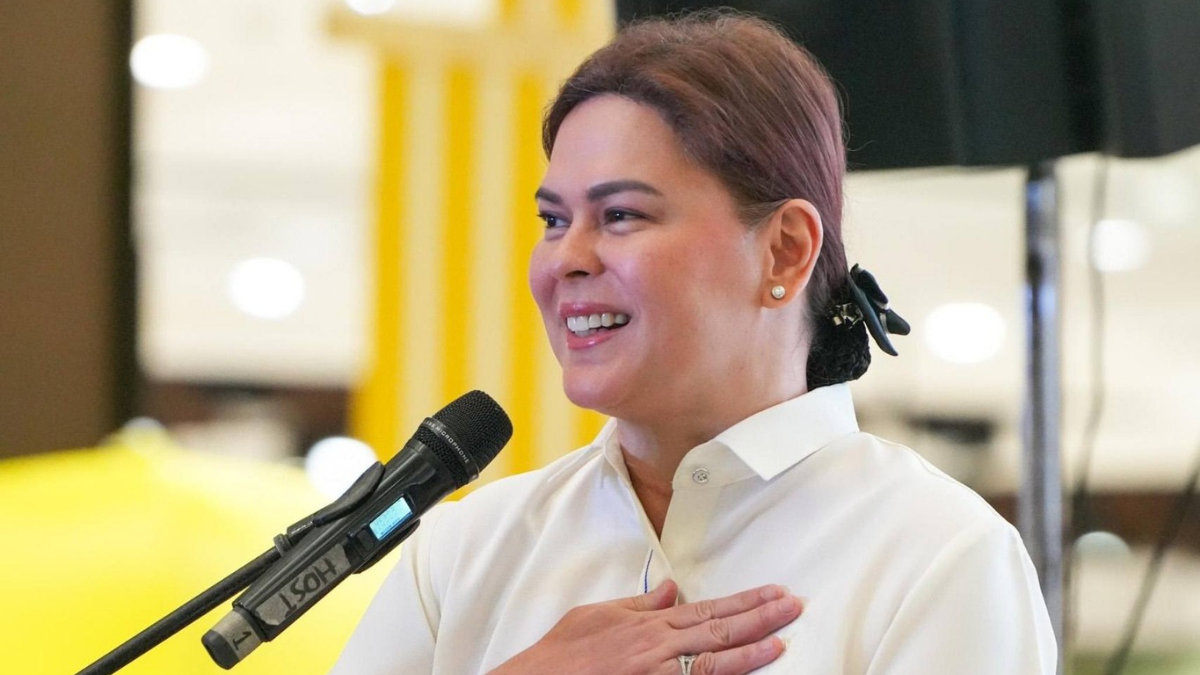
The House impeached Vice President Sara Duterte on May 11, with 255 lawmakers approving the Committee on Justice report — making her the first Philippine official to be impeached twice.
The statement was signed by more than two dozen legal academics, including retired Supreme Court Justice Adolfo S. Azcuna, now a professor at San Beda’s Graduate School of Law, alongside deans from Adamson University, Lyceum of the Philippines University, the University of Asia and the Pacific, Holy Name University, Ateneo de Naga University, Saint Louis University, Misamis University, and the University of the Cagayan Valley.
