



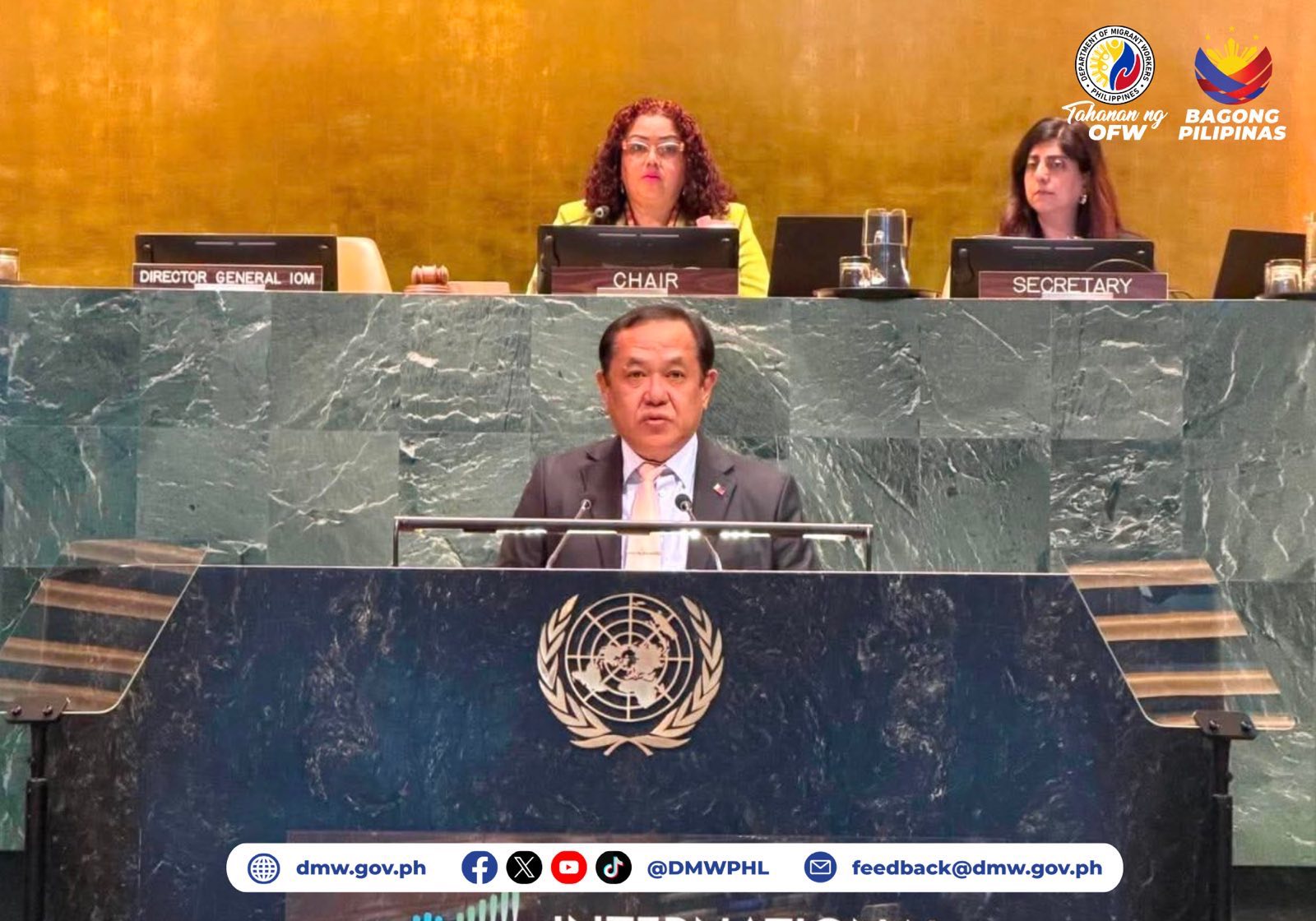

Concrete improvements in the daily lives of overseas workers must be the ultimate measure of migration policy, the Philippines stressed at a major international forum this week.

Speaking at the General Debate of the 2nd International Migration Review Forum in New York City on May 7, DMW Undersecretary Jainal Rasul, Jr. delivered a statement urging that Global Compact for Safe, Orderly and Regular Migration commitments move beyond declarations and into practical action in destination countries.
The Philippines framed the GCM as a framework built on shared responsibility — one that cannot be carried by sending countries alone. Rasul called on receiving nations to become genuine partners in migration governance, arguing that countries of origin, transit, and destination must all contribute meaningfully if migrant workers are to see real change.

On the domestic side, the government pointed to a range of programs covering the full migration cycle, from pre-departure preparation through on-site support to reintegration. Systems for employer documentation, agency licensing, skills certification, and employment verification have been put in place, with the stated aim of securing decent work, fair wages, and humane conditions for Filipino workers abroad.
Forty-three Migrant Workers Offices embedded in Philippine embassies and consulates worldwide serve as the frontline response to worker distress, handling cases involving contract violations, unpaid wages, maltreatment, and abuse. The government also cited 72 active bilateral labor agreements with receiving countries, along with targeted reforms for domestic workers, among the more vulnerable segments of the OFW population.
The Philippines additionally pointed to multilateral platforms — including ASEAN and the Abu Dhabi Dialogue — as channels for reinforcing collective action between labor-sending and labor-receiving nations.
