



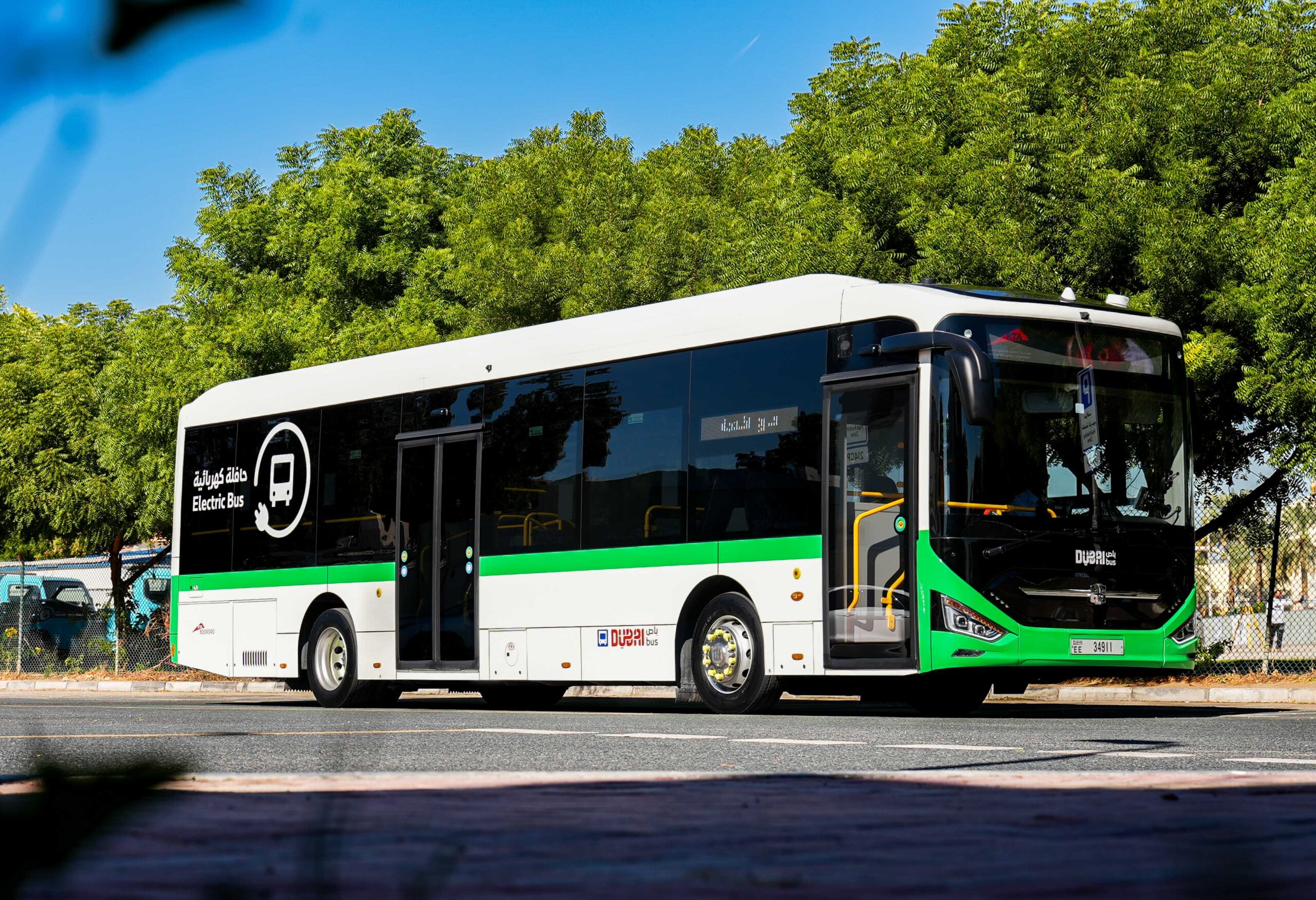

Dubai’s public transport network is set for a major green overhaul, with 735 electric buses scheduled for phased delivery throughout 2026 — the single largest electric bus deployment in the UAE to date.

The Roads and Transport Authority confirmed the rollout as a key milestone in its push toward a fully zero-emission transport system by the middle of the century, aligned with both the Dubai Economic Agenda D33 and the UAE’s national climate neutrality goals.
Ground-level preparations are already in place. Charging facilities have been installed at five bus depots — Al Quoz, Al Ruwayyah, Lehbab, Business Bay, and Jebel Ali — with 32 high-capacity chargers rated at 360 kilowatts each, ensuring the infrastructure can sustain fleet operations as deployment scales.
A pilot bus is already in service on Route F13, drawing from a 470-kilowatt-hour battery that delivers a range of up to 370 kilometres per charge. The RTA said passenger comfort and air-conditioning performance were priorities in the vehicle’s design. Early results have been strong: satisfaction rates among both drivers and commuters have topped 95 per cent, with the bus performing particularly well on short and medium urban routes.
Formal performance assessments are tracking battery range, charging times, energy consumption, and emissions output, among other indicators.

Marwan Al Zarooni, director of buses at the Public Transport Agency, said the charging network buildout at strategic locations is critical to ensuring fleet reliability and enabling the gradual expansion of electric buses across the system.
“The expansion is part of a long-term strategy to build a sustainable and environmentally friendly transport system through the adoption of advanced operational solutions that enhance efficiency and reduce emissions,” Al Zarooni said.
The RTA currently runs 40 electric buses, alongside hydrogen-powered vehicles, as part of its existing clean transport mix.
Emissions data underscores the impact of the shift. The authority recorded a 12 per cent reduction in greenhouse gas emissions in 2025 compared to the previous year, and a 44 per cent decline against its 2022 baseline. Electric bus operations alone helped avoid more than 59,000 tonnes of carbon dioxide emissions last year, as Dubai works toward a 30 per cent emissions reduction target by 2030.
