



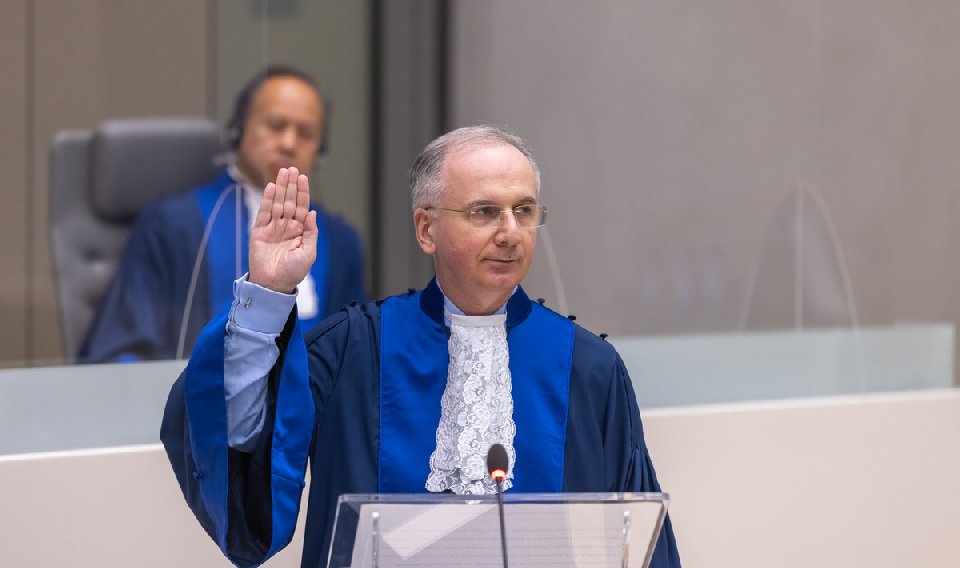

A dissenting judge at the International Criminal Court has raised serious doubts about whether the tribunal has the legal standing to try former Philippine president Rodrigo Duterte, even as the court’s Appeals Chamber cleared the way for proceedings to move forward.

Judge Gocha Lordkipanidze, in a dissenting opinion dated April 22, argued that the ICC’s jurisdiction was never properly activated before the Philippines’ exit from the Rome Statute took effect — and that the majority got the law wrong.
At the center of his disagreement is what qualifies as a matter “under consideration” by the court under Article 127(2) of the Rome Statute. The Appeals Chamber’s majority held that a preliminary examination conducted before Manila’s withdrawal was sufficient to preserve jurisdiction. Lordkipanidze rejected that conclusion outright.
“A situation is only under consideration by the Court once a pre-trial chamber authorizes an investigation,” he wrote, describing preliminary examinations as informal proceedings that carry no binding legal weight.

Under his reading of the statute, the ICC would have needed to formally authorize an investigation during the Philippines’ one-year withdrawal window — something that did not happen. Without that step, he argued, the court has no valid basis to proceed against Duterte over the alleged killings linked to his anti-drug campaign.
The dissent also raised a broader warning: that extending jurisdiction on the strength of a preliminary examination alone risks distorting the treaty’s architecture and weakening states’ right to exit the court.
“The Statute thus gives the Court an opportunity to assert its jurisdiction. However, it also respects the States’ right to withdraw,” Lordkipanidze wrote, cautioning that the majority’s interpretation could render the withdrawal provision hollow.
The four grounds of appeal brought by Duterte’s defense were each dismissed by the majority, which upheld the earlier finding that the court retained jurisdiction. Lordkipanidze concluded that the Pre-Trial Chamber had committed a legal error in its interpretation of Article 127(2).
