



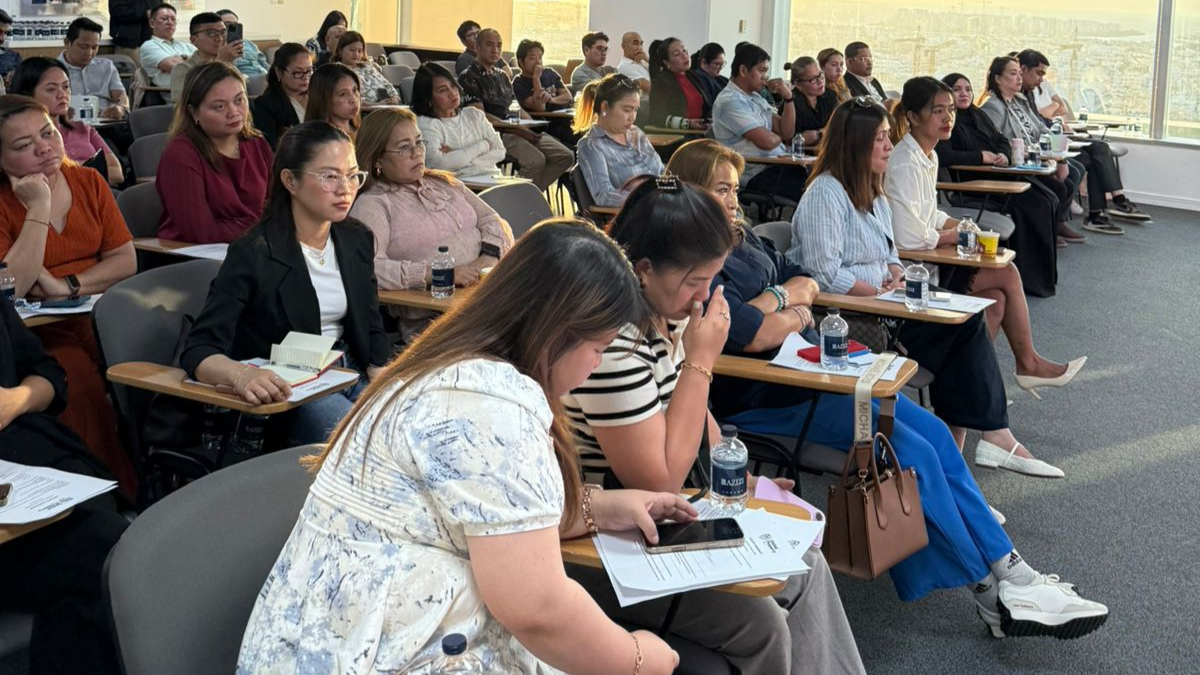

Landlord journey – ABU DHABI, UNITED ARAB EMIRATES — As global markets navigate persistent uncertainty, the United Arab Emirates continues to reinforce its position as one of the world’s most stable and strategically protected investment destinations. Against this backdrop, a growing number of Overseas Filipino Workers (OFWs) in Abu Dhabi are transitioning from long-term renters to income-generating property owners in Dubai, capitalizing on the emirate’s resilient real estate sector and investor-friendly framework.

This shift is being supported by the Dubai Landlord Training Program, a complimentary professional initiative presented by FHI Global Property and Filipino Homes, in partnership with Azizi Developments, one of the UAE’s leading master developers.
A Safe Haven Backed by Multi-Layered National Strength
In periods of global volatility, capital typically gravitates toward jurisdictions offering security, economic resilience, and regulatory transparency. The UAE distinguishes itself through a multi-layered system that underpins long-term investor confidence.
At the foundation is national security and geopolitical stability, supported by strong international alliances that ensure continuity of economic activity. Complementing this is a diversified economic model, driven by sectors such as trade, tourism, aviation, finance, and real estate—aligned with long-term strategies including the Dubai Economic Agenda (D33) and UAE Vision 2030.
Equally critical is the UAE’s robust financial and regulatory framework, led by institutions such as the Dubai Land Department. These systems provide escrow-backed developments, transparent ownership processes, and efficient transaction mechanisms, alongside a tax-efficient environment with no personal income tax on rental earnings or capital gains.
Structural Growth Driving Rental Demand
Dubai’s growth trajectory is anchored in long-term, forward-looking urban and economic planning. Through initiatives such as the D33 Agenda and the Dubai 2040 Urban Master Plan, the emirate aims to double its economic output, expand infrastructure, and increase tourism to over 40 million annual visitors.
Major infrastructure projects—including the expansion of Al Maktoum International Airport and the development of new metro lines—are expected to accelerate population growth and urban connectivity, reinforcing sustained demand for residential properties.
This structural expansion supports a clear economic cycle:
Growth → Employment → Population Increase → Housing Demand → Rental Income
From Fixed Expense to Income-Generating Asset
For many OFWs, monthly rent has long represented a recurring expense with no long-term return. Dubai’s real estate market now presents a compelling alternative: ownership of income-generating property that converts active earnings into scalable, recurring rental income.

The market continues to offer:
Competitive rental yields compared to global cities
Capital preservation through asset-backed investment
Long-term wealth accumulation opportunities
Potential eligibility for residency programs such as the UAE Golden Visa
Empowering Investors Through Education
The Dubai Landlord Training Program is designed to equip Filipino investors with the knowledge and tools required to participate confidently in the market.
Participants gain practical insights into:
Short-term rental and holiday home income strategies
Passive income system development
UAE tenancy laws and regulatory compliance
Investment protection frameworks
Real estate pathways to long-term UAE residency
Training Details
Venue:
M1 Cafe Lounge, Al Bateen, Abu Dhabi
https://maps.app.goo.gl/5ELtAMZ1DSArLCyR8
🔗 Register for your FREE slot:
https://forms.gle/vHuEZXdvTpni7Zah6
Date and Time:
April 25–26, 2026
2:00 PM
A Strategic Shift Toward Financial Independence
As the UAE continues to lead regional economic recovery and strengthen its position as a global investment hub, OFWs are increasingly recognizing the importance of transitioning from income earners to asset owners.
This initiative represents more than a training program—it is a strategic pathway for Filipinos abroad to convert hard-earned income into sustainable, long-term wealth through property ownership in one of the world’s most resilient real estate markets.
In today’s economic landscape, financial progress is no longer defined by income alone—but by the ability to transform income into income-generating assets.
