



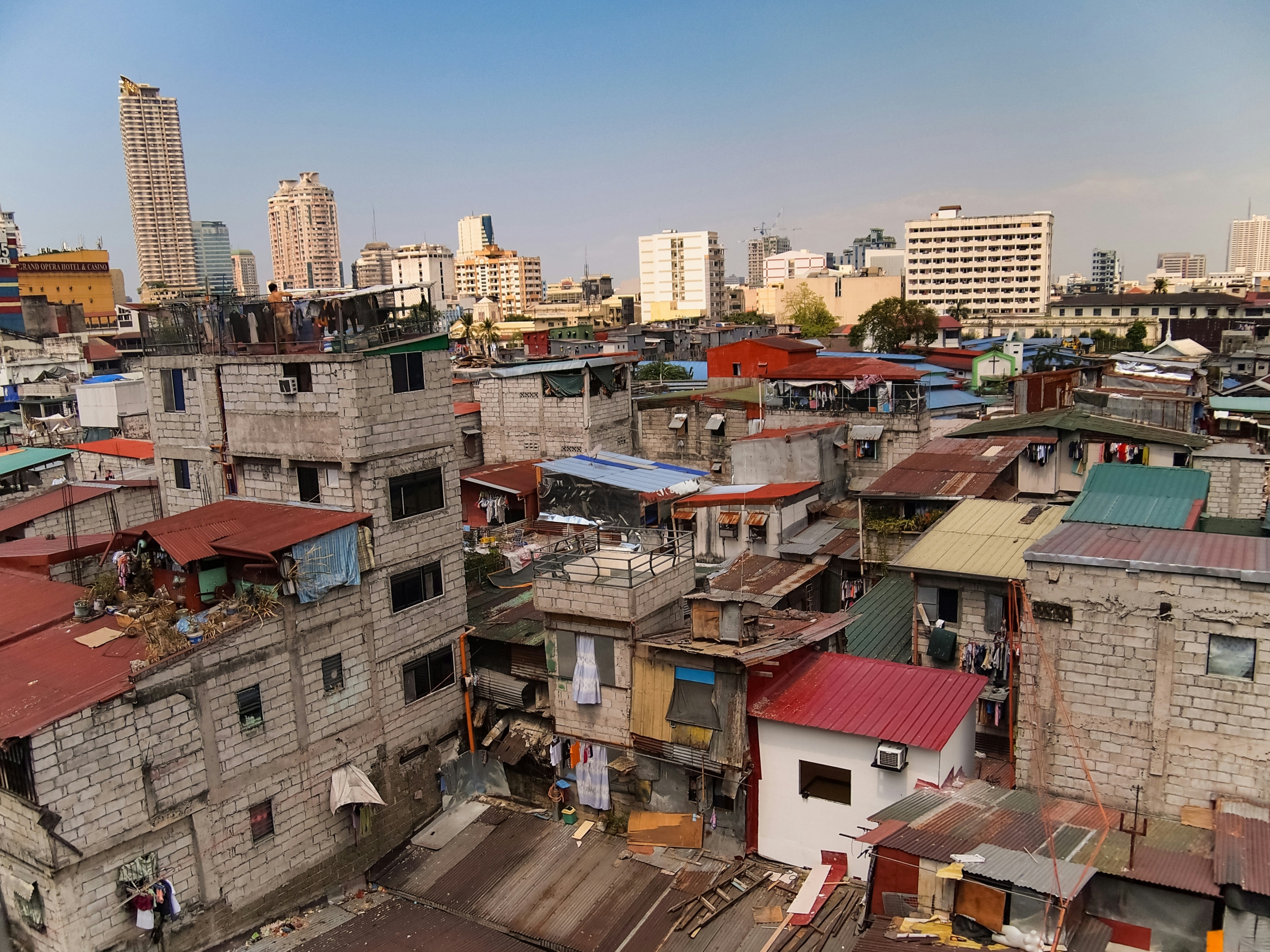

A state think tank is warning that the ongoing Middle East conflict’s effect on global oil markets could significantly worsen poverty conditions in the Philippines, with households barely above the poverty threshold facing the greatest risk of sliding under it.

The Philippine Institute for Development Studies laid out the projections in a policy note titled “Who Suffers Most When Oil Prices Spike,” written by senior research fellow Jose Ramon Albert. The analysis examined three price scenarios and their cascading effects on Filipino households.
At $105 per barrel — the current scenario — the national poverty rate is projected to climb from an estimated 13.2 percent in 2025 to 14.4 percent, pulling approximately 1.34 million Filipinos into poverty. Should oil reach $125 per barrel, the rate rises further to 15.3 percent. In the most extreme scenario of $145 per barrel, the poverty rate could hit 16.3 percent.
The burden, PIDS noted, would not fall equally. Food spending accounts for over 57 percent of poor households’ budgets, and because food supply chains are heavily energy-dependent, rising fuel costs translate quickly into higher food prices — hitting low-income families hardest.
“Because poor households allocate over 57 percent of their spending to food and food supply chains are highly energy intensive, the transmission of cost increases through food prices disproportionately affects low-income households,” the institute said.

On the question of policy response, PIDS drew a sharp distinction between a fuel excise tax cut and direct cash transfers. A tax cut, it argued, benefits wealthier households in absolute terms — delivering roughly four times more in pesos to rich families than poor ones.
“A fuel excise tax cut that reduces prices uniformly provides roughly four times more in absolute pesos to a rich household than to a poor household. Only targeted cash transfers can reverse this regressivity by directing support specifically to those least able to absorb the loss,” the PIDS said.
The institute identified the proposed Suplementaryong Ayuda Para sa Apektadong Tahanan program as the most equitable and cost-effective instrument available. Structured around a P6,000 per household grant covering existing beneficiaries, waitlisted households, persons with disabilities, and minimum wage earners, the program could shield roughly 754,000 Filipinos from poverty, according to PIDS.
Timing, the institute stressed, is critical. “The challenge is to implement the program before the shock fully manifests as deeper poverty,” it said, adding that a prolonged or intensifying crisis would require additional layers of assistance.
House ways and means committee chairman Rep. Miro Quimbo flagged a gap in the current relief framework: middle-class Filipinos, he noted, remain outside the coverage of government financial assistance programs even as they are squeezed by the same price pressures battering lower-income households.
