



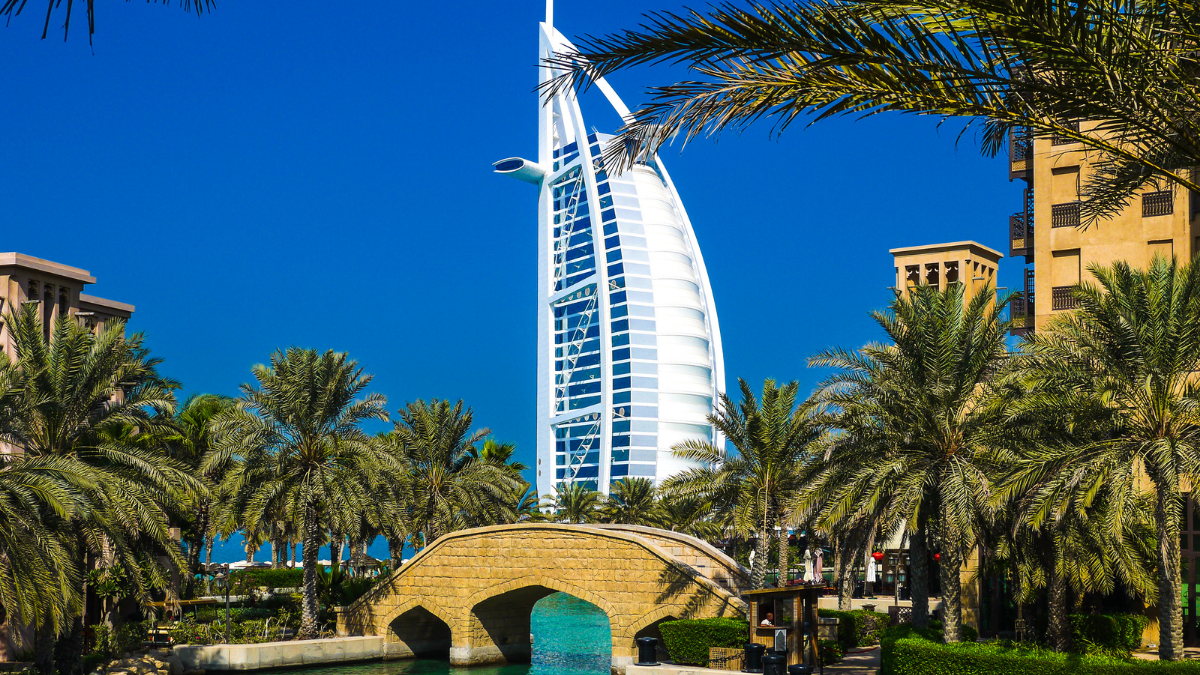

A landmark renovation is coming to one of the world’s most recognisable hotels. The Jumeirah Burj Al Arab, the sail-shaped tower that has defined Dubai’s skyline since 1999, will enter a phased restoration programme spanning roughly 18 months — the first of its kind since the property opened.

French interior architect Tristan Auer, internationally known for his work on storied heritage properties including the Hôtel de Crillon in Paris, will lead the project. Jumeirah Group said he was selected through a rigorous process, citing his reputation for balancing historical sensitivity with contemporary design sensibility.
Auer acknowledged the weight of the assignment. “Being entrusted with the very first restoration of a property of this calibre in Dubai — the Jumeirah Burj Al Arab, a timeless icon of the region — is a profound privilege,” he said. “To carry forward, with the utmost dedication, the legacy of such an extraordinary landmark is both an honour and a responsibility.”
The scope of work centres on the property’s distinctive interiors — which feature marble, gold leaf and Swarovski crystal throughout its 198 luxury suites — with Jumeirah stating that guest services will continue uninterrupted during the process.

Jumeirah Group CEO Thomas B. Meier framed the restoration as a milestone in the hotel’s longer history rather than a structural overhaul. “Jumeirah Burj Al Arab is far more than an architectural landmark; it is a symbol of ambition, craftsmanship and enduring excellence,” he said. “This restoration programme marks a new chapter in the story of Jumeirah Burj Al Arab.”
The hotel, owned by Jumeirah Group under parent company Dubai Holding, was credited with reshaping luxury hospitality benchmarks in the region after its launch, notably by introducing dedicated butler service and setting a new tier of ultra-premium guest experience. It has since become one of the most photographed structures globally.
Jumeirah said the programme is driven by an intent to preserve the property as an enduring symbol for future generations, consistent with Dubai’s broader approach to maintaining its modern architectural landmarks as the city develops.
