



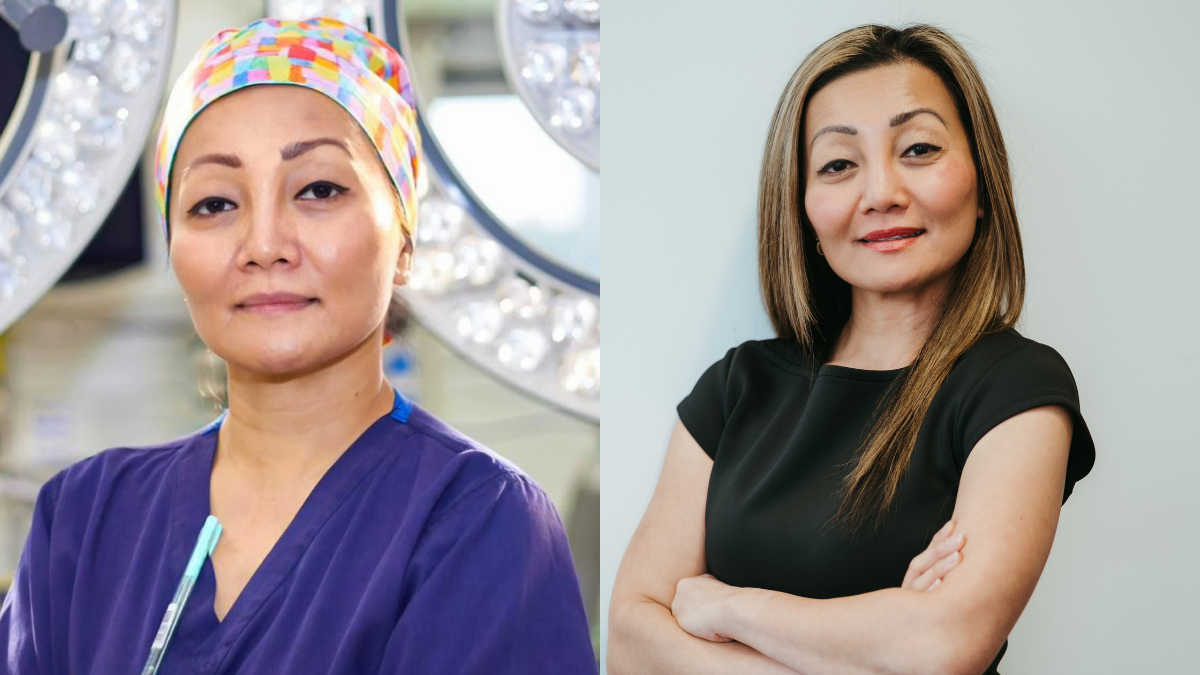

There is a particular kind of courage that does not announce itself. Arlene Alano-Abdullah knows this well. A Senior Sister and HepatoBiliary (HPB) lead at University Hospital Southampton, she has spent more than 25 years working in one of the most high-stakes environments in medicine — the operating theatre — and the public, for the most part, has no idea she exists.

That was never the plan. Neither, for that matter, was nursing.
Duty that became a calling
Arlene grew up in Cebu City, the daughter of parents who had mapped out a future for her before she had a chance to map one herself. Nursing was their dream, not hers. She pursued it anyway — out of obligation, out of love, out of the particular Filipino logic that understands family sacrifice as its own kind of ambition.
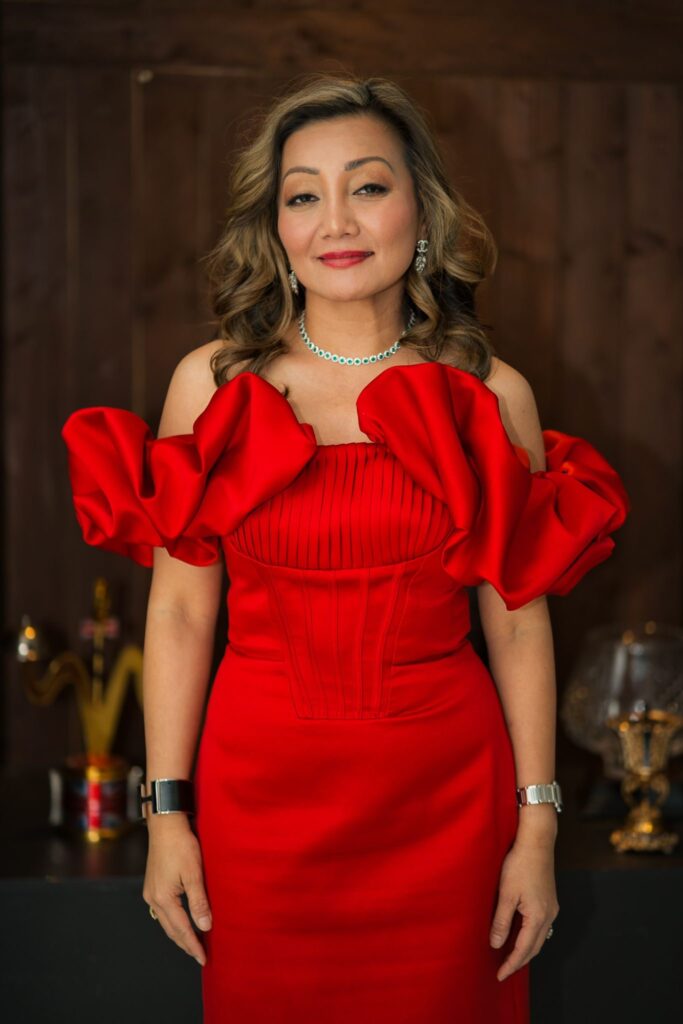
“Nursing was not my first choice — it was my parents’ dream,” she shares with TGFM. “I initially pursued it out of duty.”
She trained and graduated at Cebu Velez General Hospital, and then, only months after completing her degree, made a decision that would reorder everything. She left the Philippines for the United Kingdom — her first time living away from her family. In 2000, she arrived at Southampton General Hospital as part of the very first cohort of Filipino nurses recruited to the institution. They came, she recalls, “not only with suitcases but with courage.”
The courage was tested immediately. The NHS was a different world: unfamiliar systems, different hierarchies, communication styles that did not always translate, and the invisible but ever-present pressure to prove that she belonged. There were moments of homesickness. There was self-doubt. There was what she describes carefully as “subtle discrimination” — the kind that never makes it into official records but shapes a young nurse’s experience in ways that linger.
She had a plan, of sorts. Stay two years. Gain experience. Move on to the United States. That was the trajectory she had drawn for herself.
“Two years became twenty-five,” she says simply.

The room that frightened her
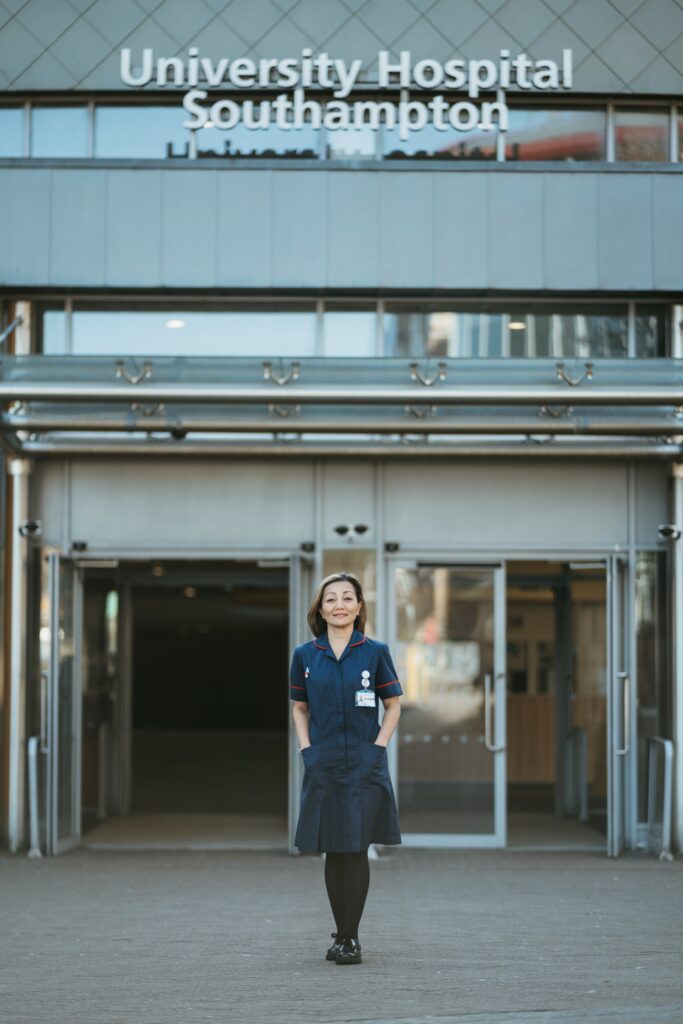
Theatre nursing was not a calling she recognised at first either. During her student placement in the operating room, Arlene found it overwhelming — the intensity, the exacting personalities, the surgeons who did not suffer hesitation gladly. “I found theatre nurses and surgeons scary,” she admits. “I honestly did not like it at first.”
What changed was something harder to name than a single moment. It crept in incrementally — the precision required, the technical demands, the silent choreography of a functioning theatre team. She began volunteering for complex cases. She studied harder. She asked questions. And slowly, what had once intimidated her became the environment where she felt most alive.
“I began to appreciate the discipline, the precision, and the silent choreography of the operating theatre,” she says. “What once frightened me became my passion.”
Today, she leads the HPB department at University Hospital Southampton — one of the UK’s largest laparoscopic hepatobiliary centres, and by some accounts the largest dedicated unit of its kind in the country. The surgeries her team supports include liver resections, Whipple procedures, Ivor Lewis operations, and Intraoperative Radiation Therapy using the Mobetron — a service that exists nowhere else in the UK. Her department has supported surgeons of international reputation, pioneered keyhole liver surgery, and introduced the use of 3D-printed liver models for complex surgical planning.
In 2009, she assisted in Trinidad and Tobago’s first laparoscopic right hemihepatectomy. She has also worked with teams in Jerusalem, supporting improvements to theatre policies and standards. The girl who once found the operating room terrifying is now one of the people other countries call when they want to do something that has never been done before.
What the public does not see
There is a reason most people cannot describe what a scrub nurse actually does. The work happens behind closed doors, during the hours when a patient is least able to observe or remember anything at all.
Arlene is measured but direct when she speaks about this invisibility. “When a patient is asleep on the operating table — completely vulnerable and unable to speak for themselves — we become their voice,” she says. “We are their advocate, their protector, and their safety net.”

The preparation alone — long before the first incision — involves anticipating complications, coordinating with anaesthetists, verifying equipment, maintaining sterility, and running through safety checks that leave no room for approximation. In a specialty like HPB surgery, where the anatomy is complex and the margin for error is nearly non-existent, the theatre nurse’s vigilance runs parallel to the surgeon’s throughout. Sometimes for hours without a break.
There is emotional labour too. Arlene describes meeting patients at their most frightened, offering reassurance, holding hands before anaesthesia takes hold. Then the doors close and the work becomes almost entirely silent and technical — until it is done, and the patient wakes in another room, with little sense of what was done on their behalf or by whom.
“We may not always be the faces patients remember,” she says, “but we are part of the reason they wake up safely — and that is something of which I am incredibly proud.”
Her leadership philosophy follows a similar logic: visible where it matters, quiet where possible. “I lead not to command, but to create spaces where others find their confidence.” In high-pressure moments, she says her priority is to stay calm and steady, because the theatre reflects the tone of whoever is leading it. Before every list, she ensures the team understands the plan and the risks. After difficult cases, she debriefs, acknowledges what went well, and identifies what to carry forward.
Psychological safety — the ability of any team member to raise a concern without fear — is non-negotiable in her department. It is also, she notes, not always popular. “Leadership requires courage,” she says. “It means advocating for psychological safety, even when it’s not popular. It means choosing long-term culture over short-term comfort.”
A door left wider open
In 2007, Arlene became one of the first Filipino nurses to reach Band 7 — Senior Sister level — in the operating theatres at University Hospital Southampton. She was also, at the time, the youngest to do so. Before that, she had been the youngest Filipino Band 6 nurse in theatres. In 2012 and 2013, the hospital trusted her enough to send her back to the Philippines — to recruit nurses on its behalf.
Many of those she recruited are now senior leaders themselves. Within a trust of over 14,000 staff, Filipino nurses now represent the largest international workforce group, accounting for approximately 6.4 percent of the total workforce.
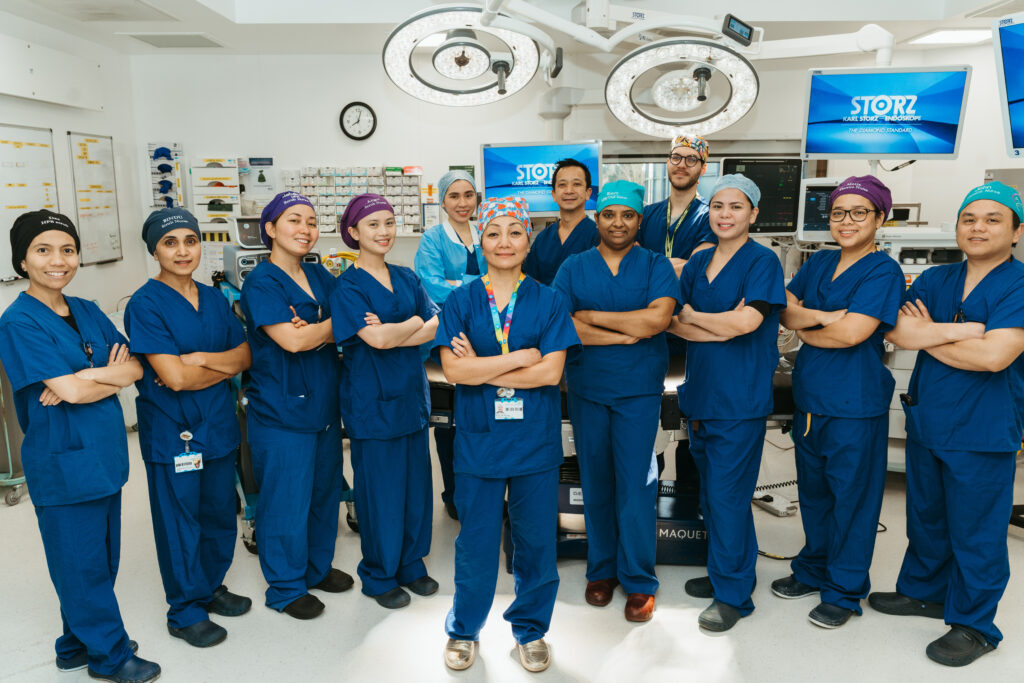
She holds these numbers carefully, not as evidence of personal success but as a marker of something larger. “Filipino nurses, who have long been the backbone of healthcare systems worldwide, are finally being seen not only as excellent clinicians but as leaders,” she says. “It challenges outdated stereotypes and opens doors for others.”
She is also honest about the weight of visibility — the awareness that younger Filipino nurses are watching, measuring what seems possible against what they can see in front of them. “I want my presence to say: yes, you belong here; your voice matters; and your background is a strength, not a barrier.”
In 2023, her contributions were recognised with the G.E.M. Award — Going the Extra Mile — from NHS Professionals, for innovation, quality of care, and staff wellbeing. She accepted it with characteristic understatement. What she says she is proudest of is not the award, or the title, or even the firsts.
“I am proud that I stayed when things were difficult,” she says. “I am proud that I found my voice in environments where I once felt intimidated.”
Her advice to young Filipino nurses considering a career abroad is precise and unsentimental: be brave enough to start, patient enough to grow, and deliberate enough to lift others on the way up. The homesickness is real, she says. The self-doubt is real. The pressure to prove yourself — constantly, quietly, without being asked — is real.
But so is the destination.
“Dreams that begin in the Philippines can grow anywhere in the world,” she says, “if you are willing to believe in yourself and keep going.”
She would know. She almost did not start. She almost left after two years. She almost chose a different country, a different life, a different version of the future entirely.
Instead, she stayed. And in doing so, she made staying look possible for everyone who came after her.
