



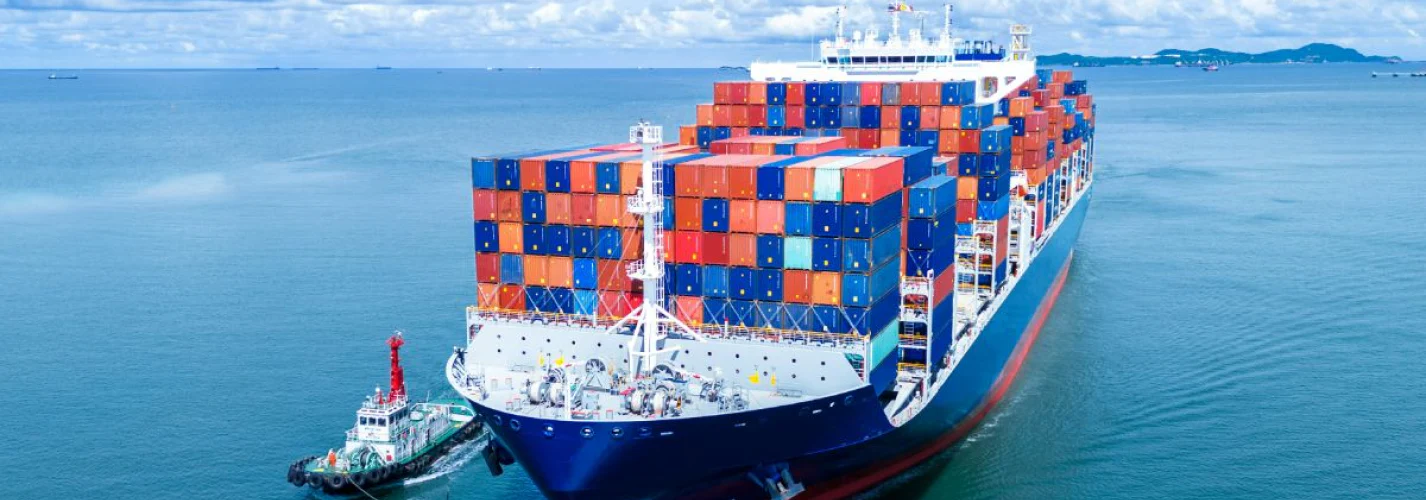

Cargo routes through the Middle East have been severely disrupted by the ongoing regional conflict, with roughly 130 Philippine container vessels now unable to pass through the Strait of Hormuz, according to testimony delivered to a Senate committee Wednesday.

Patrick Ronas, president of the Association of International Shipping Lines, appeared before the Senate Committee on Agriculture, Food, and Agrarian Reform to detail the compounding logistical problems facing Philippine-linked cargo operations in the region.
Because of war risks in and around the strait, Philippine export cargo that would normally pass through is being offloaded at Khor Fakkan in the United Arab Emirates — just short of the strait’s entry point.
“Once containers are dropped to the area, they will now have to be trucked to the destinations all over the Middle East,” Ronas said.
That workaround has left vessels effectively anchored in place. “Currently, there are about 130 container vessels that are actually trapped inside the strait. There have been a few ships that have been able to get out, but so far, there are hundreds of container vessels that are still inside the Strait of Hormuz,” he told the panel.

The bottleneck is forcing shipping companies to rethink their entire operations. “Basically, not only [is] fuel causing a lot of challenges for shipping lines or international shipping lines, but because of the vessels being trapped in the strait, a diversion of services is being done, reassessment of the network is also being done, as well as containers [are] being offloaded to other ports,” Ronas said.
Routes to Europe have been hit separately. All cargo movement in that direction has been redirected around the African continent via the Cape of Good Hope — a corridor that bypasses the strait entirely but adds significant travel time.
“Movement to Europe [has] now gone back to 100% moving through the Cape of Good Hope, which adds about 10 to 14 days transit time, which means vessels are taking a little bit longer before they get to their destination in Europe,” Ronas explained.
The Strait of Hormuz ordinarily serves as a direct corridor linking Asia, Africa, and Europe — making the current disruption a strain across multiple trade routes simultaneously.
