



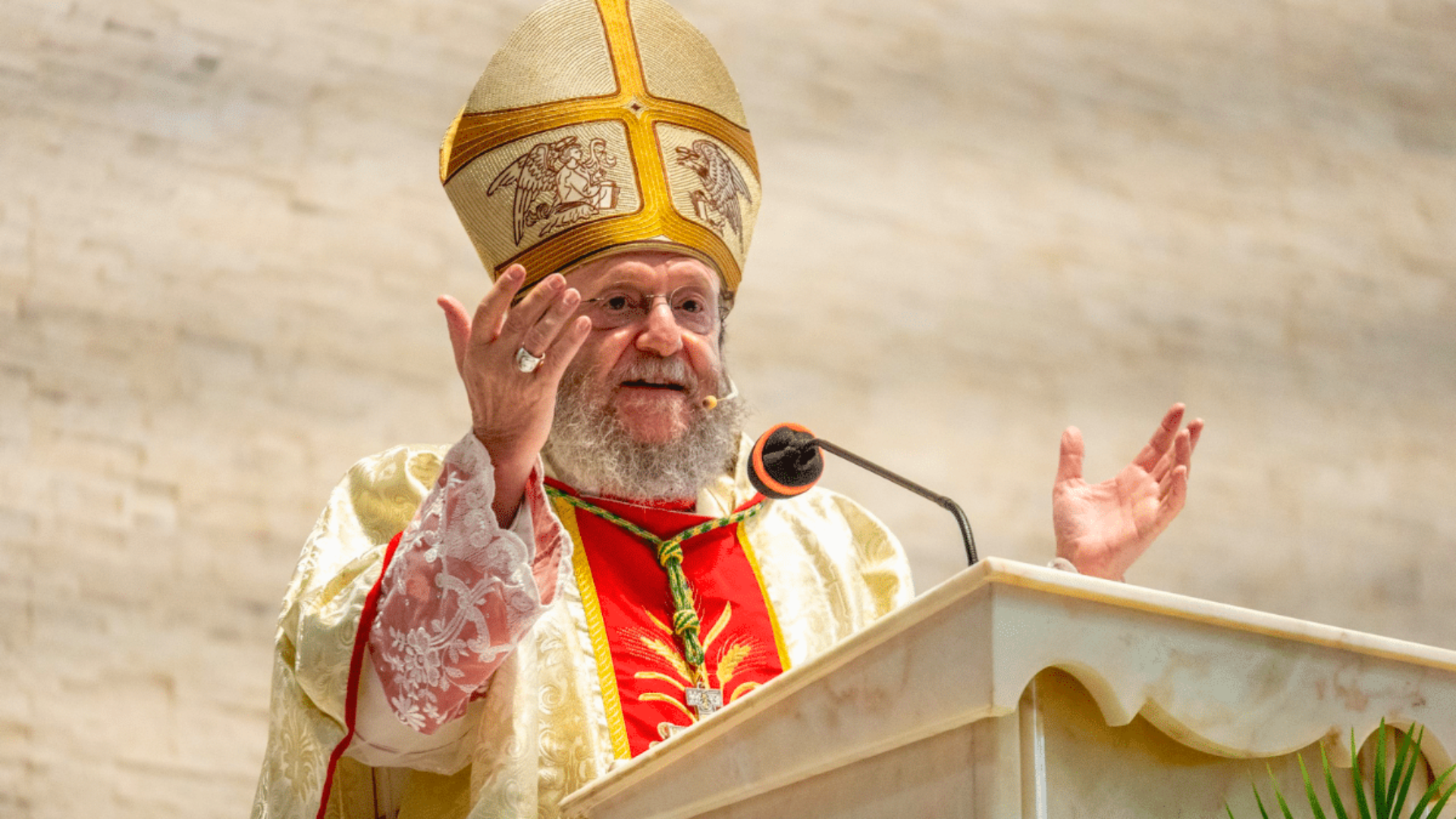

The head of the Catholic Church in the UAE has issued a pastoral letter to thousands of parishioners in Dubai after the emirate’s two Catholic churches were ordered shut during the holiest week of the Christian calendar, citing government safety directives linked to the ongoing regional conflict.

Bishop Paolo Martinelli, OFMCap, Apostolic Vicar of Southern Arabia — the church authority overseeing Catholic communities across the UAE, Oman, and Yemen — addressed the faithful of St. Mary’s Catholic Church in Oud Metha and St. Francis of Assisi Catholic Church in Jebel Ali in a letter dated April 3, 2026, from Abu Dhabi.
“Unfortunately, the current circumstances required the moving of the liturgies online and the closure of churches in Dubai and Jebel Ali,” Bishop Martinelli wrote, adding: “We sincerely hope to return to celebrating together with all of you in our churches soon.”
The closures, effective April 3, came on Good Friday — one of the most sacred days on the Catholic calendar — following a directive from Dubai’s Community Development Authority (CDA) ordering all houses of worship to move religious activities online until further notice. The move is directly tied to the ongoing effects of US and Israeli bombing of Iran, which has drawn Iranian retaliatory strikes — including missiles and drones — targeting Gulf states.
The bishop’s letter marked the first official statement from the Apostolic Vicariate of Southern Arabia on the closures. Earlier reports noted that the Apostolic Vicariate had not yet issued an official statement at the time the individual parishes announced their shutdowns.
The impact is significant. Masses at Dubai’s Catholic churches regularly attract thousands of worshippers over Easter and Christmas, with crowds outside the buildings listening to services through speakers.
The closures extended beyond Catholic churches — Dubai’s Hindu Temple and the Gurudwara Guru Nanak Darbar also shut for safety and security reasons, as per official instructions.

While St. Mary’s streamed its Good Friday services via YouTube, St. Francis of Assisi in Jebel Ali offered no livestream alternative, leaving some parishioners without any form of communal worship. Bishop Martinelli acknowledged the loss, writing: “It is certainly painful not to be able to take part in person in the beautiful and rich celebrations of the Holy Week.”
Still, he urged the faithful to find meaning in the disruption. “I invite you to offer the difficulties of these days in union with Christ so that this sacrifice may bear fruit for the good of the Church and for peace in the world,” he wrote.
The wartime context was never far from the surface. Earlier, at a Holy Thursday Mass at St. Joseph’s Cathedral in Abu Dhabi, Bishop Martinelli told his congregation that it was a special time “marked by the uncertainty of war,” saying: “We feel fear for the future, for our children and for our jobs. But today we are certain that we are not alone.”
In a separate Holy Week message, the bishop called on all Catholics in the region to live the difficulties of this time in union with Christ, “as a sign of our participation in His sufferings for the Redemption,” and expressed hope that Christ’s “victory over evil and death spread throughout the world to shun the noise of war and bring the joy of peace and reconciliation.”
Churches in other emirates remain open. The Apostolic Vicariate confirmed that no changes were reported to services in Sharjah and Ras Al Khaimah, and the Evangelical Church in Abu Dhabi held in-person services.
The bishop closed his letter with a prayer: “The Risen Christ, Prince of Peace, is our peace. We pray incessantly for an end to the war and for peace and reconciliation.”
The Apostolic Vicariate of Southern Arabia oversees the Catholic Church in the UAE, Oman, and Yemen, serving a community of over 850,000 faithful in the UAE and approximately 100,000 in Oman, almost all of whom are migrants.
