



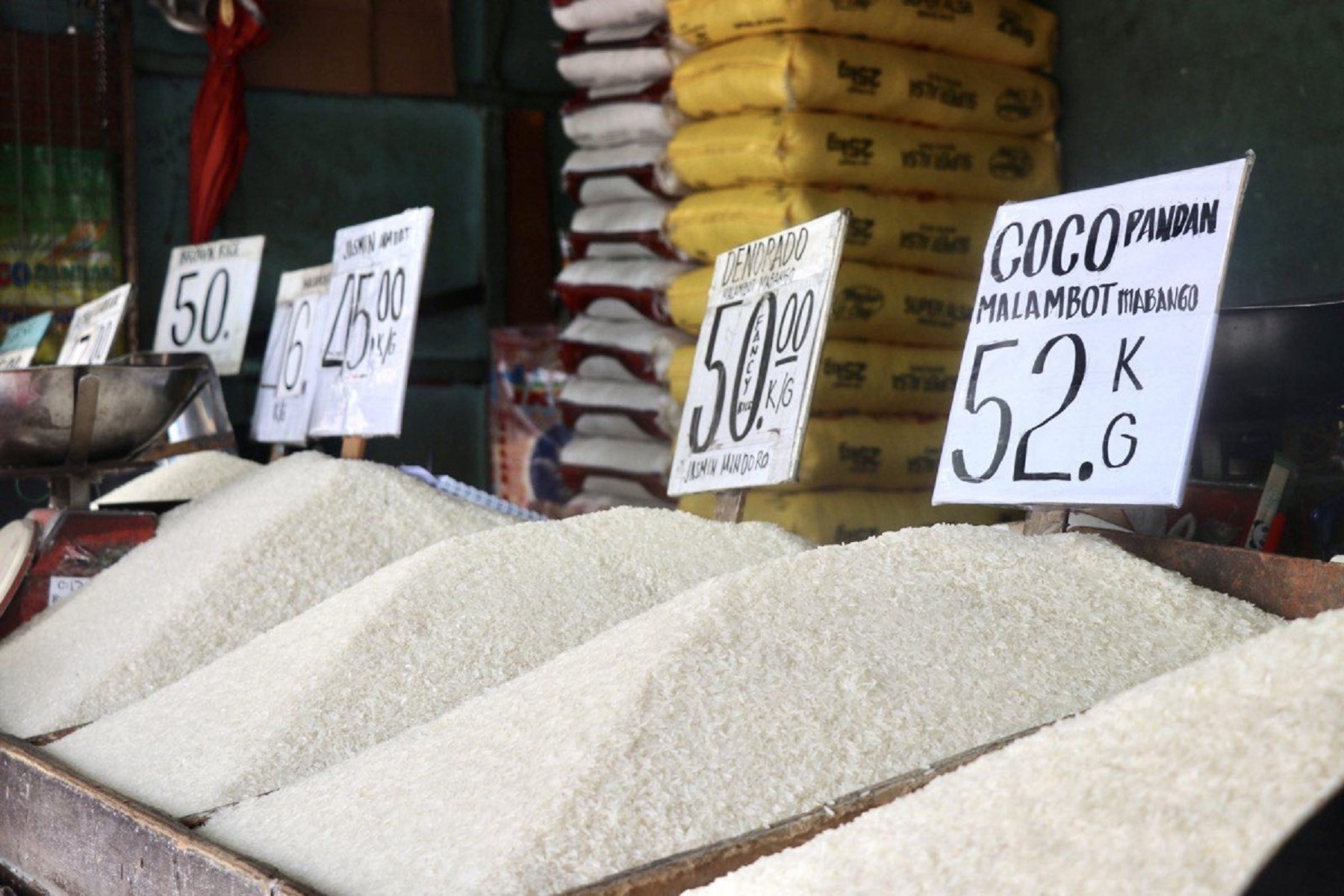

A price ceiling on imported rice and a wave of fuel and food subsidy measures form the centerpiece of the Philippine government’s response to surging global oil prices driven by tensions in the Middle East, President Ferdinand Marcos Jr. announced Tuesday.

The National Price Coordinating Council’s recommendation of a P50-per-kilo cap on imported well-milled rice has been accepted, with Marcos saying an executive order to enforce it would be issued promptly. “When the price of oil goes up, food prices are next. That’s something we don’t want to happen,” he said in a video message.
Palace press officer Claire Castro separately addressed questions about what happens after April 16, when manufacturer pledges to hold prices steady begin expiring. She declined to commit to further contingency measures, saying speculation about post-deadline price hikes was premature. “We don’t want to speculate that prices will increase [after April 16]. So for now, let’s focus on there being no price increase, and after a week, we can ask the Department of Trade and Industry [DTI] again for a more detailed program,” Castro said.
Those pledges, secured through Trade Secretary Cristina Roque, cover 21 manufacturers who agreed to freeze prices of goods including canned sardines, instant noodles, bread, bottled water, and coffee for between 30 and 60 days — through either April 16 or May 16.
On fuel supply, the Philippine National Oil Company-Exploration Corp. has procured 1.04 million barrels of diesel, with 142,000 barrels arriving this week and the balance expected in April. Marcos said the country’s fuel stockpile has been extended from 45 to 51 days.

To shield farmers and fisherfolk, over four million of them are set to receive P2,325 each this month under the Presidential Assistance to Farmers, Fisherfolk, and Families program. Around 40,000 farmers will also receive fuel subsidies, while nearly 100,000 fuel cards and vouchers are being distributed to fisherfolk.
The P20-per-kilo rice program has also been expanded — from 600 tons to 2,000 tons — now operating across 627 centers nationwide in response to increased demand, Marcos said.
On the power sector, the Energy Regulatory Commission suspended the Wholesale Electricity Spot Market effective March 26, a move Marcos said would prioritize cheaper renewable energy sources and give the government greater pricing oversight. “The optimal dispatch of cheaper energy sources, such as renewables, will now be implemented. The government will also have control over pricing in the WESM. The ERC is currently working on this,” he said.
Castro acknowledged the limits of government intervention given global market forces. “There are indeed times when we cannot prevent increases due to the ongoing conflict in the Middle East. But rest assured, all possible actions by government agencies will be taken to ensure that this does not become a heavy burden for our fellow Filipinos,” she said.
Among the longer-term supply developments cited by Marcos is the successful drilling of the Camago-3 well off Palawan, which can produce up to 60 million cubic feet of gas daily. Marcos noted the cost advantage of domestic Malampaya gas — priced at P4.80 per kilowatt hour — compared to imported LNG at P10.30, and said the well is expected to extend the life of the Malampaya field by roughly six years.
