



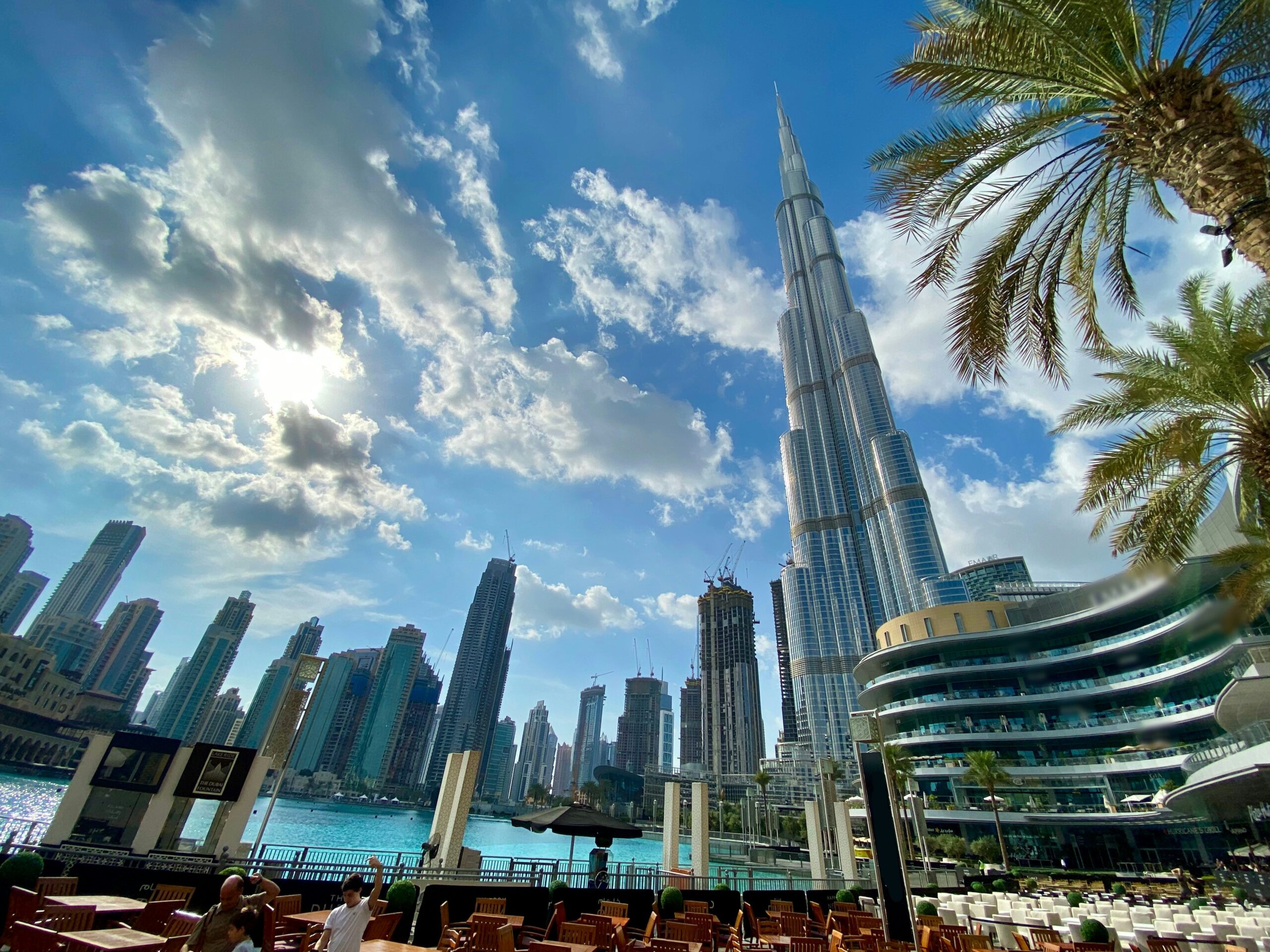

Fifty years ago, the skyline of Dubai was defined by the humble masts of dhows and the quiet determination of pearl divers. Today, that same horizon is a jagged, glittering testament to human ambition, dominated by the world’s tallest spires and a pulse that rivals New York or London. Often dubbed the “Hong Kong of the Middle East,” Dubai has evolved from a strategic desert gateway into a global laboratory for the future. As the city pivots from the era of oil to the era of the D33 economic agenda, it isn’t just building skyscrapers anymore — it is building a legacy of diversification that challenges every traditional boundary of commerce, tourism, and technology.

Hong Kong of the Gulf and the Middle East
Dubai has long been nicknamed the “Hong Kong of the Middle East” or the “Hong Kong of the Gulf.” This comparison stems from its status as a premier global entrepôt — a strategically neutral gateway that connects vast surrounding markets. Much like Hong Kong, Dubai’s story is one of rapid metamorphosis, evolving from a modest pearl-diving and fishing village into a futuristic global metropolis in just a few decades.
A vision beyond oil discovery
While the discovery of oil in 1966 catalyzed its early development, Dubai’s leaders — particularly the ruling Al Maktoum family — recognized the finite nature of such resources. They made the bold decision to diversify early, investing oil wealth into world-class infrastructure such as Port Rashid and Dubai International Airport. Today, oil contributes roughly 1% of Dubai’s GDP, with the economy now driven by tourism, aviation, financial services, and real estate.
Global trading and financial hub
The city mirrors Hong Kong’s economic model through its extensive free trade zones, such as the Jebel Ali Free Zone, which offer tax incentives and full foreign ownership to attract multinational corporations. Its Dubai International Financial Centre (DIFC) operates under an independent legal framework based on English common law, making it a stable bridge between major financial hubs in Europe and East Asia.
The world’s “Disney World for adults”
In the Middle East and Gulf region, Dubai is synonymous with superlatives and luxury. It is known for its record-breaking skyline, headlined by the Burj Khalifa — the world’s tallest building — and massive engineering marvels such as the Palm Jumeirah artificial islands. This “glitz and glam” has made it the most visited city in the Middle East, offering everything from indoor skiing to world-renowned shopping festivals.
A cultural melting pot
Despite its ultra-modern façade, the city retains its old soul through traditional souks (markets) for gold and spices, and historic districts like Al Fahidi. It is one of the most multicultural cities in the world, with a population comprising over 200 nationalities, where expatriates vastly outnumber the native Emirati population.
Dubai’s evolution is a masterclass in strategic reinvention, transitioning from a desert outpost to a global icon. As of March 2026, the city continues to redefine its identity through a blend of heritage preservation and boundary-pushing initiatives.
Historical foundations: the old soul
Long before the skyscrapers, Dubai was a pivotal maritime hub. Its history is anchored by the Dubai Creek, which served as the lifeblood for pearl diving and trade.
Al Fahidi Fort (1787): Recognized as the oldest existing building in Dubai, this coral and mud-brick fortress served as a royal residence, a defensive stronghold, and a prison before becoming the Dubai Museum in 1971.
Traditional ingenuity: The historic Al Fahidi neighborhood (Al Bastakiya) is famous for its barjeels (wind towers). These ancient architectural features acted as a natural air-conditioning system, funneling cool breezes into homes during the scorching Gulf summers.

The Al Maktoum legacy: The formal founding of modern Dubai dates to 1833, when the Al Maktoum family established a fishing settlement at the Creek. Their long-standing, business-savvy approach paved the way for the city’s transition into a re-export hub connecting India and Persia in the early 20th century.
Future projects: the 2030 and 2040 vision
Dubai’s next chapter focuses on sustainability, advanced technology, and urban livability — rather than sheer vertical height.
Dubai Creek Tower (2026 restart): Following a strategic redesign, Emaar launched the main construction tender in early 2026. The new vision shifts away from “world’s tallest” toward a “modern minaret” concept, focused on architectural beauty and cultural integration.
Al Maktoum International Airport: Planned to be five times the size of the current Dubai International Airport, this “city within a city” aims to become the world’s largest travel hub, featuring queue-free designs and integrated monorail systems.
2040 Urban Master Plan: This roadmap aims to double Dubai’s green and recreational spaces. Key initiatives include the Dubai Autonomous Transportation Strategy, which targets 25% of all journeys to be made by autonomous vehicles by 2030.
Current economic reputation: the “safe haven” hub
In the current 2026 landscape, Dubai is recognized across the Middle East as the ultimate diversified economy, with oil now accounting for less than 2% of GDP.
Regional benchmark: Across the Gulf, Dubai is the gold standard for ease of doing business, offering 100% foreign ownership and long-term Golden Visas that attract global talent and entrepreneurs.
The financial bridge: Through the DIFC, Dubai remains the region’s primary conduit for capital flows between Europe and Asia.
Brand “safe haven”: Despite regional geopolitical shifts, Dubai has cemented its reputation as a safe-haven destination for investment, tourism, and luxury real estate. Its non-oil GDP — powered by logistics, aviation, and digital services — accounts for approximately 75% of the UAE’s total economic activity.
A closing message from the author
“As an observer of Dubai’s meteoric rise, it is clear that the city’s true wealth lies not in its offshore oil or its gold-plated souks, but in its relentless refusal to stand still. While many global hubs rest on their laurels, Dubai operates with the urgency of a startup and the vision of a dynasty — proving that ‘impossible’ is merely a dare. To look at Dubai in 2026 is to see a mirror of our collective potential: a reminder that with enough grit and a clear roadmap, even the most barren sands can bloom into a global sanctuary of innovation. The story of Dubai isn’t just a Middle Eastern success story; it is a blueprint for any nation daring enough to imagine a better tomorrow.”
