



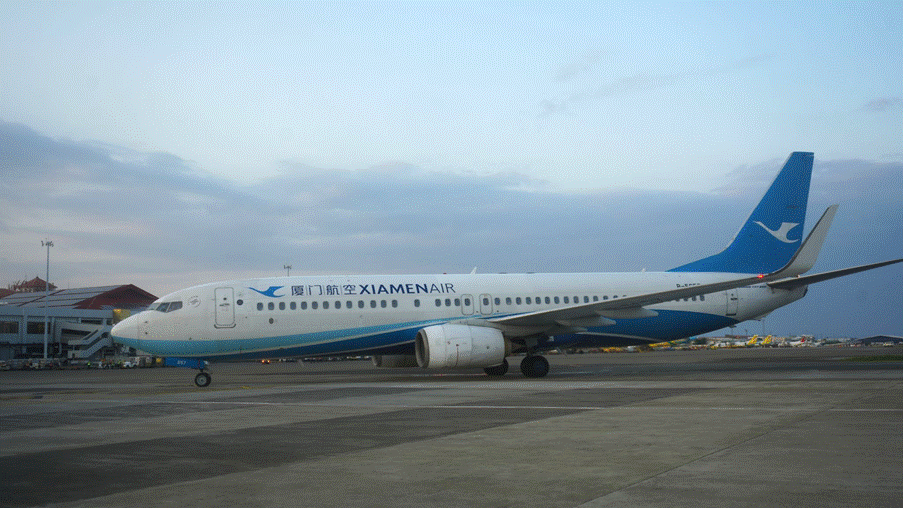

A twice-weekly air service connecting Mactan-Cebu International Airport to Quanzhou in China’s Fujian Province has resumed operations, with Xiamen Air completing its inaugural flight on the route on March 29, 2026.

The Boeing 737-800 service, scheduled every Tuesday and Saturday, covers the roughly three-hour journey between the two cities. Quanzhou is a significant industrial center known for footwear, textiles, and stone products, while Cebu anchors the Visayas region as a commercial and export hub — a pairing that airport officials say holds practical value beyond leisure travel.
Cebu Provincial Governor Pamela S. Baricuatro, whose office pushed for the route’s revival after a diplomatic visit to Fujian in February, framed the development in terms of longstanding ties. “Today, that same spirit takes flight, bringing with it the new possibilities for tourism, trade, and people-to-people connection,” she said. “Cebu has always been a gateway. We are open, dynamic, and forward-looking. With this renewed route, we continue that legacy in opening doors wider to the world, and strengthening our ties with our friends from Quanzhou and across China.”

The timing coincides with a recently enacted 14-day visa-free entry arrangement for eligible Chinese visitors, a policy shift that airport and government officials have been keen to capitalize on. Julius G. Neri, Jr., General Manager and CEO of the Mactan-Cebu International Airport Authority, pointed to the entry policy as a factor in driving renewed passenger interest. “With the recent easing of visa requirements, we are thrilled to welcome a new wave of travelers and provide them with a seamless, world-class transit experience with our signature Cebuano warmth,” he said. “We will continue working closely with our private partners to ensure that Cebu remains an accessible, top-of-mind destination for international travelers.”
For Aboitiz InfraCapital Cebu Airport Corporation CEO Athanasios Titonis, the Quanzhou route fits into a broader strategic ambition for the airport. “We want to be more than just an entry point; we want to be the transit and transfer hub to the Philippine islands,” he said. “By bridging Central Visayas directly with Fujian, we are opening up immense opportunities for local tourism operators, exporters, and businesses.”
On the commercial side, the direct connection is expected to cut transit times for supply-chain visits and corporate travel between the two provinces, removing the need for connecting flights that previously added hours to the journey.
