



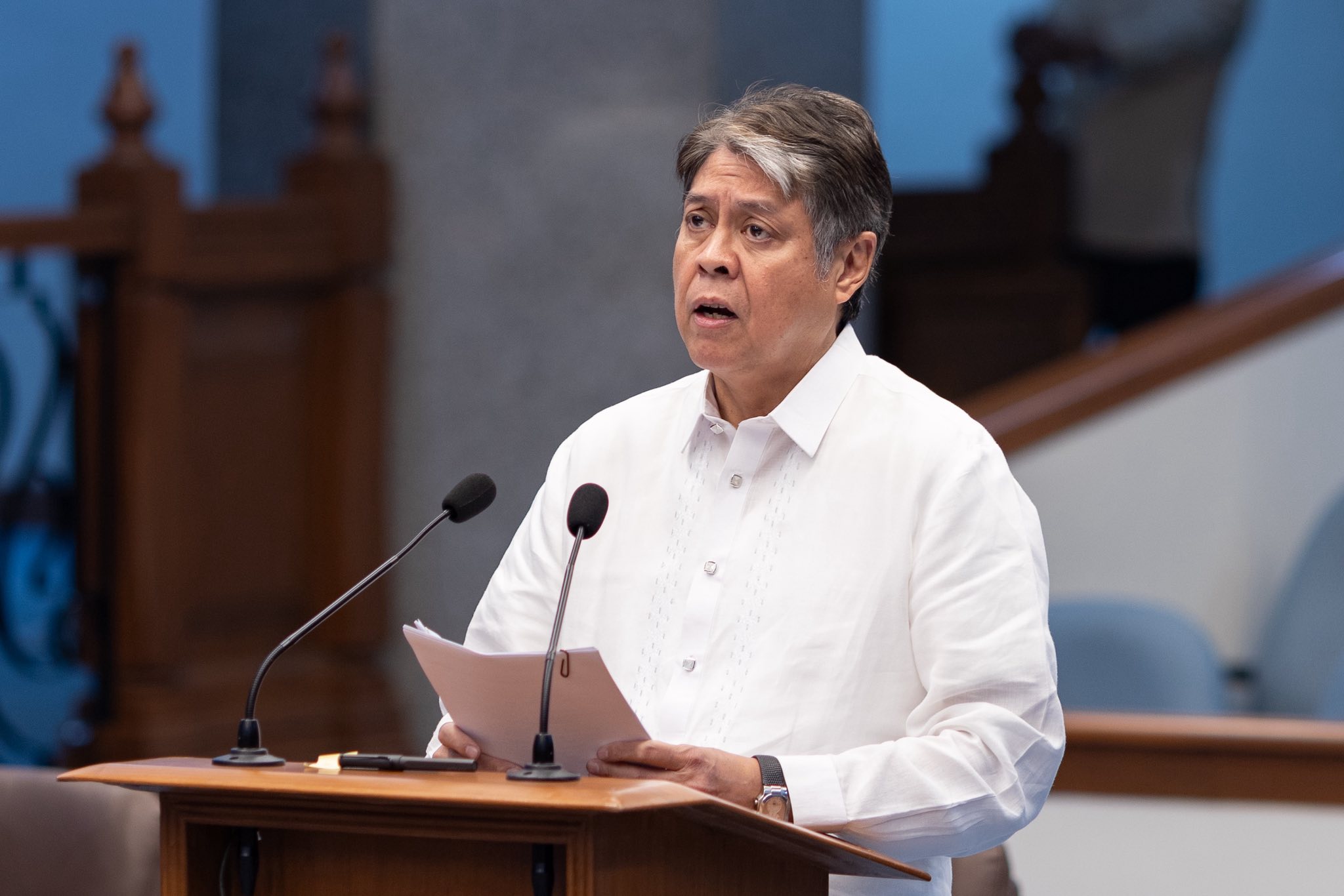

Two pending Senate measures that would reshape how agricultural and fisheries extension services are delivered across the country were at the center of Senator Francis Pangilinan’s remarks at a university anniversary event in Pampanga on Thursday.

Pangilinan, who chairs the Senate Committee on Agriculture, Food and Agrarian Reform, told students and graduates at the 140th founding anniversary of Pampanga State Agricultural University that his proposed Agricultural and Fisheries Cooperatives Act and Agriculture and Fisheries Extension Act were designed to open up employment pathways in local governments, national agencies, and the private sector — while putting in place stronger institutional support for farmers and fisherfolk.
The senator pointed to what he described as a persistent gap between the Philippines’ potential and its actual agricultural performance. Despite being home to institutions that train agriculture experts from across the region — including the University of the Philippines Los Baños and the International Rice Research Institute — the country has fallen behind its neighbors in agricultural development, he said, calling for sharper investment in education, research, and extension work.

At a separate dialogue with farmers in San Simon, Pangilinan laid out plans to renationalize the extension system and restore a dedicated bureau under the Department of Agriculture, a move intended to push technical assistance down to the municipal level where farmers can directly access modern practices and productivity support.
He also pointed to the Sagip Saka Act — a law he authored that allows government agencies and local government units to purchase food directly from farmers and fisherfolk without going through public bidding — as a model for the kind of market stability his proposed legislation seeks to build on. Farmers in the area have already entered supply agreements with institutions such as the Bureau of Jail Management and Penology under that framework.
Pangilinan cited Executive Order 100, which sets a minimum floor price for palay, and EO 101 as recent policy wins, and called for broader support including expanded credit access and infrastructure investment to back up legislative efforts with on-the-ground resources.
