



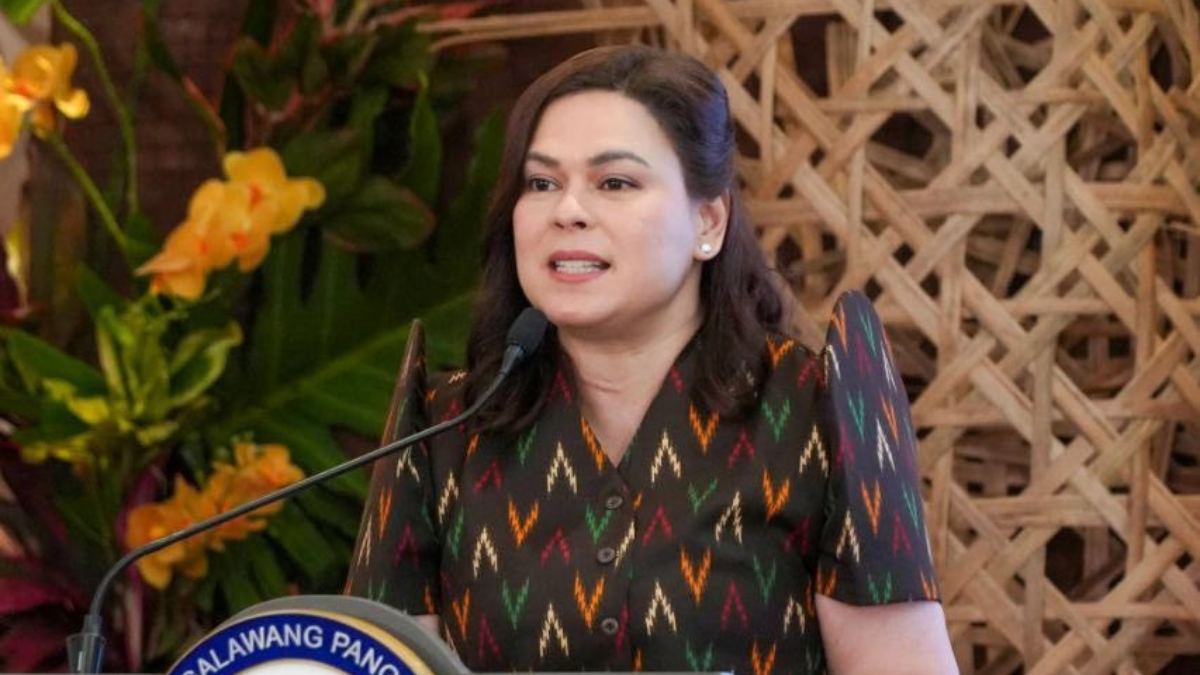

The legal team of Vice President Sara Duterte is pushing back against characterizations that its formal response to the House Committee on Justice amounted to a non-answer, saying the panel failed to engage with what it considers the core legal weaknesses in the impeachment complaints filed against her.

Lawyer Michael Wesley Poa, the team’s spokesman, said the complaints lack the specific factual allegations required under Philippine law — particularly on the charge of plunder, which requires showing that a public official actually amassed or accumulated ill-gotten wealth through a series or combination of overt acts.
“Given that our Vice President is a public official, where is the allegation that she was able to amass and accumulate? All that they said there, at least in our opinion, is a conclusion of law, or at least speculations or self-serving conjectures,” Poa said in a television interview.
He raised similar objections to how the complaints handled Duterte’s statement of assets, liabilities and net worth, arguing that pointing to increases in the SALN does not, by itself, establish criminal liability.
“When you show the SALN, then you suddenly conclude that there is ill-gotten wealth because there is an increase in the SALN, to us that is again another conclusion of law,” Poa said, describing this as one example of what the defense considers a fundamental defect in the charges.

The complaints also failed to identify what Poa called “actionable documents” — instruments such as contracts in which Duterte directly participated — which he said would be necessary to sustain certain allegations.
“They have to be material averments or allegations, which we feel they weren’t, and secondly, if there are actionable documents, actionable documents are like contracts, for example, where the vice president participated in a contract. There is nothing like that,” he said.
The committee, chaired by Batangas Rep. Gerville Luistro, earlier declared the two impeachment complaints sufficient in grounds, clearing the path for hearings during the session break.
Should the committee refuse to address the defense’s objections, Poa said elevating the matter to the Supreme Court remains on the table. “We will see if the committee violated our rights. We want to first raise our objections at the committee, that we oppose and we disagree, but if we are not heard there, then maybe that would be the appropriate time [to go to the Supreme Court],” he said.
