



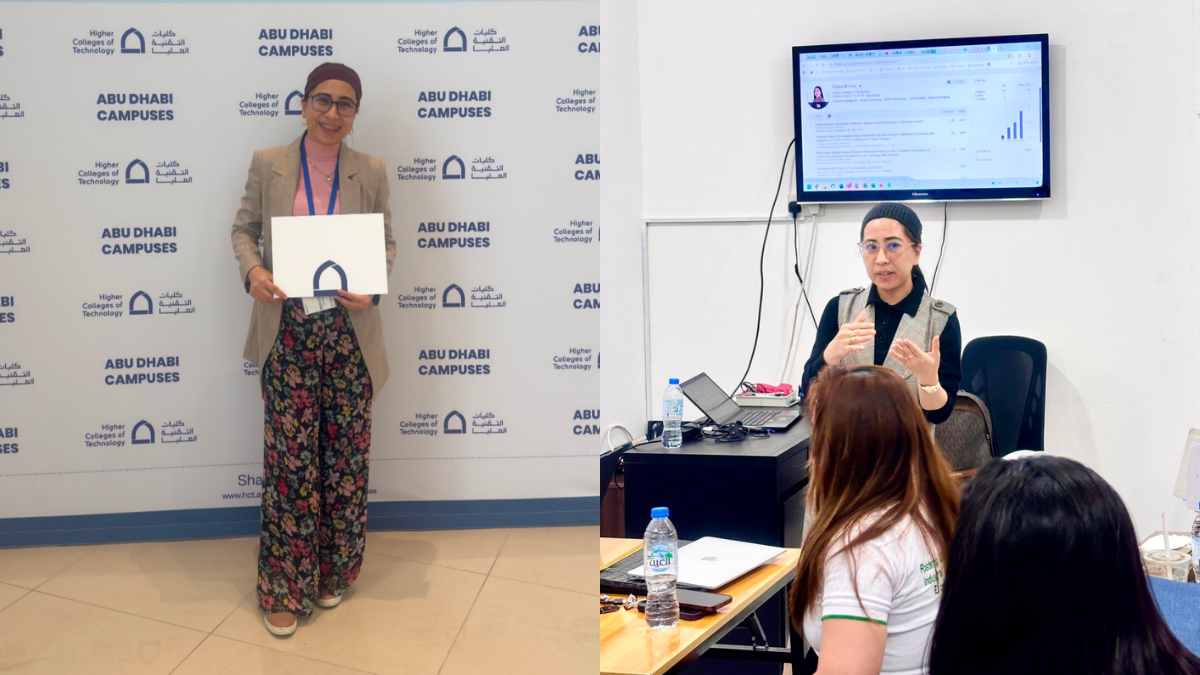

There are people who stumble into their life’s work, and there are people who build it, brick by brick, across two countries and nearly a decade away from home. Dr. Raiza Dimapilis is the latter kind.

At 40, she holds a PhD in Information Technology, teaches computing and AI at one of the UAE’s most prominent higher education institutions, and runs a volunteer initiative she built from scratch to bring artificial intelligence literacy to Filipino workers in the Gulf. None of it happened by accident.
From the Philippines to Bahrain to Abu Dhabi
Before the UAE, there was Bahrain. Dimapilis spent four years there as an educator and IT professional — her first real test of working in a multicultural environment far from the familiar rhythms of home. “This experience played a significant role in shaping my global perspective in education and research,” she says.
That stint was formative. It sharpened her instincts as a teacher, expanded her tolerance for uncertainty, and proved she could hold her own in rooms where she was often the only Filipino. By the time she made the move to Abu Dhabi, she arrived not as someone finding her footing, but as someone with a plan.
Today she is a Lecturer in the Division of Computer Information Science at the Higher Colleges of Technology, where her work spans teaching, research, and institutional engagement. She advises the school’s IT Club, supervises student research projects, and contributes to technology-driven academic initiatives. Her research interests — artificial intelligence, computer vision, cybersecurity, and the Internet of Things — track some of the most consequential frontiers in modern technology.
The part of the job that keeps her going
Ask Dimapilis what she values most about her work, and she doesn’t point to the research or the titles. She points to her students.
“Seeing them grow in confidence and apply their knowledge to real-world challenges is incredibly fulfilling,” she says. It is a sentiment that could sound rehearsed coming from anyone else, but from someone who has spent the better part of eight years building toward this particular kind of influence, it rings true.
She came to this field with conviction. “I believe technology — especially artificial intelligence — has the power to transform lives and industries,” she says. “Being part of that transformation, and helping others understand and use these technologies, gives my work a strong sense of purpose.”
Building something beyond the classroom
Perhaps the clearest expression of that purpose is Project PINAI — Personal Intelligence for Filipinos in AI — a volunteer-led initiative Dimapilis founded to give OFWs in the UAE foundational knowledge and practical skills in artificial intelligence. Developed in collaboration with the PIIE–UAE Chapter and inspired by fellow educator Dr. Rossian V. Perea, the project focuses on AI awareness, responsible technology use, and digital empowerment for the Filipino community.

She also serves as Education Lead for Women in AI Philippines, where she advocates for broader access to tech careers for women.
Both roles extend well beyond what her day job requires. They speak to someone who sees her position abroad not just as a career opportunity, but as a platform. “Working abroad allows me to represent Filipino talent on a global stage,” she says, “and contribute to the growing presence of Filipinos in the fields of science and technology.”
The personal rewards have been real, too. Eight years of discipline and long-term thinking have translated into financial stability — including the acquisition of two private properties — achievements she frames plainly as the result of hard work and deliberate planning.
What she wants other Filipinos to hear
Dimapilis does not romanticize the OFW experience. She acknowledges the weight of being away from family, the friction of cultural adjustment, the pressure of new professional expectations. But she is equally clear that those difficulties shaped her.
Her advice to fellow Filipinos abroad is direct: “Always remember your purpose and stay committed to your goals. Continue learning and upgrading your skills, especially in today’s fast-changing digital landscape.”
She adds something that feels central to how she operates: “Let go of negativity and focus on continuous self-improvement.”
For Dimapilis, the work — in the classroom, in the community, in the quiet hours building something for the next Filipino who needs it — is still very much ongoing.
Filipinos interested in free AI training can connect with Project PINAI on Facebook.
