





When emergencies strike — whether armed conflict, natural disasters, or public health crises — Filipino workers in the Middle East have a structured pathway to seek government assistance and, if necessary, return home safely.

Multiple agencies share responsibility for the response. The Overseas Workers Welfare Administration (OWWA), the Department of Migrant Workers (DMW), and Philippine embassies in the region all play roles in coordinating relief and repatriation.
Starting the process
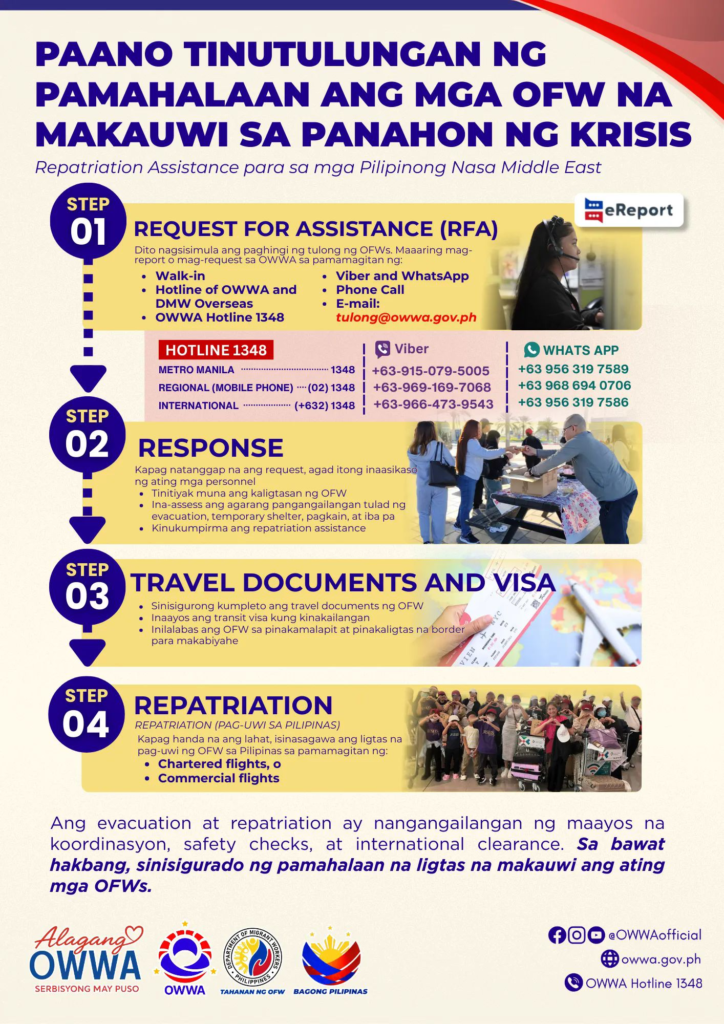
Workers who need help should contact OWWA as early as possible. The agency accepts requests through several channels: its hotline (1348), official email, and messaging apps including Viber and WhatsApp. OFWs who are near a Philippine embassy or labour office may also walk in directly to file a request.
Through these channels, workers can report safety concerns, emergencies, or situations requiring urgent intervention.
What happens after a request is filed
Once a request comes in, OWWA welfare officers and rapid response teams evaluate the case to determine how quickly and what kind of help is needed. This includes assessing whether the worker requires evacuation, temporary accommodation, food, or other support before any travel can be arranged.
Repatriation — the formal return of a worker to the Philippines — is considered only after this assessment confirms it is necessary.

Document verification and clearances
A critical step before any movement can happen is confirming that the worker’s passport and visa are in order. If exit permits or transit visas are required, Philippine officials will coordinate with the host country’s authorities and relevant agencies along the travel route to obtain the necessary approvals.
This stage can take time, and the government has been explicit about why.
“From monitoring the situation, processing of travel documents such as exit visas and transit clearances, up until arranging of plane tickets and ensuring the safe return (of Filipinos) to the Philippines. This is not a simple process but with every step, we have one goal and that is to safely bring back our OFWs home,” OWWA said.
Getting home
Once documents are cleared, workers are transported to the nearest secure border crossing or departure point. Flights home — whether chartered or commercial — are arranged depending on the scale and nature of the crisis.
OWWA has described the overall effort as one requiring careful international coordination at every stage, from the initial welfare check to the moment a worker lands in the Philippines.
