



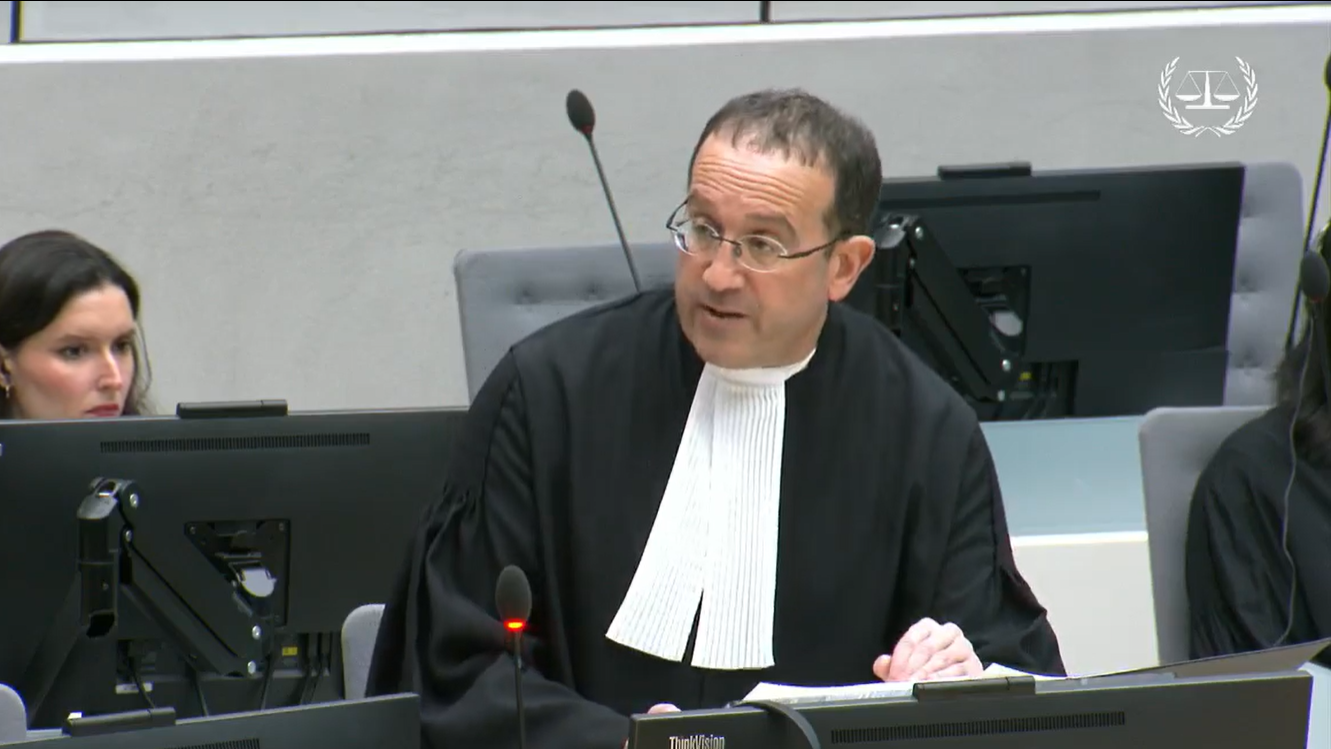

The lawyer representing former president Rodrigo Duterte at the International Criminal Court (ICC) used the ongoing confirmation of charges hearings to shift attention to alleged killings that occurred after Duterte left office, asking whether the current administration has faced similar scrutiny.

During the defense’s presentation before the ICC, Nicholas Kaufman raised the issue of deaths recorded under President Ferdinand Marcos Jr., arguing that incidents attributed to state forces and vigilantes did not stop with Duterte’s exit from Malacañang.
“There is no reason to believe that Duterte’s disappearance from the political scene would have frustrated the ongoing incidents of murder at the hands of state agents or vigilantes,” Kaufman said in court.
He then posed a pointed question to those participating in the proceedings. “Clearly, I’m forced to ask myself whether anyone on the other side of this room has thought of investigating the Marcos regime and the related phenomenon and holding someone accountable,” he added.
To support his claim, Kaufman cited findings from the University of the Philippines’ Dahas Project. According to the report he referenced, 342 killings were documented during the first year of the Marcos administration, with 160 allegedly carried out by state agents. He also noted that the number of cases rose to 362 between July 2023 and June 2024, and that state actors were linked to 34% of the recorded deaths.
Kaufman further questioned why lawyers representing victims of the anti-drug campaign were not publicly pressing for accountability over more recent killings. “Or is it of no consequence now that Mr. Duterte is sitting in the ICC detention center?” he asked.

GMA News Online said it has sought comment from Malacañang regarding the statements made by Duterte’s counsel and would publish any response once available.
Duterte is facing three counts of crimes against humanity before the ICC’s Office of the Prosecutor, which accuses him of murder and attempted murder in connection with operations conducted during his tenure as Davao City mayor and later as president.
Prosecutors have previously outlined what they described as a coordinated strategy targeting suspected drug offenders. In earlier sessions, they identified alleged co-perpetrators and detailed their supposed roles in what was characterized as a “common plan.” The charges were formally read from the Document Containing the Charges, which had been made public.
This week, the prosecution also cited specific incidents, including the deaths of former Albuera, Leyte mayor Rolando Espinosa, Ozamiz City mayor Reynaldo Parojinog, and teenager Kian Delos Santos. They presented portions of Duterte’s speeches and his so-called “narco-list,” arguing that these statements and materials demonstrated intent to support law enforcement officers involved in anti-drug operations.
Kaufman has maintained that the case against his client lacks substance, previously describing the evidence as “wholly insufficient” and expressing hope that the Pre-Trial Chamber I would throw out the charges and return to the Filipino people “their Tatay Digong.”
