



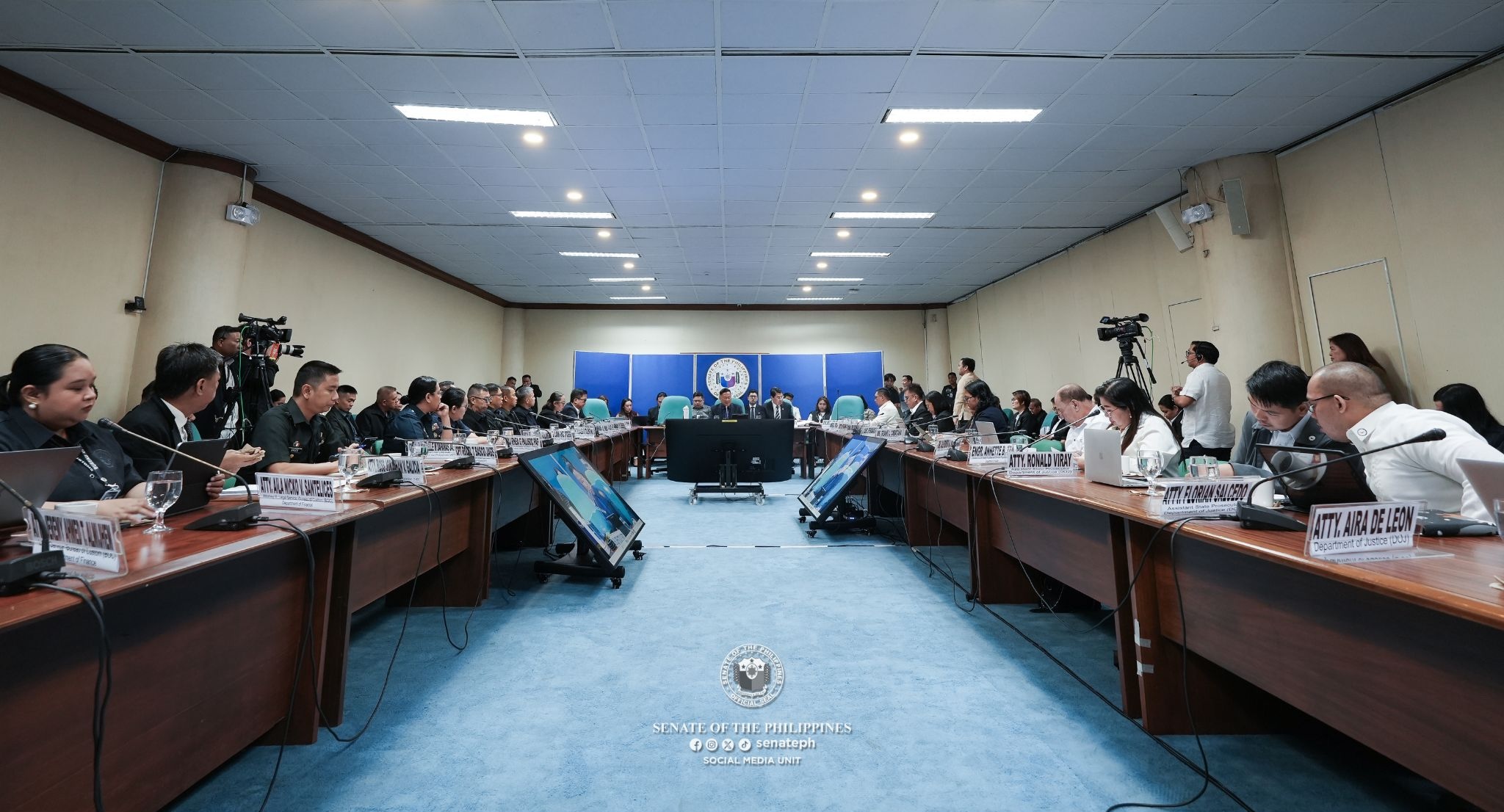

A proposed measure restricting political dynasties moved a step closer to floor deliberations after securing the support of 12 senators, surpassing the number of signatures required to elevate a committee report to the plenary.

The report, prepared by the Senate committee on electoral reforms and people’s participation, seeks to prohibit political dynasties up to the second degree of consanguinity and affinity. Only nine senators’ signatures were needed to transmit the document for debate.
Those who signed were Senators Risa Hontiveros, Erwin Tulfo, JV Ejercito, Francis Pangilinan, Panfilo Lacson, Loren Legarda, Sherwin Gatchalian, Robin Padilla, Imee Marcos, Juan Miguel Zubiri, Bam Aquino, and Lito Lapid.
Hontiveros, who chairs the panel, outlined key components of the proposal, including its definition of a political dynasty. The restriction would apply to relatives within the second degree, covering parents, children, siblings, and spouses.
“There are some studies, or at least one study, which said that even if the first antidynasty bill only covers up to the second degree, it could already affect around 30 percent of political dynasties on the ground,” she said.
Another major feature of the report is the target implementation period. Lawmakers are eyeing enforcement beginning in 2028.

“This will be implemented beginning in the next election. If that happens, it will shake things up at the local level,” Hontiveros said.
The proposal draws distinctions between national and local posts. National offices would be assessed separately from local positions, and holding a national post would not automatically bar a relative from seeking a local seat, or vice versa. However, party-list representation would be restricted if a related individual already occupies a national or local elective office.
“Party list representation is prohibited if a dynasty member already holds a national or local position. Both simultaneous and successive holding of positions are prohibited. There are penalties and mechanisms being provided to the Commission on Elections to enforce this prohibition,” Hontiveros said.
The report details several scenarios that would constitute a political dynasty under the bill. These include relatives serving at the same time in national elective posts, or concurrently occupying local positions within the same legislative district, province, city, or municipality. The restriction would also apply when relatives hold office in different municipalities or cities within the same province, or in separate legislative districts within one local government unit.
It further covers cases involving simultaneous service within and across party-list groups, as well as situations where a relative of an incumbent immediately assumes the latter’s post.
Under the measure, any form of succession or appointment to an elective position—whether temporary or permanent—would be treated as holding elective office for purposes of determining a dynasty relationship.
