



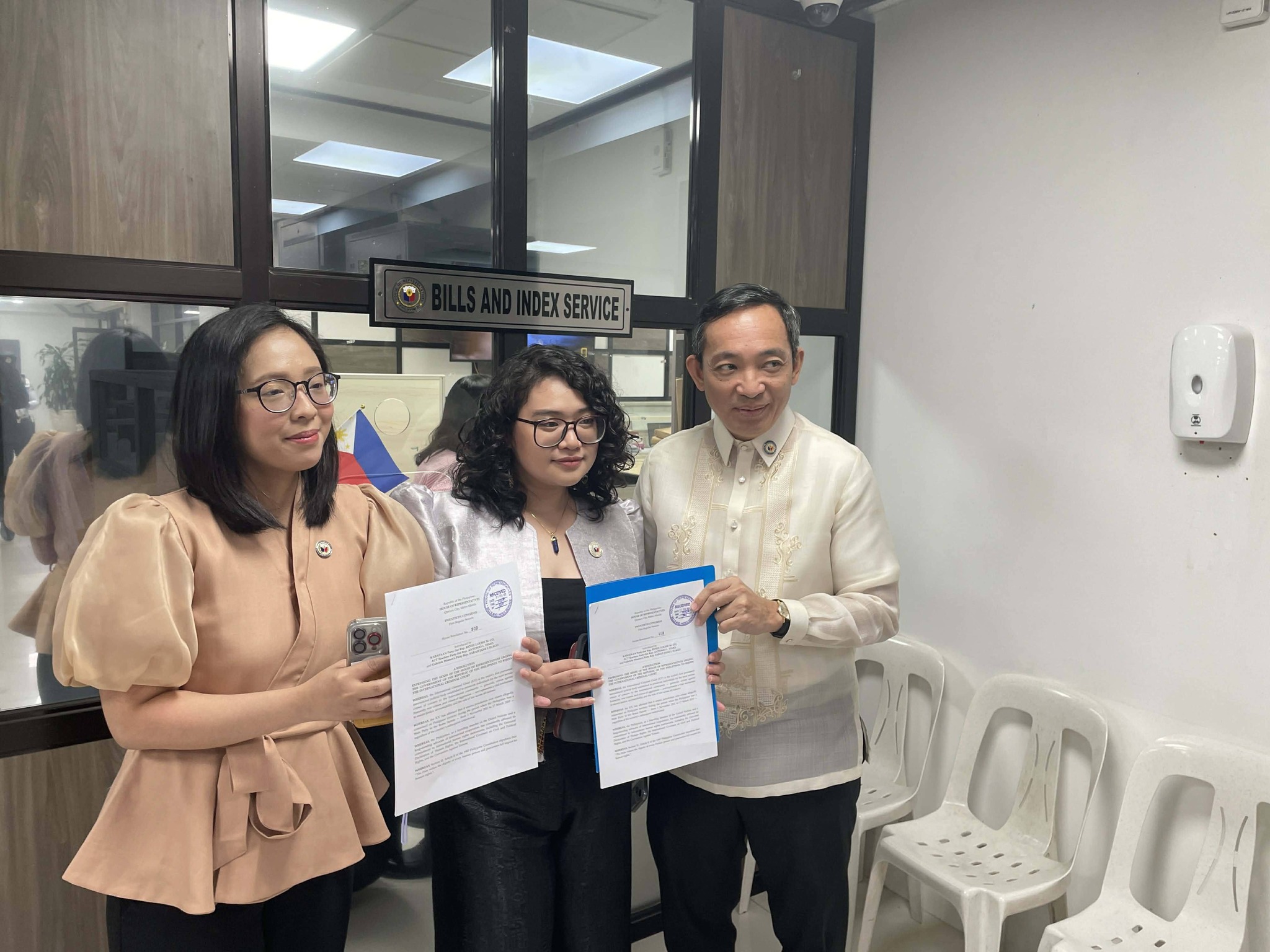

A group of progressive lawmakers has formally asked the House of Representatives to support the Philippines’ reentry into the International Criminal Court, framing the move as a step toward restoring international trust and upholding human rights commitments.

ACT Teachers party-list Rep. Antonio Tinio, Gabriela party-list Rep. Sarah Elago, and Kabataan party-list Rep. Renee Co filed House Resolution No. 809, which calls on the government to rejoin the ICC and once again become a party to the Rome Statute. If adopted, the measure would express the chamber’s position urging the executive branch to take the necessary steps toward renewed membership.
In their proposal, the lawmakers said returning to the ICC would signal the country’s adherence to global standards on accountability. They described reentry as a way to send a “clear and strong message that the Philippines honors its international obligations, respects the sanctity of life, and is committed to breaking the cycle of impunity and state violence.”
The resolution also argues that renewed participation would enhance the country’s standing abroad. “Reengagement with the ICC would strengthen the country’s global reputation as a rights-respecting democracy, restore international confidence in the Philippines’ legal system and bolster partnerships rooted in justice, good governance, and the rule of law,” the Makabayan bloc said in HR No. 809.
It further asserted the institutional responsibility of Congress in matters of justice and accountability. “The House of Representatives, as the duly elected, constitutional voice of the Filipino people, is duty-bound to champion justice, truth, and transparency, and to advance the national interest by aligning the country with international norms of human rights protection,” it added.
The Philippines had been among the original states that adopted the Rome Statute in July 2002, becoming part of the treaty that established the ICC. That status changed in 2018, when then-President Rodrigo Duterte announced the country’s withdrawal. The exit took effect a year later.

Duterte justified the move by citing what he described as unfair actions directed at him and his administration. He pointed to the “baseless, unprecedented, and outrageous attacks on my person as against my administration, engineered by the officials of the United Nations, as well as the attempt by the [ICC] special prosecutor to place my person within the jurisdiction of the [ICC].”
Prior to the withdrawal, complaints had been filed before the tribunal accusing Duterte of crimes against humanity linked to his administration’s anti-drug operations. Although the Philippines left the ICC, the court maintained authority over alleged offenses committed while the country was still a member.
The Makabayan bloc underscored that legal obligations remain in force for acts that occurred during membership. “In March 2018, the Philippines, under the administration of then-President Rodrigo Roa Duterte, unilaterally withdrew from the Rome Statute, a move that was widely criticized by local and international human rights advocates as a retreat from accountability and transparency,” it said.
“Despite its withdrawal, the Philippines remains obligated under Article 127 of the Rome Statute, to cooperate with the ICC in connection with investigations and proceedings concerning acts committed while it was a State Party, and such withdrawal does not terminate any obligations incurred during the period of membership,” the bloc added.
Calls for renewed membership have surfaced before. In October 2025, Mamamayang Liberal party-list Rep. Leila de Lima urged the Senate to consider proposals aimed at rejoining the ICC instead of passing a measure that sought the interim release of Duterte from ICC detention. Referring to the adoption of Senate Resolution No. 144, she said, “They should have discussed and voted on proposals to bring back the Philippines as an ICC member. But we are still backwards.”
Outside Congress, progressive coalition Bagong Alyansang Makabayan criticized the Senate move, calling it a mere “display of political opportunism.”
