



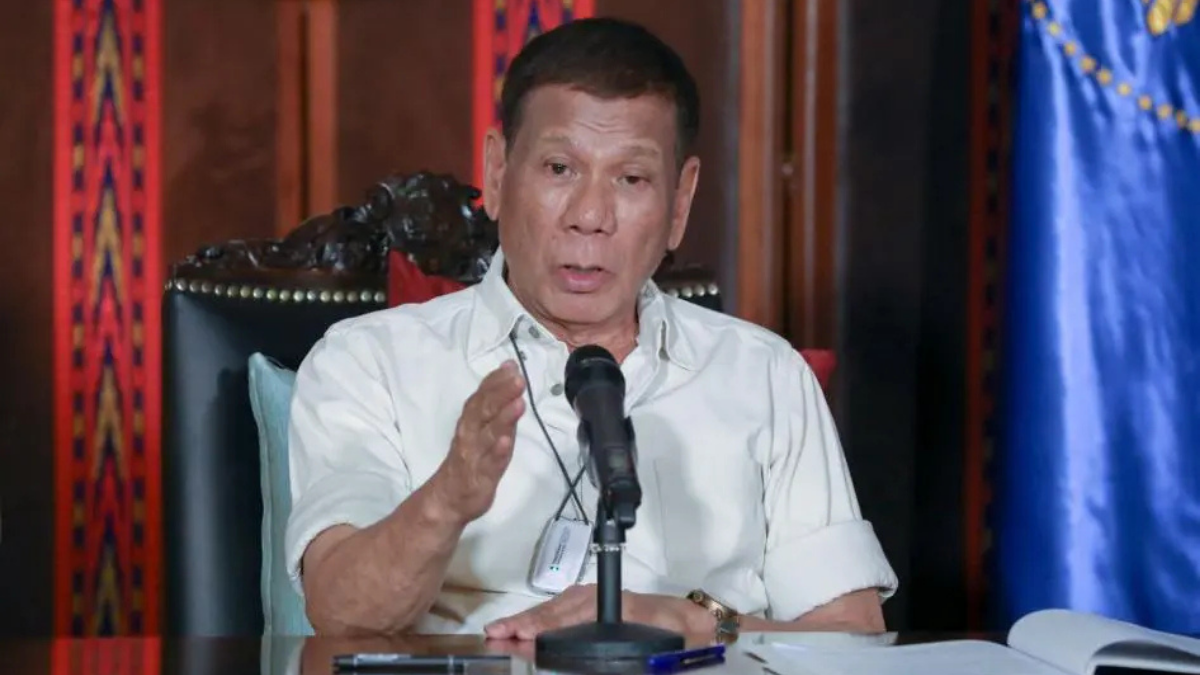

Proceedings at the International Criminal Court in The Hague have entered a critical phase, with arguments underway to determine whether charges tied to former Philippine President Rodrigo Duterte’s anti-drug campaign will proceed to trial.

Speaking to GMA Integrated News after the first day of the confirmation of charges hearings before ICC Pre-Trial Chamber I, defense lawyer Nicholas Kaufman said his client is not expecting a favorable outcome at this stage.
“He’s, frankly, not holding up any hopes and not expecting too great. We assure him that we have the evidence and that we’re convinced that we can put a good show for him and that’s what we will do,” Kaufman said.
According to Kaufman, Duterte has repeatedly voiced fears that he could die while in detention in The Hague. The legal team, he said, has been making efforts to keep him active and encouraged.
“He said it a couple of times, and quite a few times to our considerable consternation. But we do sit with him, and part of the time, cheering him up. Keep him occupied. We push him, we said to him ‘go out, have some exercise,’” Kaufman said.
The hearings center on allegations that Duterte committed crimes against humanity in connection with his campaign against illegal drugs, covering both his presidency and his earlier tenure as mayor of Davao City. The ICC earlier rejected his bid for interim release.
Kaufman argued that concerns about possible flight or interference with witnesses are unfounded, citing Duterte’s health condition.
“Whether or not the former President would be likely to flee, whether or not he would intimidate witnesses of the prosecution, whether or not he continue to commit crimes. All of which, our medical experts said would be impossible because of his medical condition,” he said.
Vice President Sara Duterte previously disclosed that her 80-year-old father had expressed a wish to be cremated should he die while under detention abroad.
As the hearings continue, the defense has opted not to submit evidence at this stage. Kaufman said presenting materials now would allow prosecutors to scrutinize and attempt to dismantle them before trial.

“The answer is quite clearly, we will not be presenting evidence,” he said.
“The prosecution is entitled to continue its investigation so if the charges are confirmed, then they will take what we presented at confirmation and go on attack it, and investigate and try to disprove it,” he added.
Despite withholding formal evidence, Kaufman indicated that the defense intends to disclose a key element tied to its strategy.
“We will be presenting something, and I’m not gonna tell you what because I’m not gonna disclose our strategy in advance of the hearing because I’m not gonna give the prosecution a head start when I don’t need to, but we will be disclosing something which is crucial and fundamental to the case,” he said.
During arguments before the court, Kaufman also criticized how Duterte’s public remarks during the anti-drug campaign were portrayed, asserting that media coverage amplified controversial statements while omitting context.
“They highlight the salacious content while ignoring the true context because that it what captivates the reader,” he said.
“Rodrigo Duterte, whose speeches were fertile fodder for his enemies and detractors, a man whose hyperbole, bluster and rhetoric, once published, became a natural target for privately funded NGOs and human rights activists and those collectively known as civil society,” he added.
Kaufman maintained that judicial decisions must rest on proof rather than commentary.
“Because at the end of the day, were it not for those belligerent and controversial speeches, there would have been no impetus to bring the people’s president to The Hague,” he said.
