



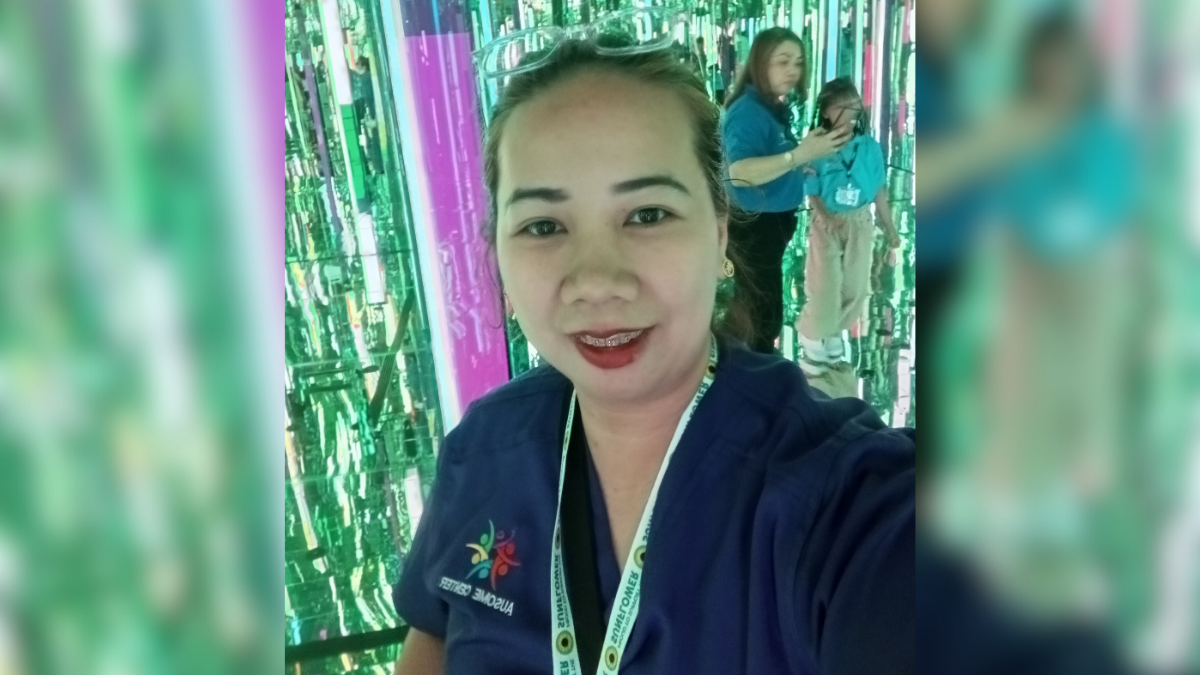

Some life changes begin in the most familiar way—when you realize the system you trusted isn’t giving people what they truly need. Arlene Terencio knows that feeling well, and she built her life’s work around it, turning frustration into a mission that now supports families across the UAE who once felt alone in their child’s special needs journey.

As the Founder and Clinical Director of Ausome Development & Learning Center, Terencio has spent the past decade working in the field of special education and rehabilitation, driven by a belief that early intervention should never be a privilege reserved only for families who can afford premium therapy packages. She is a Certified Autism Specialist, Special Educator, and International Behaviour Analyst—titles she wears with credibility, but also with a clear sense of purpose.
Behind those credentials is a woman who has seen, firsthand, how difficult it can be for parents to navigate a world of diagnoses, therapy recommendations, and emotional uncertainty—especially when they are doing it far from home.
A mission born from frustration
Terencio did not build Ausome from a business plan. She built it from a breaking point.
Before establishing her own center, she worked as a Special Educator and ABA Therapist, but what troubled her most was not the workload—it was what she witnessed behind closed doors.
“Most of the centers I work are not transparents with the parents,” she shared. “They always hide what the kids are doing during the day. And if their incident happened, they didn’t inform the parents as well.”
For her, the lack of transparency was not a small issue. It was a betrayal of trust.
“Which I believe when you ask for collaboration, it needs truthfully what happened, honesty,” she added.
That frustration became her turning point. She envisioned something different—something that felt both professional and human. Ausome, she said, was created from “a heartfelt mission: to make quality special needs support more accessible and more compassionate, especially for families who feel lost, unheard, or financially burdened.”
Living in the UAE, she met countless parents, many of them Filipino, Pakistani, and Indian, who were eager to seek therapy for their children but felt blocked by high costs and limited options. The gap was clear: families wanted help, but the system wasn’t meeting them halfway.
So she decided to build a space where it would.
Therapy built around the child, not the checklist
At Ausome Development & Learning Center, the goal is not to “fix” children—it is to support them in a way that respects who they are.
Terencio described her approach as deeply individualized, shaped around the child’s needs, strengths, and developmental pace.
“I have always believed that every child deserves to be understood—not judged and supported in a way that respects their strengths, personality, and pace,” she said.
Ausome provides a wide range of early intervention and developmental services including ABA Therapy, Speech and Language Therapy, Occupational Therapy, Physiotherapy, Special Education support, school readiness programs, social skills development, and functional life skills training.
But Terencio emphasized that the real difference lies in how those services are delivered.
“What makes our approach special is that we focus not just on goals, but also on the child’s wellbeing,” she explained.
Her work centers on building communication, emotional regulation, sensory support, independence, and confidence—foundational skills that allow children not only to progress in therapy, but also to function more comfortably in everyday life.
For Terencio, early intervention is not about rushing children into milestones. It is about helping them grow in a way that makes sense for them.
“Early support and Intervention changes everything, as long as they get the right support,” she said.
Making early intervention affordable for families
One of Terencio’s most defining commitments is affordability—a decision that has positioned Ausome as a lifeline for many parents, especially Filipino families in the UAE who are balancing work, household costs, and responsibilities back home.
“Because therapy should never feel like a privilege only a few can afford,” she said.
She has seen parents struggle to access consistent therapy due to financial limitations, lack of awareness, and limited support systems. And as a Filipino herself, she understands the pressure that many overseas families carry.
“I understand that many families carry responsibilities not only for their children here, but also for relatives back home,” she said.
That is why she refuses to let therapy become another source of shame for parents who are already overwhelmed.

“I want parents to feel that support is possible, therapy is achievable, and progress is within reach without shame or fear,” she added.
Terencio also revealed that Ausome does its best to extend help beyond paid services.
“Will you believe me when I said We do our best to give charity, not only to Filipinos but other nationalities? those ones that really deserve it,” she said. “Because I believe I cannot get the money physically , maybe in God’s house I’m building it there.”
It is a statement that reflects her mindset: this is not just a profession—it is a calling.
When progress becomes hope
Terencio’s work is filled with stories, but there are certain moments that stay with her—especially those that remind her why she started.
“There are many moments that stay in my heart,” she said, “but one of the most meaningful is when a parent tells me, ‘This is the first time I felt someone truly understands my child.’”
One case stood out deeply: a child with very limited communication and frequent meltdowns, a “completely level 3 kids,” as she described. The parent was exhausted and emotionally drained, constantly worried about what the future would look like.
Then the breakthrough came—not overnight, but through consistency.
“After weeks of consistent support, 2-3 months of support then continue to 6 months, the child began using simple words and functional communication instead of crying or screaming,” she recalled.
The parent cried—not out of sadness, but out of relief.
“That moment reminded me: this work is not just about therapy. It’s about changing a family’s life.”
Building confident parents, not just therapy plans
For Terencio, therapy cannot stop at the center’s door. Parents need to feel empowered enough to continue the journey at home.
She believes that one of the most important steps is helping parents shift how they see their child.
“Many parents blame themselves or feel afraid when they hear the words autism, delay, or special needs,” she said.
Her response is always rooted in compassion.
“Your child is not broken. They just learn differently.”
Through parent coaching, training, progress updates, and practical home strategies, Terencio helps families understand behavior not as defiance, but as communication. Her goal is to replace fear with clarity.
“We don’t just teach parents ‘what to do’ we help them understand why their child behaves or learns in certain ways,” she explained.
Because when parents begin to believe in their child’s strengths, the child feels it too.
“When parents believe in their child, the child feels it and the progress becomes even greater,” she said.
A bigger future for Ausome
Terencio’s vision extends far beyond a therapy center.
“My vision is for Ausome to be more than a therapy center. I want it to be a safe community for families,” she said.
She hopes to expand Ausome into a trusted early intervention and special education hub in the UAE, while also developing it as a training center for therapists, LSAs, and educators. She envisions more parent workshops, support groups, inclusive events, and stronger partnerships with schools to improve inclusion.
“A place where families feel hope and not pressure,” she said.
Ultimately, her mission remains simple but powerful: to help children become independent, confident, and included in society—while ensuring parents never feel alone.
