




It usually starts with a simple thought—what if I stayed where I am, and never pushed myself further?

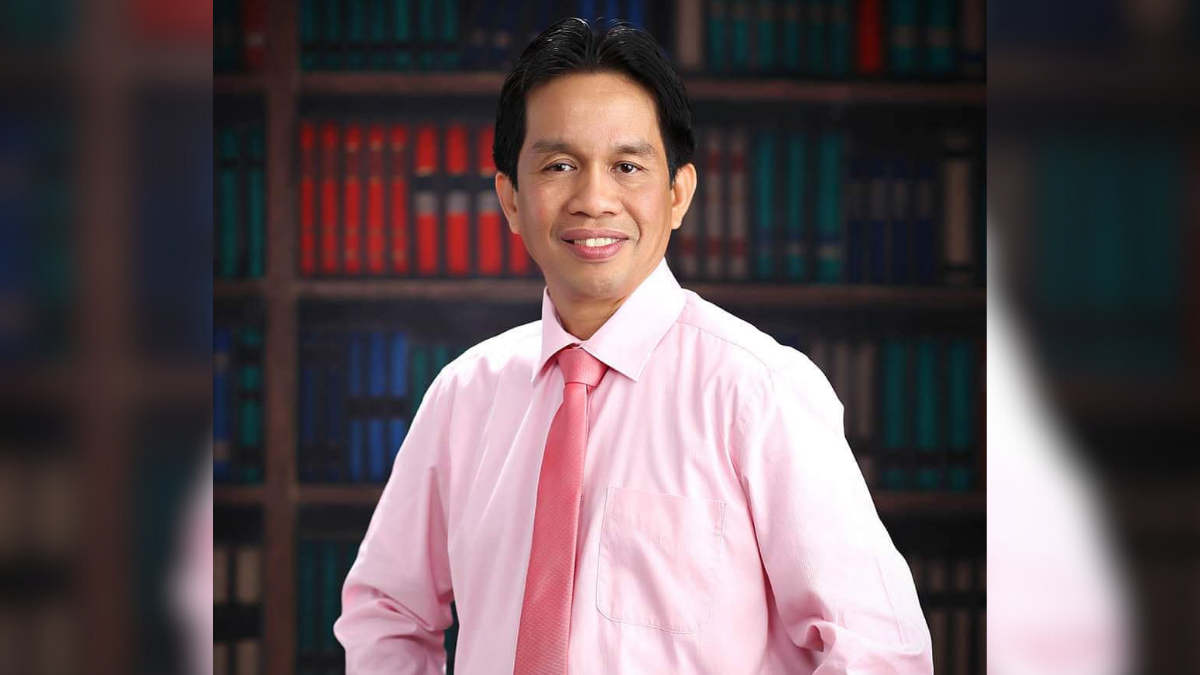
Engr. Rolando Mendoza Nicolas didn’t just push himself further. He turned professional growth into a lifelong mission, one that has quietly reshaped the careers of hundreds of Filipino engineers working overseas—particularly in the Kingdom of Saudi Arabia, where he has spent the last 31 years building not only projects, but people.
With nearly four decades of experience in electrical engineering and construction management, Nicolas is not the type to chase recognition. Yet his name has become difficult to ignore in both professional circles and Filipino communities abroad. His credentials are heavy: a Professional Electrical Engineer, an ASEAN Chartered Professional Engineer, and an ASEAN Engineer. His awards list is even heavier, including being named a 2025 Fellow Grade Awardee by the Institute of Integrated Electrical Engineers of the Philippines (IIEE), and a recipient of the 2021 Presidential Awards for Filipino Individuals & Organizations Overseas (Banaag Category)—one of the highest honors given by the Philippine government.
But the story of Rolando Nicolas isn’t about plaques or titles. It’s about how a Filipino engineer, who once didn’t even imagine becoming licensed, ended up becoming a key figure in uplifting fellow OFWs in one of the most demanding professional environments in the world.
From the classroom to Saudi Arabia’s biggest projects
Nicolas’ journey began in Pangasinan, where he earned his Bachelor’s degree in Electrical Engineering in 1986. Surprisingly, his first professional chapter was not in construction sites or corporate boardrooms, but inside a university classroom.
“I never imagined to become a license Electrical Engineer,” he shared.
That same year, he began teaching at Virgen Milagrosa University Foundation in San Carlos City, Pangasinan—his alma mater—where he served as a full-time instructor for nearly eight years. By his fifth year, he had already risen to become department head of the Electrical Engineering Department.
It was a stable career path. But in 1994, he made the decision that would shift the direction of his life permanently.
“After I left teaching post in 1994, I flew to the Kingdom of Saudi Arabia (KSA) and the rest is history.”
That “history” would become 31 years of engineering work in Riyadh, Saudi Arabia—years spent not only adapting to an international work environment but eventually thriving in it.
Today, Nicolas serves as a Senior Electrical Engineer at the Saudi Consulting Services Company Engineering Consultants, which he describes as “the oldest and largest consulting firm in the Kingdom.”
His current work places him at the center of Saudi Arabia’s futuristic transformation.
“My present project is the Saudi Telecom Company (STC) Square, a smart city in Riyadh, Saudi Arabia.”
His role involves reviewing materials and shop drawing submittals of electrical systems, ensuring technical compliance, and managing project delivery—responsibilities that demand precision, leadership, and deep experience.
His portfolio also includes work in the King Abdullah Financial District (KAFD), a major financial development in the Middle East, where he was involved in a complex subterranean infrastructure project.
In an industry where engineers are often measured only by deadlines and deliverables, Nicolas has built a career defined by consistency, technical excellence, and quiet influence.
The awards that mattered most
After decades of work, Nicolas has earned a series of national and international recognitions that reflect both his technical competence and his service to the Filipino community.
Among his notable distinctions are being named among The Filipino Times Watchlist: Top Engineers and Architects in the Middle East (2023), receiving the PRC Outstanding Professional of the Year Award (2021), and being recognized as the Most Outstanding Electrical Engineer by IIEE in 2017.
Yet when asked which recognition meant the most, Nicolas points to awards that validated not only his profession—but his advocacy.
One of the most significant was his 2021 Presidential Awards for Filipino Individuals & Organizations Overseas (PAFIOO) – Banaag Awardee.
He described PAFIOO as “the highest honor given by the Philippine government,” awarded for deeds and initiatives that contribute to nation-building and Filipino welfare abroad.
“The President recognized my commendable contributions in the skills upgrading and professional development of the Filipino Electrical Engineers in the Kingdom of Saudi Arabia.”
Then came another milestone: the 2025 IIEE Fellow Awards, the highest honor given by the Institute of Integrated Electrical Engineers of the Philippines.
“The College of Fellows is an elite and most prestigious group with only less than a hundred members among the hundred thousand of licensed Electrical Engineers in the Philippines.”
For Nicolas, these awards weren’t simply career highlights—they were reminders that service, mentorship, and community work are not secondary achievements. They are achievements that matter just as much as technical success.
Building engineers, not just buildings
What sets Nicolas apart is not only his work in construction management, but his deep commitment to professional development among Filipino engineers abroad.
He has served in leadership roles such as Chairperson of the Philippine Professional Organizations – Central Region, Saudi Arabia (PPO-CRSA) and Chapter President of the Institute of Integrated Electrical Engineers of the Philippines – Central Region Chapter, Saudi Arabia (IEE-CRCSA).
In these roles, he helped lead initiatives supporting the conduct of the Special Professional Licensure Examination (SPLE) in Riyadh—an exam jointly conducted by the PRC, Department of Migrant Workers, and the Philippine Embassy.
This wasn’t simply administrative work. It was career-changing support for OFWs who needed access to professional licensing while working abroad.
His motivation became even more urgent in 2013, when Filipino engineers abroad began facing threats to their professional standing.
“It was in 2013, when the Qatar government demoted the Filipino Engineers to lower rank due to lack of basic education years of the Philippines.”
At the time, the K-12 system had not yet been implemented. Nicolas and other leaders feared that Saudi Arabia might impose similar restrictions, affecting Filipino engineers’ job stability and accreditation status.

This concern sparked a major organizational step: the formation of the Philippine Council of Engineers & Architects – Kingdom of Saudi Arabia (PCEA-KSA), where Nicolas served as the founding Vice Chairman.
Through strong coordination and diplomatic engagement, the organization achieved what many would consider impossible.
“A Memorandum of Understanding (MOU) between Saudi Council of Engineers (SCE) and PCEA-KSA on January 29, 2014.”
This agreement helped ease accreditation challenges for Filipino engineers and architects and supported stability in employment opportunities. A delegation from PRC Manila even traveled to Riyadh to witness the signing—an indicator of how significant the moment was for the Filipino professional community.
A legacy measured in people
Nicolas’ most powerful achievements are not measured in awards, but in the number of professionals he has helped elevate.
He has conducted yearly review classes for Registered Electrical Engineers (REE) and Registered Master Electricians (RME), producing real results.
“I conducted series of review classes… which resulted to two hundred thirty-six (236) professionals. Some of them landed in the Top 10 places.”
Beyond licensure, he also supported Filipino engineers in achieving regional professional recognition through ASEAN frameworks.
“I conducted series of write shops… which resulted to conferment of twenty-three (23), ASEAN Engineers, two (2) Associate ASEAN Engineers and one (1) ASEAN Technician.”
He also helped applicants become ASEAN Chartered Professional Engineers.
“I conducted series of write shops… which resulted to conferment of forty-four (44) ASEAN Chartered Professional Engineers.”
For OFWs, these aren’t just credentials—they are tools for promotion, job security, and respect in international labor markets. Nicolas noted that some of those who benefited were promoted and earned higher compensation.
More importantly, he highlighted how PRC licensing has become a practical requirement in Saudi Arabia.
“For those new employees with Engineer visa, PRC ID card is now recognized by the Saudi government in the registration of the Saudi Council of Engineers (SCE).”
Even small privileges, such as immigration courtesy lanes for ASEAN engineers, can have a meaningful impact on OFWs who travel frequently.
“This privilege allows the ASEAN Engineers to get away from the long queue in the OFW Fast Lane at the airport which is not fast lane anymore due to many OFWs leaving the country.”
It’s a detail that feels almost humorous—but it underscores a deeper truth: professional titles can create real-world advantages.
Why lifelong learning is now non-negotiable
For Nicolas, the core message is clear: learning does not stop at graduation.
He believes professionals today are living in a time where stagnation is dangerous—not only for career growth, but for survival.
“The necessity of lifelong learning for professionals is driven by the unprecedented pace of technological disruption, particularly through artificial intelligence, automation, and robotics.”
He added, “Constant upskilling is no longer just for career growth; it is essential for career survival.”
It’s a statement grounded in reality. Industries are shifting fast, and the engineering sector is no exception. For OFWs competing in global markets, the margin between staying relevant and being replaced can be thin.
Nicolas has made it his personal advocacy to ensure Filipino engineers stay ahead of that curve.
The message he wants young OFWs to remember
After 38 years in the profession, Nicolas remains grounded in a simple belief: professional success is not only about personal ambition—it’s about lifting others along the way.
“My message to my fellow OFW engineers, keep on upgrading your chosen profession.”
And in one of his most striking reminders, he framed titles not as ego boosters, but as earned legacies.
“Those alphabets in the name are not mere decoration but titles that no one could take away from you. It’s a feather in your cap that you and your family will be proud of.”
For Nicolas, leadership is not about authority. It’s about influence, service, and building a community that outlasts any single person.
“Serve your community. Leadership is not just about duty and responsibility. It is also influence and building meaning connections.”
Then he offered advice that reflects the mindset behind his decades of service:
“Don’t ask what benefits you’ll get from the organization – instead, ask what you can contribute for its growth and betterment.”
