




It’s a familiar story for many Filipino professionals: you graduate with a hard-earned degree, pass the board exam, and still realize that the real fight begins after the celebration.

Engr. Donald Roxas Larosa knows that feeling well. In 2011, after earning his Mechanical Engineering degree and passing the licensure exam in the Philippines, he left his hometown in Sorsogon with a clear goal in mind—build a career that would give him more than just stability, but growth, impact, and purpose.
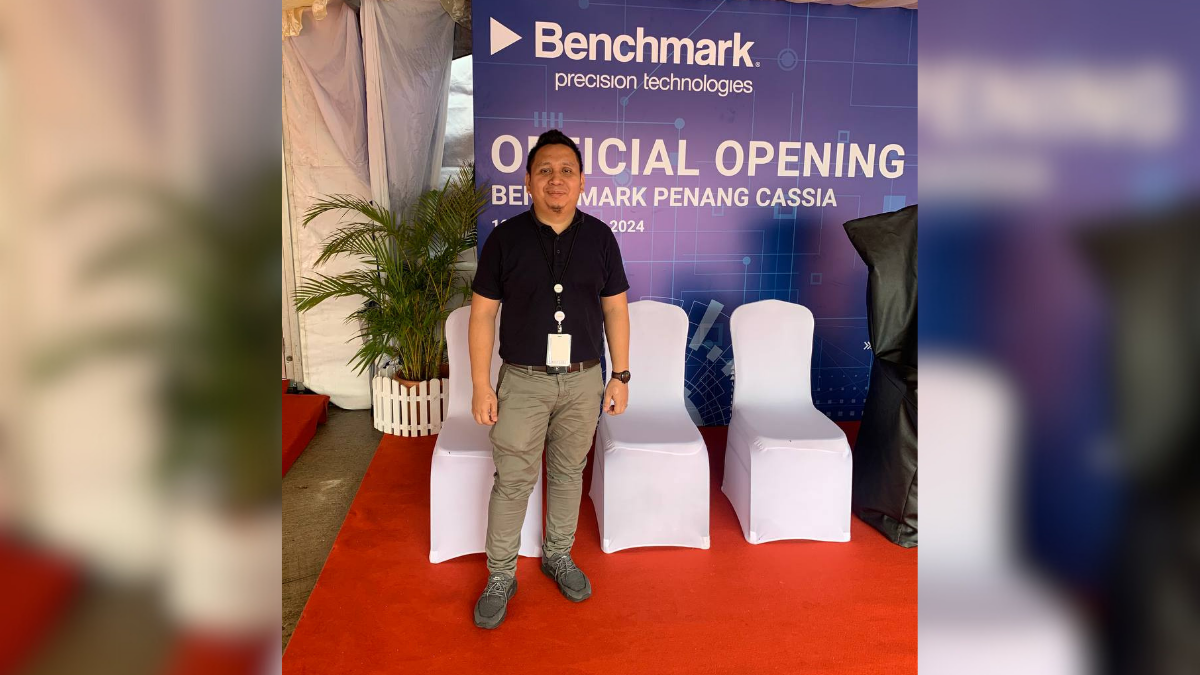
Today, Larosa is a Quality Engineering Manager at Benchmark Precision Technologies in Penang, Malaysia, leading quality operations across two manufacturing sites and overseeing processes that serve some of the most demanding industries in the world: medical, aerospace, and semiconductor manufacturing. But his story didn’t start with a managerial title or a corporate office. It began on the factory floor, with grease, machines, and a role that didn’t match the status of a newly licensed engineer.
And that early detour would become one of the defining moments that shaped the leader he is now.
Starting from the bottom, even with a license
After graduation, Larosa faced a reality that many engineers from the provinces know too well—opportunities were limited. With little room to grow in Sorsogon, he moved to Laguna and took his first industry job at Ishimoto Precision Philippines Inc.
It was not the role many would imagine for someone who had just passed the Mechanical Engineering board exam.
“Despite being a licensed Mechanical Engineer, I started as CNC Machinist,” he shared with TGFM.
For some, that might have felt like a setback. For Larosa, it was an advantage disguised as sacrifice.
Instead of insisting on a title, he leaned into the work. He learned CNC machining, machine setup, and programming. He observed how precision manufacturing works in real life—not as diagrams on paper, but as measurements, tolerances, errors, and corrections.
That hands-on exposure became the technical backbone of his career. More importantly, it built something that can’t be taught in a classroom: manufacturing instincts.
“This early exposure shaped my lifelong passion for precision manufacturing and built a strong technical foundation for my career,” he said.
It wasn’t glamorous. It wasn’t easy. But it gave him something far more valuable than prestige—it gave him credibility.
Malaysia wasn’t the dream at first. It became the proving ground.
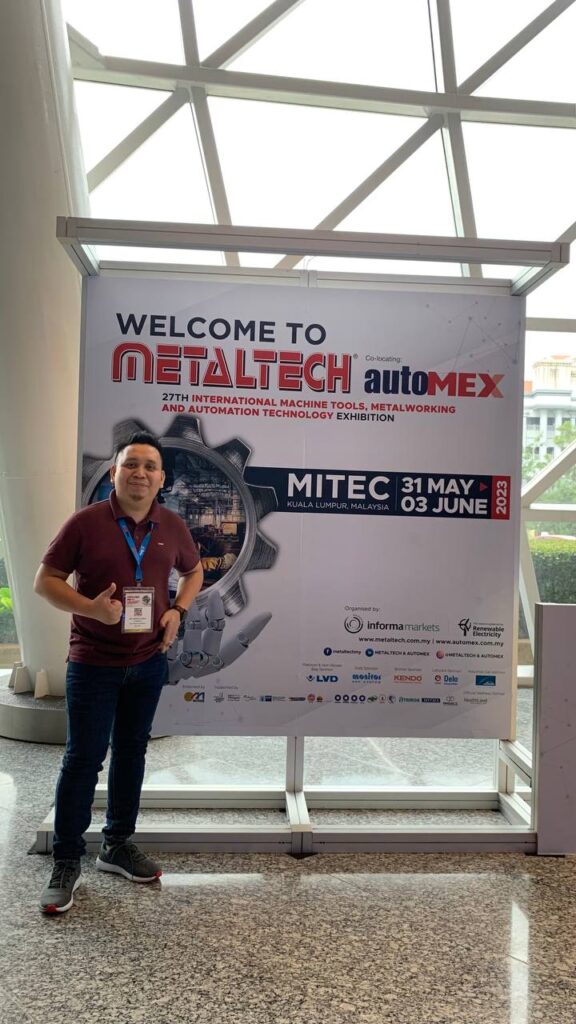
In 2013, Larosa joined Engtek Precision, a Malaysian-based company in the Philippines, as a Cadet Engineer. His work centered on in-process quality control, placing him in a role that allowed him to see both sides of the equation: production and quality.
He learned quickly that manufacturing isn’t just about building products. It’s about building consistency. And consistency depends on discipline.
That same year, he was selected for relocation to Penang, Malaysia as a Quality Assurance Engineer. For a Filipino engineer, moving abroad often comes with a mix of excitement and pressure—because overseas success is rarely just personal. It carries the weight of family expectations, national pride, and the constant need to prove your worth.
Larosa didn’t just adjust. He accelerated.
Through performance and persistence, he climbed the ranks steadily. By 2018, he earned a major promotion: Quality Assurance Manager.
“Through continuous learning, dedication, and consistent performance, I advanced through the ranks in the organization,” he said.
The story of his growth wasn’t built on luck. It was built on range. Over the years, Larosa expanded his technical exposure across a wide spectrum of precision manufacturing disciplines: tool and die, high-pressure die casting, sheet metal fabrication, welding, complex CNC machining, and assembly operations.
That breadth made him more than just a specialist. It made him adaptable—a trait that global manufacturing rewards heavily.
In a high-mix, high-precision environment, there is no room for guesswork. Every part matters. Every deviation has a cost. And every decision can affect safety, compliance, and trust.
Larosa learned to operate in that world with confidence.
Leading quality where mistakes are expensive
Today, Larosa serves as Quality Engineering Manager at Benchmark Precision Technologies, a U.S.-based multinational company. It’s a role that places him at the center of performance, compliance, and customer trust.
His responsibilities aren’t limited to checking products. His work determines whether entire systems hold up under strict standards.
“As the Quality Engineering Manager at Benchmark Precision Technologies, I lead the Build-to-Print Quality Operations across two manufacturing sites in Penang Malaysia, ensuring process compliance in precision fabrication for global customers in the medical, aerospace, and semiconductor sectors,” he explained.
In these industries, quality isn’t a corporate slogan—it’s survival. A small defect in a semiconductor component can disrupt performance. A faulty medical device part can risk lives. A deviation in aerospace manufacturing can lead to catastrophic consequences.
Larosa oversees everything from first article validation to incoming inspection, in-process controls, and final inspection. He ensures every component meets customer specifications and regulatory requirements.
“I am accountable for the quality performance of the organization,” he said.
He also leads the implementation of critical Quality Management Systems including ISO 9001, ISO 13485 for medical devices, and AS9100 for aerospace manufacturing.
His day-to-day work involves analyzing defect trends, process capability, inspection performance, and customer-critical metrics, then responding quickly when something threatens stability.
But beyond the numbers, he also manages something that’s harder to measure: people.
Building teams, not just systems
In manufacturing, processes can be written. Standards can be documented. But performance depends on people who understand what quality truly means.
Larosa treats team development as a central part of leadership—not an optional task.
“Beyond systems and processes, I am deeply committed to building and developing high-performing teams,” he said.
In his current role, he mentors and coaches Malaysian quality engineers, programmers, technicians, and inspectors. He strengthens technical capability, nurtures leadership behaviors, and pushes a quality-first mindset across the organization.
This isn’t passive mentoring. It’s daily influence.
It also reflects something deeper about how he sees success. For Larosa, career progression isn’t just about climbing the ladder—it’s about bringing others up with you.
That mindset has shaped his impact beyond the workplace. Fresh graduates he mentored are now working in major companies across Malaysia and Singapore. Internship programs under his guidance have helped create future-ready engineers who understand real industry expectations.
In an era where many leaders focus on performance alone, Larosa stands out for treating mentorship as part of the job description—not a side project.
Achievements measured in savings, systems, and standards
Larosa’s professional achievements are substantial, but what makes them impressive is that they are measurable.
Earlier in his career, he spearheaded continuous improvement programs such as the COPQ Reduction Program—an initiative aimed at cutting the Cost of Poor Quality. The results translated into significant cost savings and operational excellence.
He also championed automation projects that helped elevate quality assurance operations into a leading precision supplier in Penang.
Those achievements reflect a mindset that is both strategic and technical. He doesn’t just fix problems. He builds systems that prevent them.
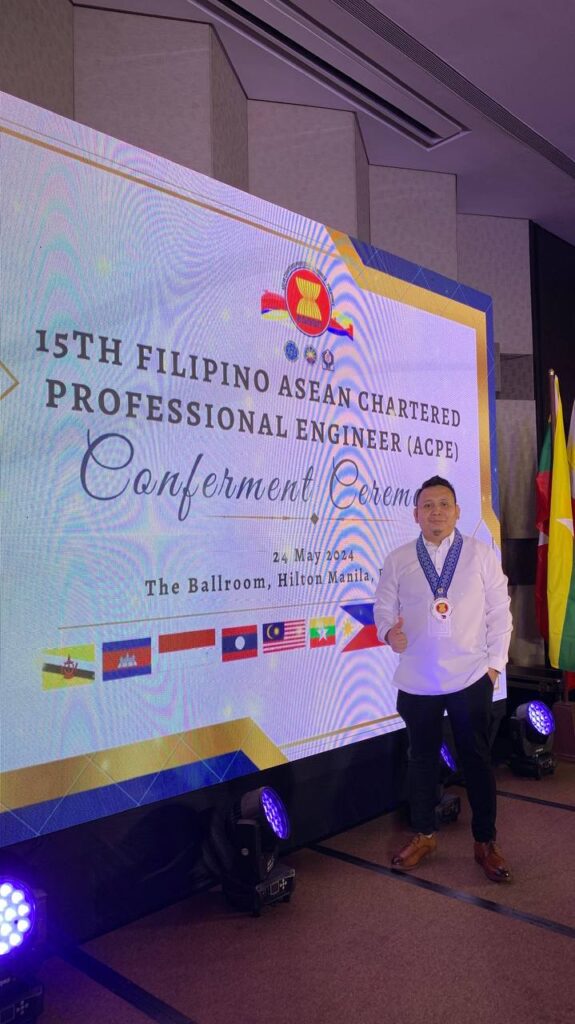
His commitment to growth is also backed by credentials. He earned a Lean Six Sigma Black Belt, pursued and completed a Master’s in Management specializing in Engineering Management, and achieved ASEAN Chartered Professional Engineer status.
In Malaysia, he was also registered as a Foreign Professional Engineer under the Board of Engineers Malaysia—a recognition that not every expatriate engineer reaches.
For someone who began as a CNC machinist despite being licensed, these milestones speak volumes. They show that his path wasn’t linear, but it was intentional.
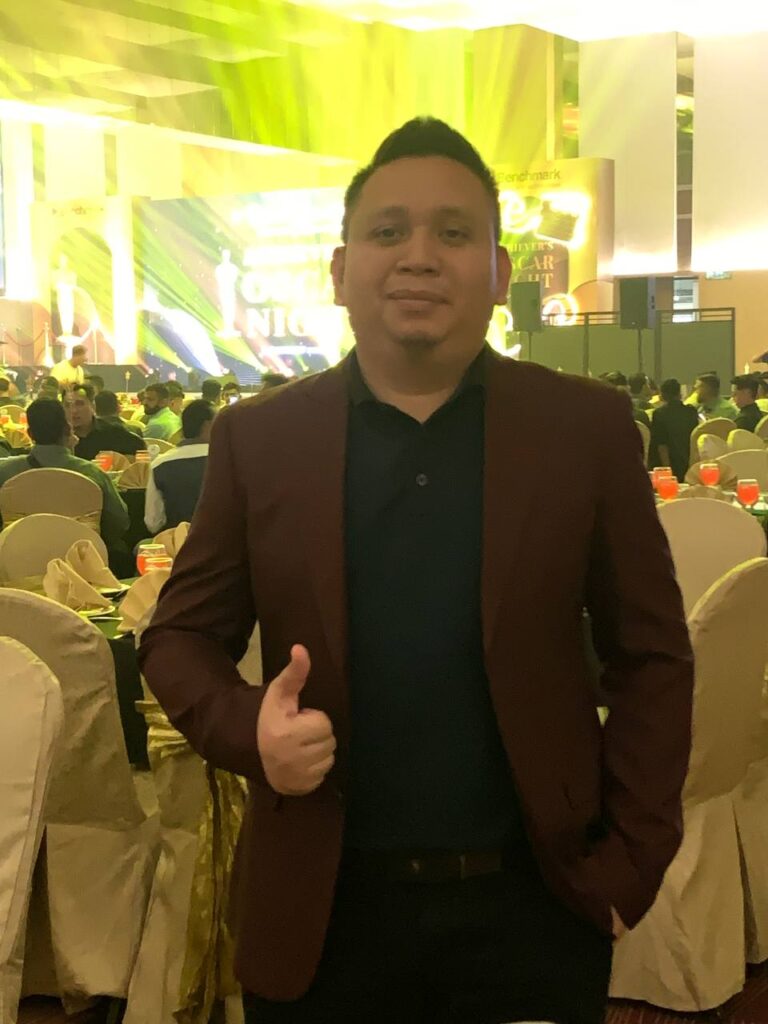
Recently, Larosa contributed to a team recognized with Benchmark’s “Extra Mile Award,” a reflection of resilience and dedication under pressure.
“Recently, I was part of a team recognized at Benchmark with the ‘Extra Mile Award,’ an acknowledgment of our dedication to pushing boundaries, exceeding customer expectations, and delivering results even under challenging conditions,” he said.
Still, he measures success differently than many.

Why his proudest moments aren’t about awards
When asked what achievements he is most proud of, Larosa could have focused on promotions, certifications, or awards. Instead, he spoke about people.
“While achievements and formal recognition are meaningful, what I value most is the people I have developed along the way,” he shared.
Over the years, he has trained and mentored Filipino and Malaysian engineers, along with professionals from other nationalities. Many of them have gone on to hold roles in major global organizations. Some have stepped into leadership positions across different countries.
And for Larosa, that is the real legacy.
“For me, leadership extends far beyond delivering operational outcomes. It is about building capability, creating opportunities, shaping future leaders, and empowering people to grow beyond what they thought possible,” he said.
Then he added a line that captures his leadership philosophy with clarity:
“The true happiness of a leader does not come from personal accolades, but from the privilege of creating another leader.”
In a world obsessed with personal branding, it’s a rare statement—and one that feels earned.
The cultural challenge of leading as a foreign professional
For many overseas Filipino workers, the biggest hurdle isn’t technical competence. It’s cultural navigation.
Larosa understands this firsthand.
“As a foreign professional progressing into leadership roles, one of the common challenges I faced is managing local teams and adapting to the native culture,” he admitted.
Differences in communication styles, work expectations, and cultural norms require patience and humility. Leading people in another country means understanding not just what to say, but how to say it.
Yet Larosa leaned on something many Filipinos are known for globally: adaptability.
“However, as Filipinos, we are shaped by resilience, perseverance, and adaptability qualities that enable us to thrive even in unfamiliar environments,” he said.
He also believes consistency is what makes leadership sustainable.
“In leadership, consistency is essential. Consistent actions, standards, and communication create stability and predictability,” he explained.
And when consistency is paired with mentorship and genuine guidance, trust begins to form.
“When trust is built, support follows. And once a leader earns both trust and support, the team naturally moves forward aligned, motivated, and united towards common goals,” he added.
It’s a simple leadership formula, but in multicultural environments, it’s often the difference between success and failure.
Mentorship as a responsibility, not a favor
Larosa speaks about mentoring the way others speak about duty.
For him, developing young talent isn’t optional—it’s one of the most important responsibilities of leadership.
“Mentoring engineers and developing young talent is one of the most important responsibilities I carry as a leader,” he said.
He sees it as a way of giving back to the community and to the version of himself who once started out with big dreams and limited direction.
“For me, developing new talent is also a way of giving back to the community, to the industry, and to my younger self who once started as a beginner with big dreams,” he shared.
His view of mentorship is rooted in a belief that knowledge has no value if it stays locked in one person’s head.
“Knowledge only becomes valuable when it is shared,” he said.
He calls mentorship a legacy, something that extends beyond projects and quarterly targets.
“Mentorship is not just a leadership duty; it is a legacy,” he added.
In the precision manufacturing world—where experience is often gained through hard-earned lessons—this mindset matters. Because every engineer shaped by strong mentorship becomes a multiplier of quality and excellence.
A mindset built on continuous improvement
Larosa’s approach to engineering and management is shaped by one philosophy: progress is never finished.
“Continuous improvement and lifelong learning shape my approach to engineering and management by grounding me in the belief that progress is constant and excellence is achieved through continuous refinement,” he explained.
This is the Lean mindset he has applied throughout his career. In his world, “good enough” is dangerous, because small compromises in quality can grow into costly failures.
In fast-evolving global manufacturing, learning isn’t a hobby. It’s survival.
“Lifelong learning keeps me technically sharp and strategically adaptable, allowing me to lead confidently in a fast-evolving manufacturing environment,” he said.
This mindset also influences how he mentors others—encouraging curiosity and resilience, not just technical skill.
“Ultimately, continuous improvement and lifelong learning are not just professional tools, but personal values that help me build stronger teams, deliver sustainable results, and shape future leaders,” he said.
A message for Filipino engineers dreaming bigger than their hometown
Larosa’s journey—from Sorsogon to Penang, from machinist to quality leader—carries a message that resonates with thousands of Filipino engineers working abroad or hoping to.
His advice is grounded in reality, not motivational clichés.
“To every Filipino engineer and professional striving to build a career on the global stage, Believe in your abilities,” he said.
He points to the traits that Filipinos often underestimate, but global industries deeply value: resilience, adaptability, work ethic, and humility.
“Our strength as Filipinos lies in our resilience, adaptability, strong work ethic, and the humility to learn continuously traits that are highly valued in industries around the world,” he said.
He also addresses a fear many young professionals carry—the fear that their starting point defines their ceiling.
“Never be intimidated by your background or where you started,” he emphasized. “Your journey, whether it began in a province, a small company, or even in a role not directly aligned with your degree, is part of what shapes your character and makes you uniquely competitive.”
For Larosa, global success comes down to courage, discipline, and professionalism—paired with a willingness to go beyond expectations.
But he ends with something even more important: staying grounded.
“Carry our Filipino values with pride and hard work, respect, integrity, and compassion,” he said.
And finally, he brings the conversation back to the principle that defines his leadership:
“And when you grow, help others grow. The true measure of success is not only in your personal achievements, but in how many people you uplift along the way.”
