




Abu Dhabi authorities will implement new speed limit reductions on three key roads in the emirate beginning February 9, following a fresh traffic safety decision announced on Wednesday.

The Joint Traffic Safety Committee said the move is intended to strengthen road safety measures across the capital, calling on motorists to comply with the revised limits to protect both themselves and other road users.
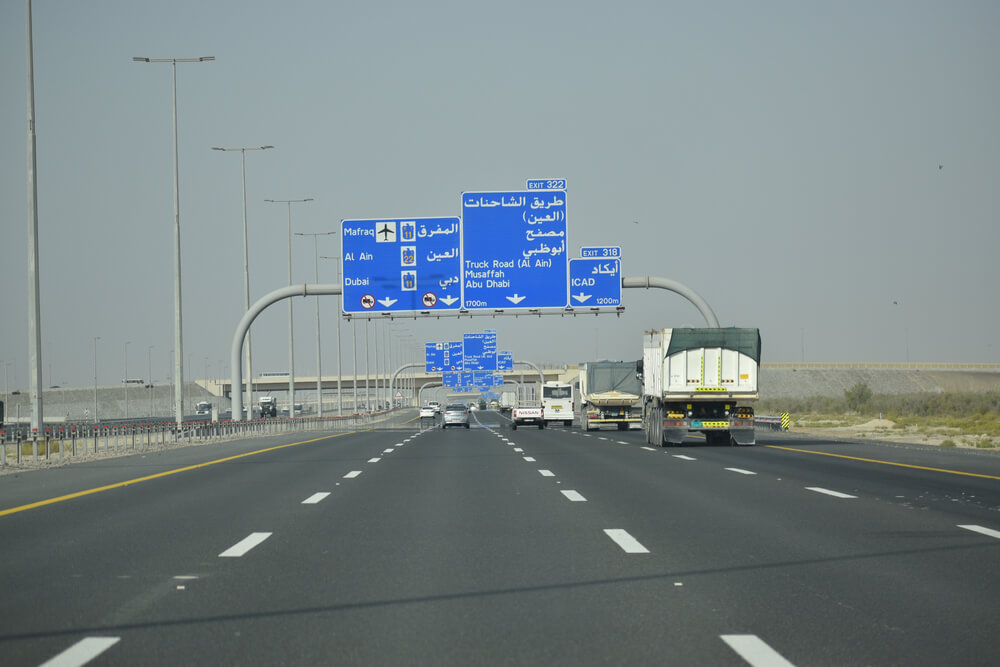
Under the updated regulations, the Abu Dhabi–Al Ain Road (E22) will have a reduced maximum speed limit in both directions from Al Nahda Interchange to Bani Yas Interchange, dropping from 160 km/h to 140 km/h. Another section of the same route, from Bani Yas Interchange up to the Bridge Complex in both directions, will also see a reduction from 140 km/h to 120 km/h.
Speed limits on Al Rawdah Road (E30) will likewise be lowered in both directions, from 120 km/h to 100 km/h.

The changes come as part of a broader series of traffic safety revisions introduced in Abu Dhabi over the past year. In April 2025, Abu Dhabi Mobility lowered the speed limit on Sheikh Khalifa bin Zayed International Road (E11) from 160 km/h to 140 km/h, while the Abu Dhabi–Sweihan Road (E20) was reduced from 120 km/h to 100 km/h.
Authorities also previously removed the minimum speed limit system of 120 km/h on Sheikh Mohammed Bin Rashid Road (E311), a step aimed at improving safety and allowing smoother movement for heavy vehicles. With the minimum requirement lifted, motorists are no longer required to maintain 120 km/h, and Dh400 fines related to minimum-speed violations have been eliminated.
From October 2025, Abu Dhabi authorities also introduced a variable speed limit system on Sheikh Zayed bin Sultan Street, allowing speed limits to shift based on live road conditions such as traffic congestion, accidents, roadworks, or weather, using a central control system connected to sensors and traffic cameras.
