



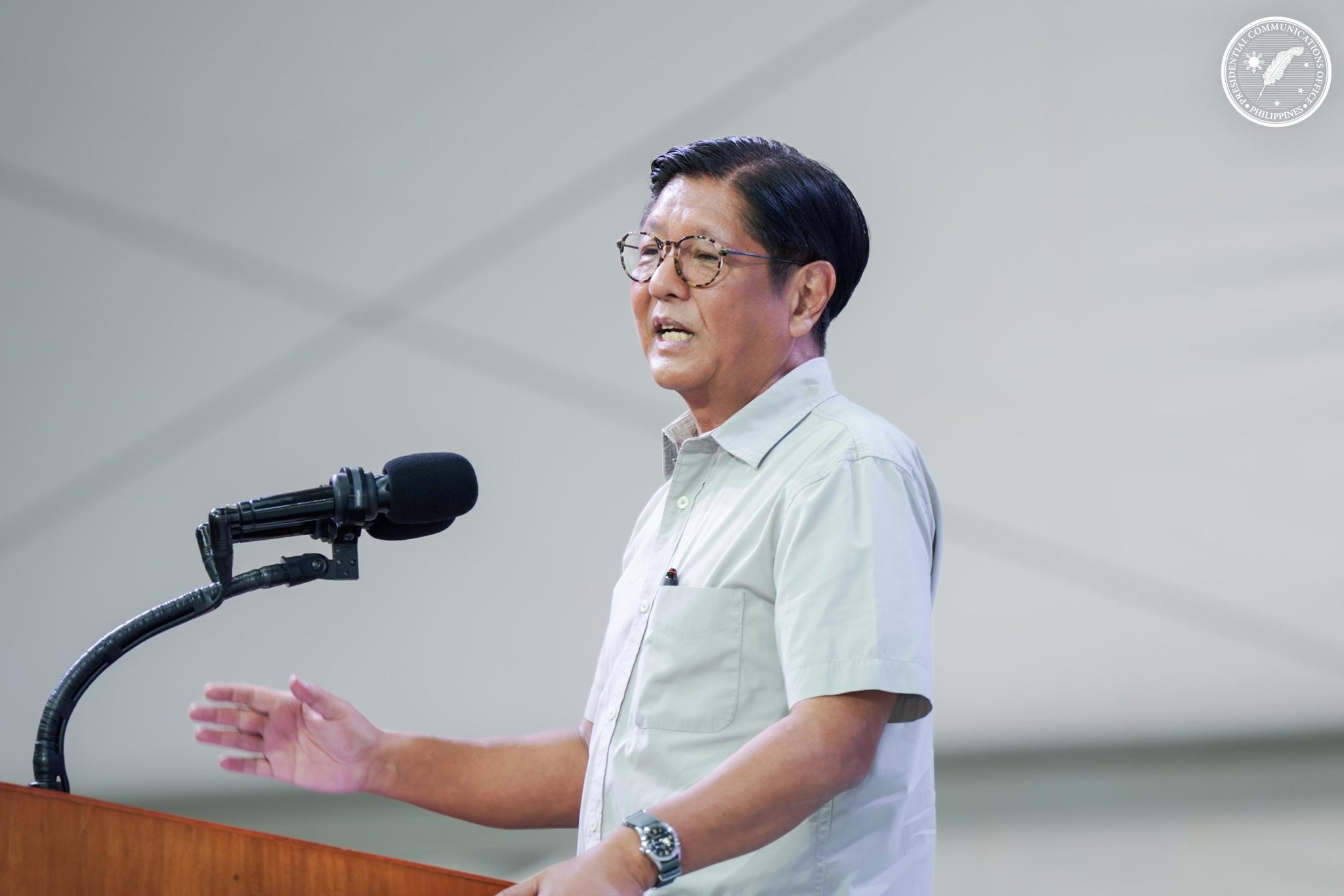

Doubts surfaced in the House justice committee on Tuesday over whether unproven accusations about President Ferdinand Marcos Jr.’s alleged drug use could legally support an impeachment case, with several lawmakers pointing to the absence of concrete facts tying the claim to any constitutional violation.

During deliberations on a complaint seeking the President’s removal, committee members took issue with the filing’s reliance on secondhand statements rather than verifiable acts. Batangas Rep. Gerville Luistro, who chairs the panel, said the allegations failed to lay out ultimate facts required to sustain an impeachment proceeding.
The complaint, lodged by lawyer Andre de Jesus and endorsed by Pusong Pinoy Rep. Jett Nisay, argues that the supposed addiction amounts to betrayal of public trust and incapacity to lead. It is among the first set of impeachment filings submitted against Marcos since he assumed office in 2022.
Mamamayang Liberal Rep. Leila de Lima challenged the legal framing of the accusation, saying that incapacity alone is not listed as a ground for impeachment. She added that even if framed under betrayal of public trust, the filing did not explain how any presidential decision or action was impaired by the alleged condition, assuming it existed.
She further rejected the argument that the President’s refusal to undergo a drug test constituted proof, calling it an inference rather than a factual allegation. De Lima also dismissed the claim that silence on the issue could itself amount to a breach of public trust.
Lawmakers noted that much of the complaint hinged on remarks made in a November 2025 speech by Sen. Imee Marcos, who accused her brother, the First Lady, and their children of chronic drug use. Surigao del Norte Rep. Bernadette Barbers said no independent evidence or authenticated records accompanied those claims.
“Such allegation of illegal drug use by respondent, which was reportedly stated by another person and not the one who filed the complaint, is mere hearsay and lacks probative value,” Barbers said.

Baguio Rep. Mauricio Domogan likewise questioned the evidentiary basis of the filing, particularly its use of media reports. He cited a Supreme Court ruling in Estrada v. Desierto (G.R. No. 146710-15), which held that newspaper accounts cannot establish the truth of their contents and are generally treated as hearsay.
“There’s no narration of facts, the arguments will not somewhat come out with a legal conclusion that the president violated the Constitution by being a drug addict,” Domogan said.
FPJ Bayanihan Rep. Brian Poe pointed out that existing records contradict the accusation, noting that Marcos tested negative for illegal drugs at St. Luke’s Medical Center in November 2021. He also cited testimony from a Senate hearing in May 2024, where a drug analyst confirmed that the President tested negative, specifically for cocaine.
“So while there is no existing record of any drug abuse, the President has on two occasions proven that he is not a drug user,” Poe said.
Committee members also raised concerns about the remaining allegations in the complaint, which include claims that the President allowed the International Criminal Court to “kidnap” former President Rodrigo Duterte, failed to veto unprogrammed appropriations in budgets from 2023 to 2026, benefited from irregular flood control projects, and created an infrastructure commission to protect allies.
The panel is currently assessing whether the complaint is sufficient in substance, a required stage in committee-level impeachment proceedings. A negative finding at this point would result in the outright dismissal of the filing.
