



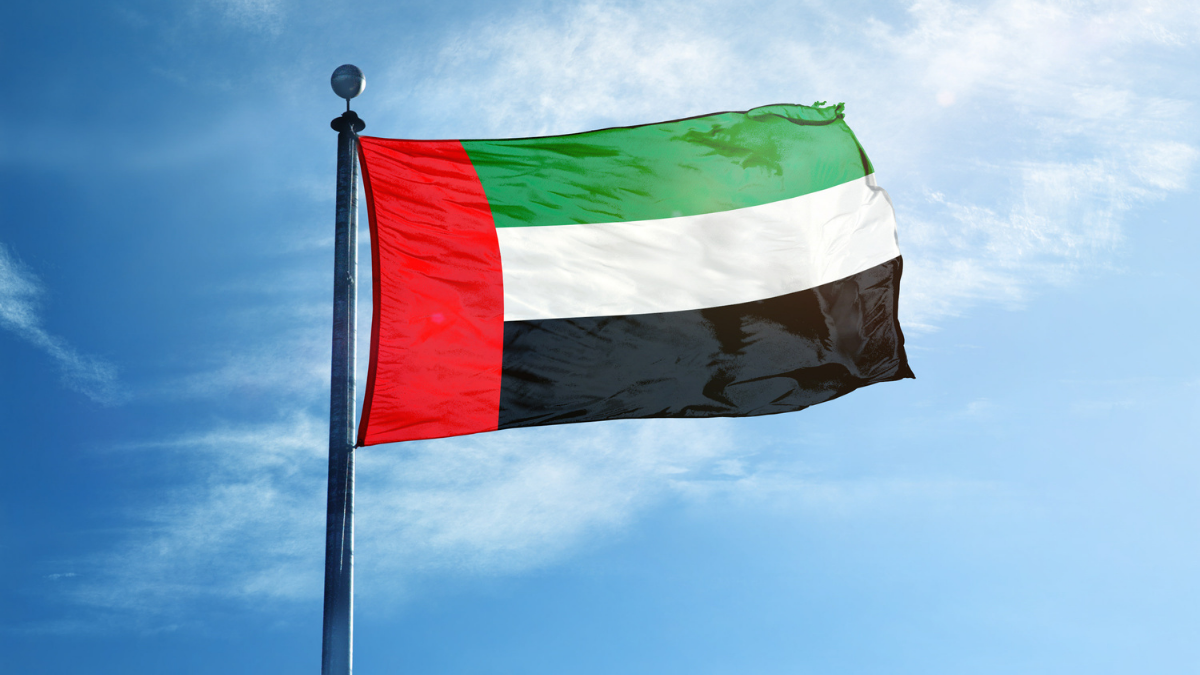

As commercial air traffic across parts of the Middle East faces mounting disruption, the United Arab Emirates has moved to publicly distance itself from any potential military confrontation involving Iran, stressing that its territory will not be used for hostile operations.

On Monday, January 26, the Ministry of Foreign Affairs said the UAE would not permit its airspace, land, or territorial waters to be involved in any military action against Iran, rejecting claims that it could provide logistical backing for an attack.
The ministry underscored that the country’s foreign policy is anchored in diplomacy, stating that dialogue, de-escalation, adherence to international law, and respect for national sovereignty remain the most effective ways to manage current regional crises.
The UAE’s position follows a similar declaration by Saudi Arabia earlier this month, when Riyadh also ruled out the use of its territory or airspace for strikes against Iran. Those remarks came as Washington warned of a “hard” response if Tehran continued its crackdown on anti-government protests.
While diplomatic messaging intensified, airlines began adjusting operations in response to the evolving security environment. Several carriers temporarily suspended services to destinations in the region, citing safety considerations linked to the geopolitical situation.
Air France announced it would halt flights to Dubai, describing the move as a precautionary response to developments in the Middle East. Dutch carrier KLM also suspended flights to several regional cities until further notice and avoided flying through the airspace of multiple countries, including Iraq and Iran, according to the Netherlands’ state broadcaster.

India’s largest airline, IndiGo, similarly cancelled a number of routes. Flights scheduled on January 25 from Delhi to Tbilisi and from Mumbai to Almaty did not operate. The carrier later said additional services to and from Tbilisi, Almaty, Tashkent, and Baku on January 26, 27, and 28 were also cancelled.
“In view of the prevailing situation and after careful assessment, IndiGo flights scheduled to operate on January 26, 27 and 28, to and from Tbilisi, Almaty, Tashkent and Baku, have been cancelled,” the airline said.
Airlines advised passengers to closely monitor flight updates as conditions continue to evolve.
Against this backdrop, rhetoric between Washington and Tehran remained tense. Although the White House last week indicated that Iran had paused planned executions of demonstrators—raising hopes of reduced confrontation—President Donald Trump later confirmed that US military preparations were ongoing.
“You know we have a lot of ships going that direction, just in case… We have a big force going toward Iran,” he said.
An Iranian official responded by warning that any attack would be considered “as an all-out war against us,” adding that Iran’s military had been placed on high alert as a US aircraft carrier strike group and additional assets moved into the region.
