



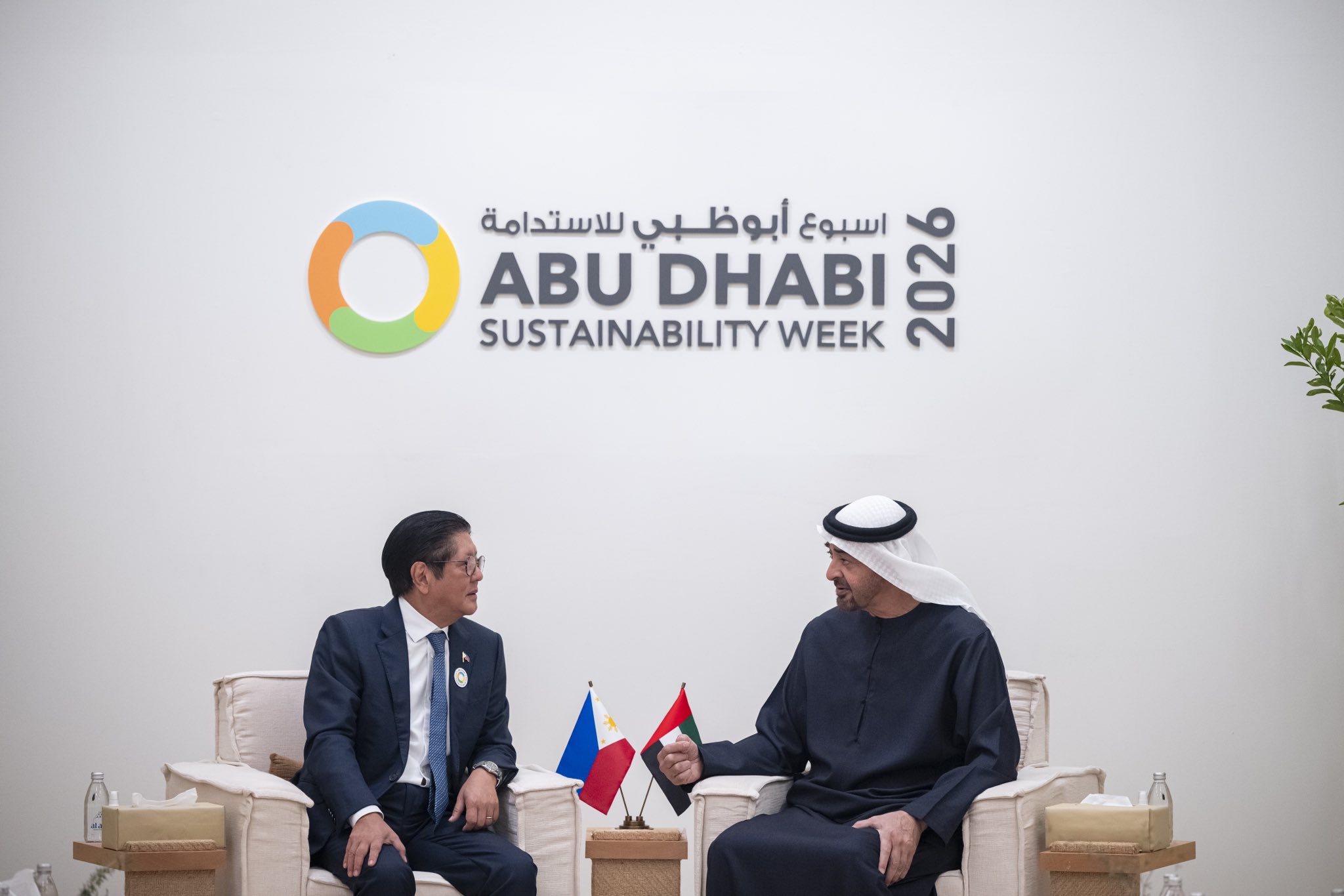

The economic agreement signed this week between the Philippines and the United Arab Emirates is expected to ease the cost of goods, expand employment prospects, and create new openings for Filipino businesses and professionals, according to Executive Secretary Ralph Recto.

Formalized in Abu Dhabi on January 13, 2026, the Comprehensive Economic Partnership Agreement (CEPA) marks the Philippines’ first free trade accord with a Middle Eastern country, positioning local exporters and service providers closer to one of the fastest-expanding markets globally.
“Isa itong malaking hakbang para palawakin ang global trade footprint ng Pilipinas,” Recto said in a press release.
“Para sa bawat Pilipino, ang ibig sabihin nito ay mas maraming dekalidad na trabaho, mas abot-kaya ang presyo ng bilihin, at mas maraming oportunidad para sa ating mga negosyo at propesyonal, dito man sa bansa o sa UAE,” he added.
Under the agreement, tariffs will be reduced and market access broadened for goods and services, while investment flows are expected to increase. The deal targets liberalization covering at least 90% of tariff lines and trade value, a level intended to accelerate commercial exchange between the two countries.

Recto said agricultural producers and manufacturers stand to gain from improved entry of Philippine products such as bananas, pineapples, canned tuna, electronics, and machinery, developments he said would help sustain livelihoods and support growth beyond major urban centers.
The agreement also provides wider, non-discriminatory access for Filipino workers and professionals in sectors including healthcare, construction, information technology, tourism, and education, responding to areas of demand in the UAE market.
Provisions within the pact are likewise designed to help Filipino entrepreneurs scale up, with specific support for micro, small, and medium enterprises, alongside measures on digital trade and technical cooperation to improve competitiveness.
Trade between the Philippines and the UAE reached nearly USD 1.83 billion in 2024, with the UAE accounting for close to 40% of Philippine exports to the Middle East, and preliminary estimates cited by Recto indicate the agreement could raise Philippine exports to the UAE by more than 9%.
The CEPA adds to the Philippines’ existing network of trade agreements with partners such as Japan, South Korea, the European Free Trade Association, ASEAN member states, and broader regional arrangements including the Regional Comprehensive Economic Partnership.
