



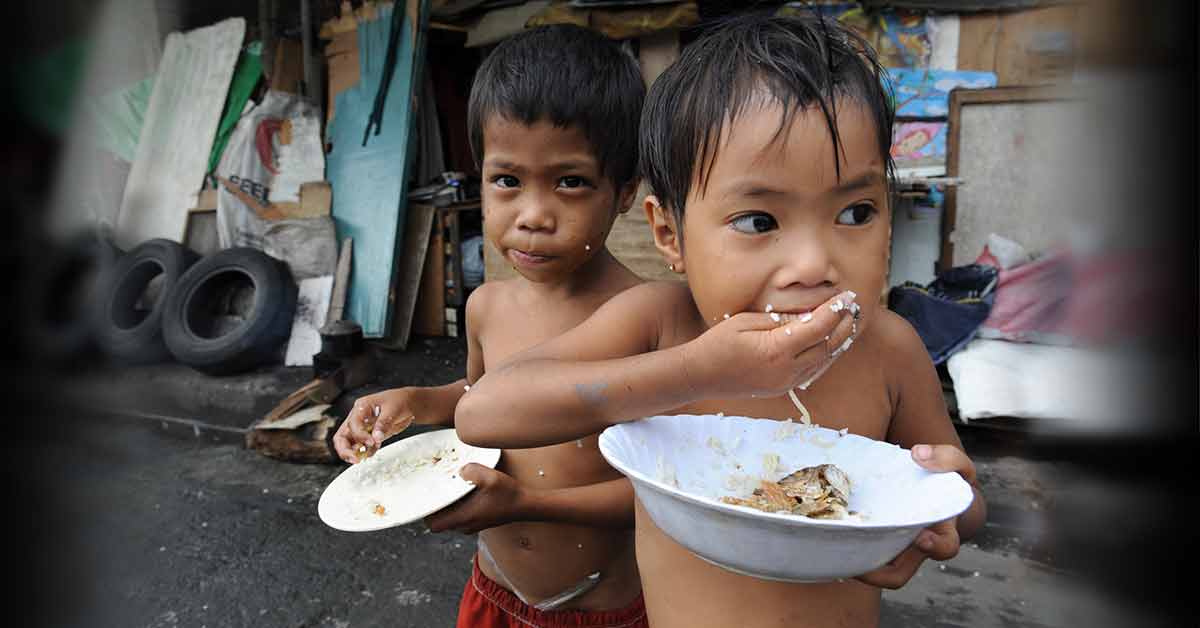

Nearly a fifth of Filipino families said they went hungry at least once in the final months of 2025, underscoring a level of food insecurity that has remained elevated in the years following the pandemic, according to a national survey.

Data released Wednesday night by Social Weather Stations showed that 20.1 percent of respondents experienced involuntary hunger during the three months leading up to the poll conducted from November 24 to 30. This marked a slight improvement from the 22 percent recorded in a comparable survey in September.
Despite the marginal decline, the research group noted that the country’s average hunger rate for the full year stood at 20.2 percent, almost unchanged from 2024. The figure remains notably higher than levels recorded in the immediate post-pandemic period, when hunger rates averaged 13.1 percent in 2021, 11.7 percent in 2022, and 10.7 percent in 2023.

Regional results showed wide variation. Mindanao posted the highest hunger incidence in November at 26.7 percent, rising sharply from 19.7 percent in September. The Visayas and Metro Manila both recorded rates of 20.3 percent, while the rest of Luzon reported the lowest level at 16.7 percent.
Looking at annual averages for 2025, Metro Manila topped all areas with a 24 percent hunger rate. This was followed by the Visayas at 21.4 percent, Mindanao at 20.1 percent, and the rest of Luzon at 18.8 percent.
The latest figures were composed of 15.6 percent of families experiencing moderate hunger—defined as going hungry once or a few times over three months—and 4.5 percent reporting severe hunger, meaning the experience occurred often or always. The survey covered 1,200 respondents nationwide and carried a margin of error of plus or minus three percentage points.
