



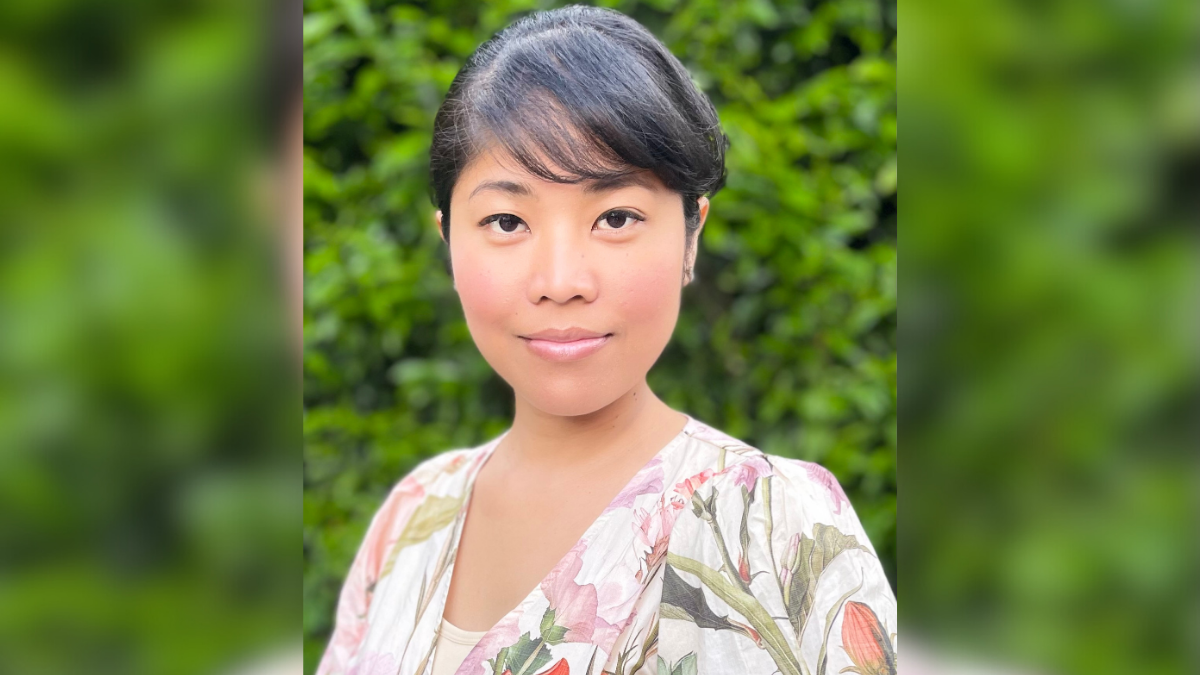

Some lives change not with spectacle, but with a quiet decision to keep going—writing through distance, doubt, and the long work of becoming. Romalyn Ante knows this terrain well, having built a literary life that stretches between Lipa and the Midlands, between a first language left behind and a second language made sharp, precise, and fully her own.

She arrived in the United Kingdom in 2005, carrying with her the layered dislocation that many migrants learn to live with rather than resolve. English, her second language, became not a barrier but a tool—one she would refine over a decade of writing, editing, and listening. That long apprenticeship culminated in recognitions few writers ever reach, including her election as the first Filipino Fellow of the Royal Society of Literature, a lifetime honour that places her among the most respected voices in British letters.
Writing from the in-between
Ante’s work has always been shaped by what it means to exist between worlds. Her debut poetry collection, Antiemetic for Homesickness, announced a writer unafraid to name longing without sentimentalising it. The book drew critical attention for its clarity and restraint, landing on the shortlist for the Jhalak Prize and the longlist for the Dylan Thomas Prize. Its success was not just personal; it marked a moment of recognition for stories of migration written from the inside, not as explanation but as lived reality.
Her second collection, AGIMAT, deepened that approach. Drawing on Filipino myth alongside medical and bodily imagery, the book examines survival with a steadier, more assured voice. It was awarded the Arthur Welton Award and named both a Poetry Book Society Recommendation and The Observer’s Poetry Book of the Month. A review in The Guardian captured its effect succinctly, noting how the work “prescribes metaphors like medicine” and “offers another side” to pain and trauma—language that speaks to Ante’s ability to hold tenderness and discipline in the same line.
She does not write to translate experience for an audience; she writes to make space for it. As she explains, “I believe that my journey as a writer sets me apart in the literary world, both for my unique perspective as a Filipino and for the accomplishments I’ve achieved as the first Filipino to receive the prestigious FRSL.” The emphasis, even here, is not on distinction for its own sake, but on what that visibility makes possible.
Recognition without erasure
The honours that followed did not pull Ante away from her community; they tethered her more firmly to it. In 2023, she was invited by King Charles to Buckingham Palace as one of the UK’s East and Southeast Asian trailblazers, a moment she describes as reaffirming “the importance of visibility for underrepresented voices in literature.” The recognition mattered not because it conferred legitimacy—her work had already done that—but because it widened the frame of who is seen, and where.
That widening continues in her current projects. Her debut novel, The Left-Behind Child, scheduled for publication in 2026, turns to the emotional and psychological costs of migration, particularly on those who remain. It is a natural extension of her poetry’s concerns, written with the same attentiveness to interior lives shaped by absence. She has also been commissioned to write the first draft of Tanker Boys, a novel exploring the lives of migrant seamen—another chapter in her ongoing commitment to telling Filipino stories that rarely reach the centre of literary attention.

“I believe that through my work, I can inspire others, especially those from marginalised and unseen communities, to embrace their own narratives and understand the power of their voices,” she says. The statement reads less like an aspiration than a description of what her career has already made tangible.
Building rooms, not pedestals
If Ante’s writing is one form of presence, her editorial and community work is another. She sits on the editorial board of Poetry London and has judged major competitions including the National Poetry Competition and the Manchester Poetry Prize—roles that allow her to influence not just what is written, but what is welcomed.
More crucially, she has created spaces where emerging writers can find footing. She founded Tsaá with Roma, an interview and workshop series designed to “engage, inform, and inspire the public,” which has since grown into generative workshops for writers. She is also the co-founding editor of harana poetry, a magazine dedicated to poets who write in English as a second or parallel language. These are not side projects; they are extensions of her belief that literature thrives when it reflects the breadth of those who make it.
“My contributions to the community have always been rooted in my belief in the power of storytelling to create change and raise awareness,” she says. That belief translates into mentorship, editorial advocacy, and the steady work of making room—particularly for Filipino and immigrant writers who rarely see themselves mirrored in mainstream publishing.
The quiet after the applause
For readers, especially those in the Filipino diaspora, Ante’s work offers something both intimate and affirming. One reader shared how AGIMAT helped them make sense of personal loss, finding resonance in its themes of survival and resilience. The book’s invocation of the goddess Mebuyan—who nurses spirits—feels emblematic of Ante’s wider project: language as care, as witness, as a form of holding.
Yet there is nothing performative in the way she carries this responsibility. Her tone remains measured, her focus clear. Success, in her telling, is not an endpoint but a platform—one that must be used thoughtfully. “My goal is to continue breaking barriers, creating space for Filipino writers in the literary world, and inspiring future generations to believe that their stories matter,” she says.
