



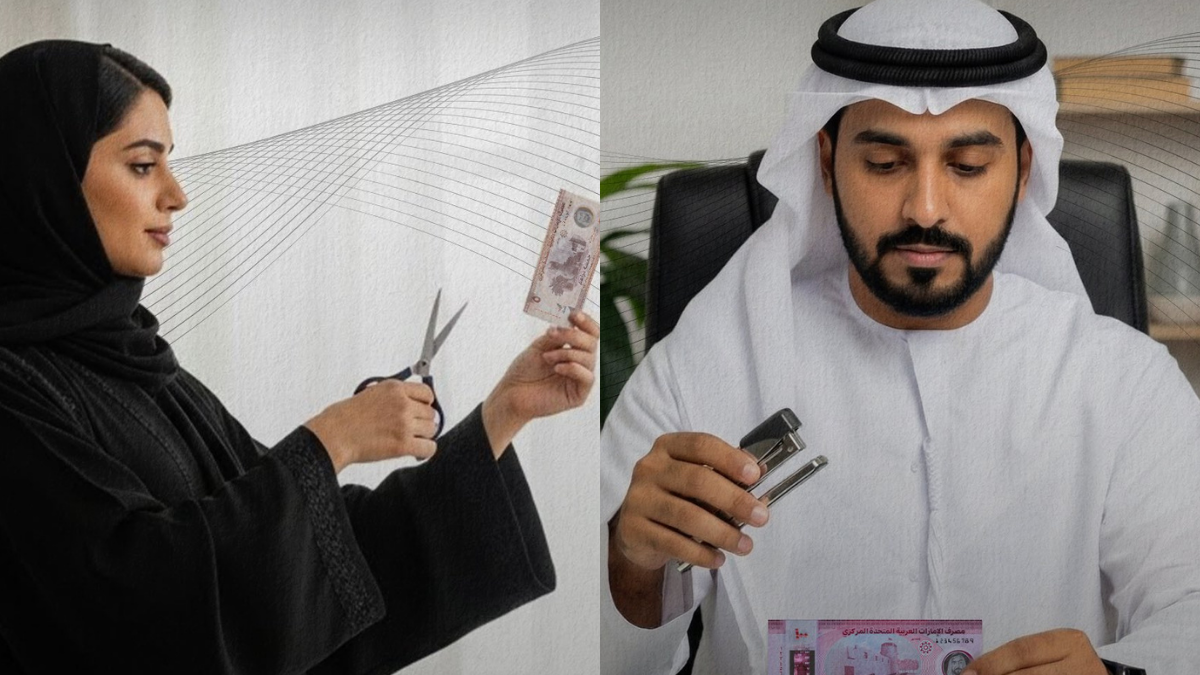

The Central Bank of the United Arab Emirates has renewed its call for the public to treat UAE banknotes with care, stressing that the national currency carries significance beyond everyday transactions. In a recent social media message, the regulator described the dirham as a “symbol of our sovereignty and a pillar of our economy.”

The bank said responsible handling of cash supports national identity while also reinforcing confidence in the wider financial environment. According to the Central Bank, routine habits that damage notes can undermine both durability and trust in circulation.
To prevent unnecessary deterioration, the authority urged residents and visitors to avoid defacing or tearing banknotes and to keep them free from practices that commonly cause damage. These include folding, crumpling, stapling, or exposing notes to sharp objects. The public was also advised to protect cash from liquids, excessive heat, adhesives, and any form of writing.

“By protecting the UAE’s national currency, we reinforce confidence in the country’s financial system,” the Central Bank said, noting that everyday handling choices collectively affect the integrity of money in circulation.
For holders of damaged or torn banknotes, the regulator outlined clear replacement rules based on how much of the original note remains. Full reimbursement is granted when at least two-thirds of a banknote—or its combined parts—are intact. Notes with more than one-third but less than two-thirds remaining qualify for half of their face value, while those with one-third or less are not eligible for compensation.
The Central Bank clarified that these measures apply only to official banknotes it has issued, with each submission examined individually to verify authenticity and eligibility before any compensation is determined.
