



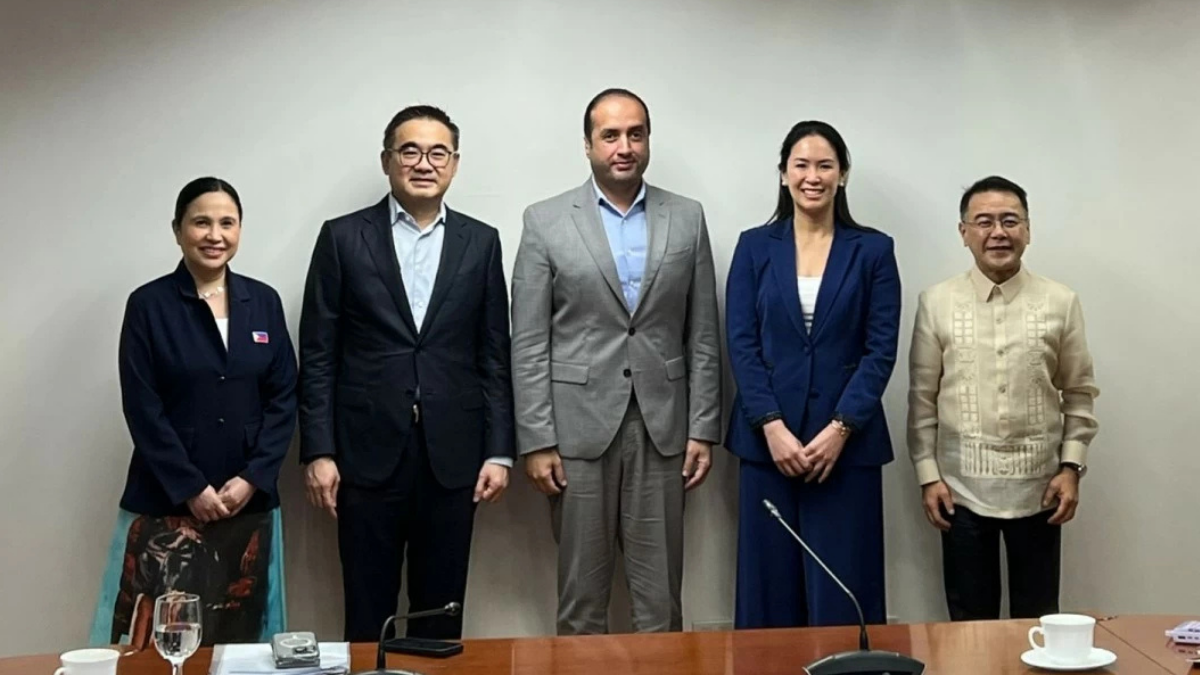

A long-negotiated economic agreement between the Philippines and the United Arab Emirates is nearing completion, with both governments preparing to sign what would become Manila’s first free trade deal with a Middle Eastern country during President Ferdinand Marcos Jr.’s visit to the UAE next week.

Special Envoy for Trade and Investment to the UAE Ma. Anna Kathryna Yu-Pimentel said the two sides are in the final stages of concluding a Comprehensive Economic Partnership Agreement, or CEPA, following months of intensified coordination and policy alignment.
According to Yu-Pimentel, the remaining procedural requirements are being finalized, allowing the agreement to move toward formal signing after sustained engagement between Philippine and Emirati officials.
Malacañang has described the CEPA as a milestone in bilateral relations, underscoring that it marks the Philippines’ first free trade agreement with a Middle Eastern partner. The accord is designed to span multiple areas of cooperation, including trade in goods and services, investment flows, small and medium enterprises, digitalization initiatives, customs coordination, governance mechanisms, and sustainability commitments.
Yu-Pimentel said negotiations advanced more rapidly after a series of encounters between officials from both countries during international gatherings, which later evolved into structured follow-up talks and sector-specific discussions. She noted that consistent participation by senior officials signaled firm political support and helped broaden the scope of economic and institutional collaboration.
She also pointed to a sequence of reciprocal visits that reinforced momentum. In June 2024, UAE Foreign Minister Sheikh Abdullah bin Zayed Al Nahyan made an official trip to Malacañang, followed months later by President Marcos’ visit to the UAE in November 2024, an engagement that coincided with the 50th anniversary of diplomatic relations between the two countries.

During that November visit, Marcos held talks with UAE President Sheikh Mohamed bin Zayed Al Nahyan, where discussions extended beyond trade to include cooperation on energy transition, the digital economy, artificial intelligence, and legal and regulatory frameworks.
Yu-Pimentel said these engagements paved the way for the signing of around 22 bilateral agreements since then, covering sectors such as culture, energy transition, government modernization, security, and legal cooperation.
Economic data cited by the special envoy showed that non-oil trade between the Philippines and the UAE reached $1.08 billion in 2023, with the UAE becoming the Philippines’ largest export destination within the Gulf region. Over the same period, UAE investments in the Philippines exceeded $129 million from 2019 to 2023.
Yu-Pimentel assumed her post as Special Envoy for Trade and Investment to the UAE in June 2024.
Earlier, UAE Ambassador to the Philippines Mohamed Alqataam Alzaabi said the planned CEPA signing is expected to expand trade and investment exchanges and reaffirm the UAE’s commitment to the welfare of more than one million Filipinos residing and working in the country.
