



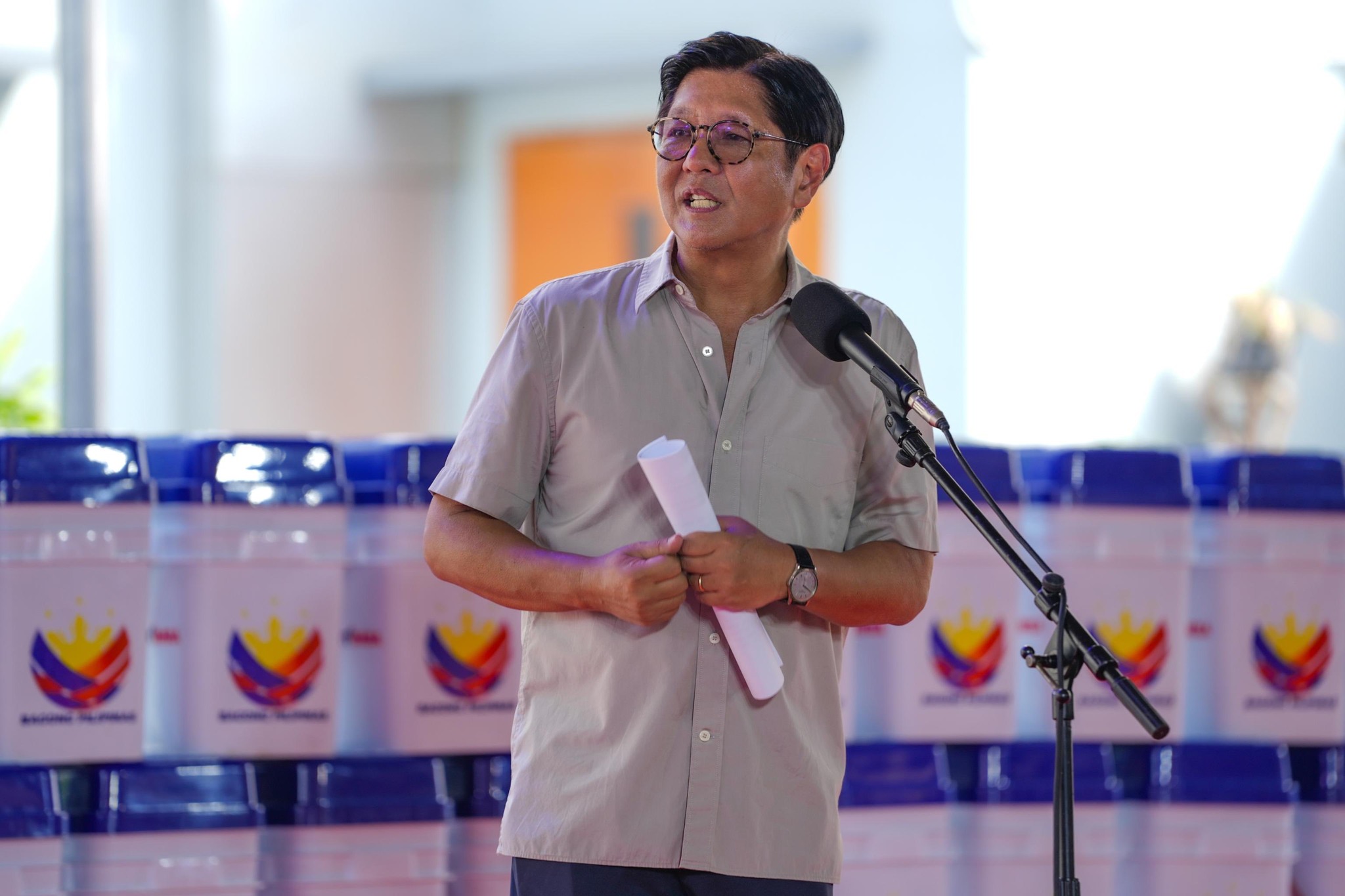

President Ferdinand Marcos Jr. on Friday framed artificial intelligence as a development tool anchored on education reform and Southeast Asian cooperation, outlining how the Philippines intends to integrate the technology into governance, learning, and workforce preparation.

Speaking at the launch of the Department of Education’s Accelerating Governance and Adaptive Pedagogy through Artificial Intelligence (AGAP.AI) at Quezon City Science High School, Marcos said the government is laying the groundwork for a national framework that positions AI as a driver of long-term economic readiness. “At the national level, we are leveraging AI as an engine for development. We are establishing the Philippine AI Program Framework for the future-proofing of our economy,” he said.
The framework, according to the president, centers on building core infrastructure such as high-performance computing systems while expanding skills training for both workers and educators. He said public investment in research and development is meant to ensure that AI adoption remains beneficial and ethically grounded. “Through investment in AI research and development, we ensure that this technology delivers real benefits while remaining ethical and responsible,” Marcos said.
In his capacity as chair of the Association of Southeast Asian Nations this year, Marcos said the Philippines is advocating for a coordinated, human-centered AI ecosystem across the region. He identified finance, agriculture, health care, manufacturing, and education as priority sectors for collaboration. “Indeed, we are taking the lead in building an innovative environment for Filipinos, as well as for our Asean brothers and sisters,” he said.
Marcos also addressed students directly, describing the current generation as uniquely positioned to access powerful digital tools. While acknowledging AI’s capacity to handle complex problems, he cautioned against treating it as a substitute for human effort. “You have in your hands an extraordinarily powerful tool. But you must use it to help you think and support your learning. It should never replace your drive, your creativity, and your grit to learn about our world,” he said.

The president said the Department of Education, with support from the Asean Foundation and Google.org, will implement a nationwide AI skills training initiative expected to reach as many as 1.5 million Filipinos, including students, teachers, and parents. The courses will cover responsible use of AI, identifying misinformation, privacy and security concerns, and basic AI literacy.
Education Secretary Sonny Angara said AGAP.AI is anchored on a national policy direction aligned with the “Bagong Pilipinas” agenda and the Quality Basic Education Development Plan. “So we can strengthen teaching, improve governance, and bring better results to the entire education system that is for humans, for teachers, and for children. This is how we build a future-ready Philippines and a future-ready Asean,” Angara said.
Students and teachers at the pilot school pointed to practical classroom applications. Senior high school student Brianna Untal said the program supports her engineering-related track. “It is a huge step toward machine learning and other programming methods,” she said. Teacher Milanie Cayanan said AI-supported strategies could expand learning beyond traditional instruction. “It can give us more strategies, like gamification, when it comes to our lessons. Because this also entertains the students, it would be more interactive,” she said.
During the event, the Office of the President donated two units of Starlink satellite internet service and a Smartboard interactive touchscreen to Quezon City Science High School, while Marcos, Angara, and Joy Belmonte toured exhibits by local and international partners showcasing technology applications for education and governance.
