



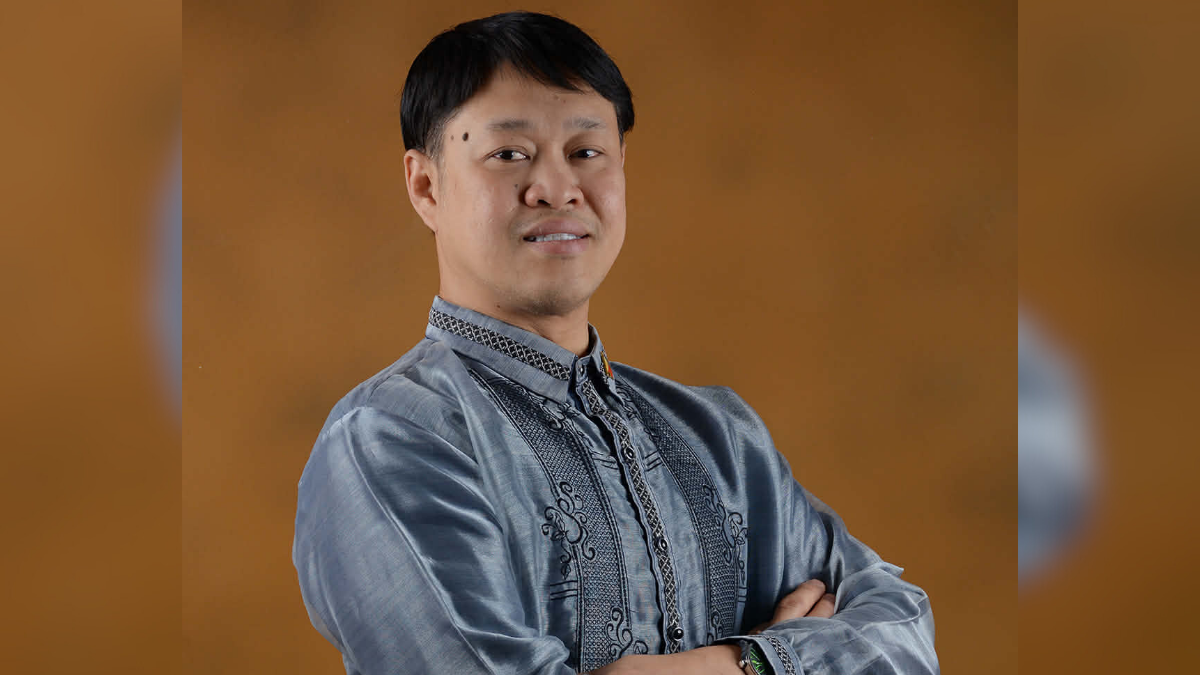

For many overseas Filipinos, the days blur into a familiar rhythm of long hours, remittances sent home, and quiet personal sacrifices made far from the people who know you best. Somewhere between survival and routine, a few manage to carve out a different path—one that slowly reshapes not just their own lives, but how the world sees Filipino talent.

Michael Palic Conjusta has spent nearly two decades in Qatar turning blank walls into statements, and ordinary public spaces into places of meaning. A painter, graffiti artist, and muralist by profession, his journey mirrors that of many OFWs—except his canvas kept getting bigger, his audience wider, and the stakes far higher.
From overseas worker to global stage
Michael arrived in Qatar carrying more than brushes and paint. Like many Filipinos abroad, he carried ambition tempered by reality. He built his career patiently, honing his craft while navigating the demands of overseas work. Over time, his artistry moved beyond interiors and private commissions into something more public, more daring.
That steady progression reached an unmistakable turning point when he was selected as an official graffiti artist for the FIFA World Cup Qatar 2022. Over the course of the tournament, Michael produced 21 graffiti paintings displayed across the country—works that were seen not just by football fans, but by millions following the event globally.
For a Filipino artist, it was unprecedented. And it didn’t stop there. His work would later appear at the FIFA Intercontinental Cup, AFC Asian Cup 2024, and the French Super Cup 2024, placing Filipino creativity alongside some of the world’s most watched sporting events.
Unlike many artists who remain within gallery walls, Michael brought Filipino artistry into public spaces that demanded both speed and scale. His murals were not quiet pieces to be contemplated in silence—they were meant to be seen, photographed, shared, and remembered.
Art that meets people where they are
During the World Cup, Michael painted live murals outside stadiums, often working daily in front of crowds from every corner of the world. Fans stopped to watch, to ask questions, to take photos. Some told him his work made them happy. Others shared images of his murals online, tagging locations they had only known through television before.
The feedback stayed with him. It was, as he recalled, something that “made his heart full.” What he created wasn’t just decoration—it became part of people’s memories of the tournament itself. Even after the event, messages continued to arrive from outside Qatar, from strangers who had encountered his work briefly but felt compelled to reach out.

Coverage from local media, including The Peninsula Newspaper and online platforms in Qatar, helped amplify that moment, but the impact went beyond headlines. It was proof that art could connect across cultures without translation.
Breaking barriers, one first at a time
Michael’s influence hasn’t been limited to sporting events. In 2019, he became the first Filipino artist to mount a solo exhibition at the Qatar National Library, a milestone that quietly but firmly broke new ground for Filipino creatives in the Middle East.
He has also been a consistent awardee at the Qatar International Art Festival, earning distinctions such as Live Painting Excellence Award, Best Artistic Fashion Show Award, and Best Creative Designer across multiple years. The recognition spoke not only to talent, but to staying power—an ability to remain relevant and respected in a competitive international art scene.
Recognition from home followed. One of his paintings was selected for the Philippine Department of Foreign Affairs’ 2023 official calendar, and he was named a 2023 Overseas Filipino Awardee for his contributions to Filipino culture abroad. More recently, he received one of the country’s highest acknowledgments for overseas Filipinos—being honored as 2025 Bagong Bayani for Culture and the Arts at Malacañang Palace.
Representing more than himself
Despite the accolades, Michael remains grounded in why his work matters.
Through embassy-led exhibitions, national celebrations, church activities, and nonprofit initiatives, he continues to give back—often quietly, without fanfare. His art becomes a form of cultural diplomacy, strengthening Filipino visibility while inspiring younger creatives who wonder if there’s room for them on the world stage.
“Through my art, I aim to bring Filipino identity, values, and excellence to global platforms—transforming public spaces into stories of culture, hope, and unity,” he said. “My work matters because it represents not only my personal journey, but the shared aspirations of Overseas Filipinos—to be seen, to be heard, and to make a positive impact wherever we are in the world.”
In a landscape where many OFWs are defined solely by the jobs they hold, Michael Palic Conjusta stands as a reminder that representation can take many forms—and that sometimes, the most powerful statements are painted in plain sight.
