



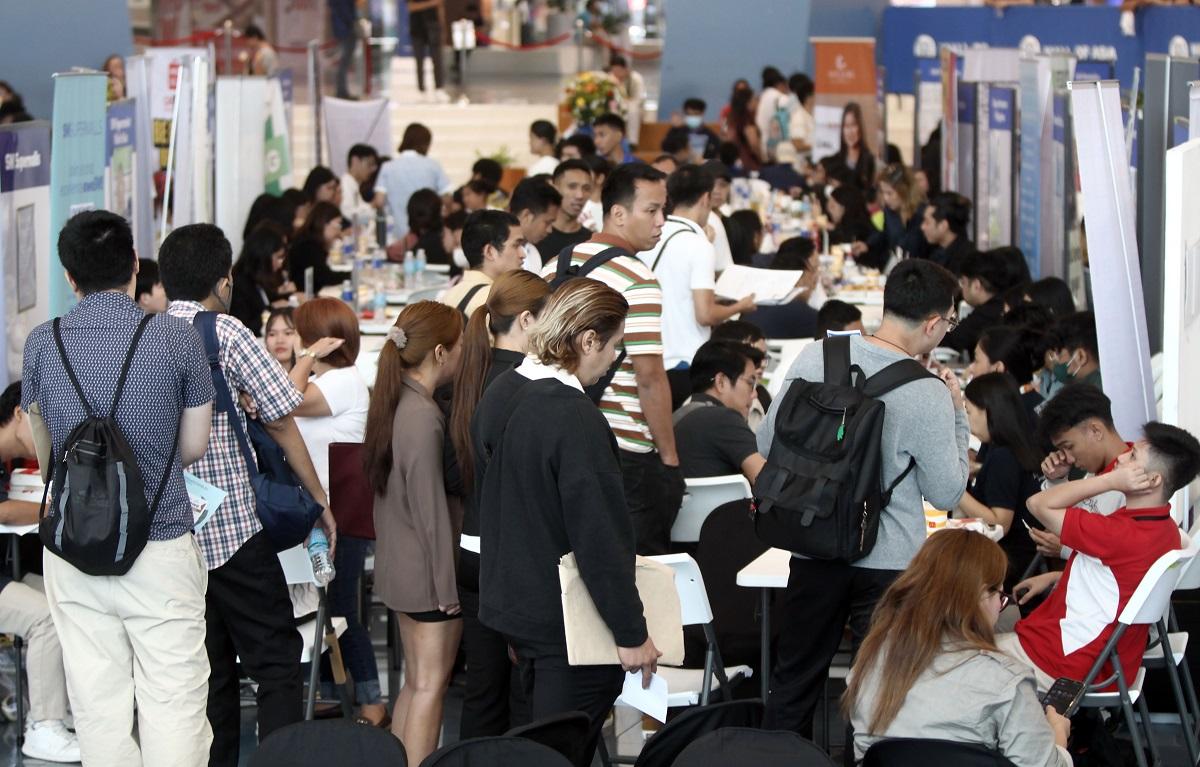

The Philippine labor market showed modest improvement in November 2025, with fewer Filipinos counted as unemployed even as participation in the workforce edged higher, based on the latest Labor Force Survey released by the Philippine Statistics Authority.

Data presented by National Statistician and PSA chief Claire Dennis Mapa indicated that 2.25 million Filipinos aged 15 and above were without work during the month, down from 2.54 million in October. The figure, however, remained above the 1.66 million recorded in November 2024.
With 51.52 million individuals actively participating in the labor force, the unemployment rate settled at 4.4 percent, improving from the 5 percent logged a month earlier. This translates to roughly 44 out of every 1,000 labor force participants having no job or livelihood at the time of the survey.
Employment levels also rose on a month-on-month basis, reaching 49.26 million from 48.62 million in October. Compared with the same month last year, however, total employment was slightly lower than the 49.54 million registered in November 2024, bringing the employment rate to 95.6 percent. This was higher than October’s 95 percent but below the 96.8 percent posted a year earlier.
Mapa attributed the mixed performance to external shocks, noting that “the strong typhoons that we experienced in the month of November” tempered labor gains, even as the holiday season typically drives short-term hiring.
Several industries posted notable employment gains during the month. Other service activities added 621,000 workers, followed by wholesale and retail trade with 356,000, education with 173,000, construction with 143,000, and accommodation and food service activities with 90,000. On a year-on-year basis, the largest increases were seen in public administration and defense, education, administrative and support service activities, construction, and information and communication.

At the same time, employment declined sharply in sectors vulnerable to climate and demand shocks. Agriculture and forestry shed 517,000 jobs month-on-month, while public administration and defense, fishing and aquaculture, financial and insurance activities, and manufacturing also recorded losses. Compared with November 2024, accommodation and food service activities, wholesale and retail trade, other service activities, manufacturing, and fishing and aquaculture registered the biggest employment contractions.
Wage and salary workers continued to dominate the workforce, accounting for 63.4 percent of all employed persons. Self-employed individuals without paid employees made up 27.8 percent, unpaid family workers 7.2 percent, and employers in family-operated enterprises 1.6 percent. Most wage and salary workers were in private establishments, representing 77.8 percent of that group, while those in government or government-controlled corporations comprised 14.8 percent.
The labor force itself expanded slightly, rising from 51.16 million in October and 51.2 million in November last year. In a separate assessment, the Department of Economy, Planning, and Development said severe typhoons disrupted economic activity across several industries, affecting an estimated 873,000 workers, particularly in accommodation and food services, trade, other services, and fishing and aquaculture.
DEPDev Secretary Arsenio Balisacan said the government is focusing on workforce resilience and adaptability. “The government is prioritizing investments in skills development, lifelong learning, and social protection systems to enable workers to transition across sectors and withstand economic shocks. Strengthening workforce competitiveness is one of the key elements to attract investments that generate quality jobs,” he said.
Job quality indicators also improved, with the underemployment rate dropping to 10.4 percent from 12 percent in October and 10.8 percent a year earlier. This placed the number of underemployed Filipinos at 5.11 million out of the total employed population.
