



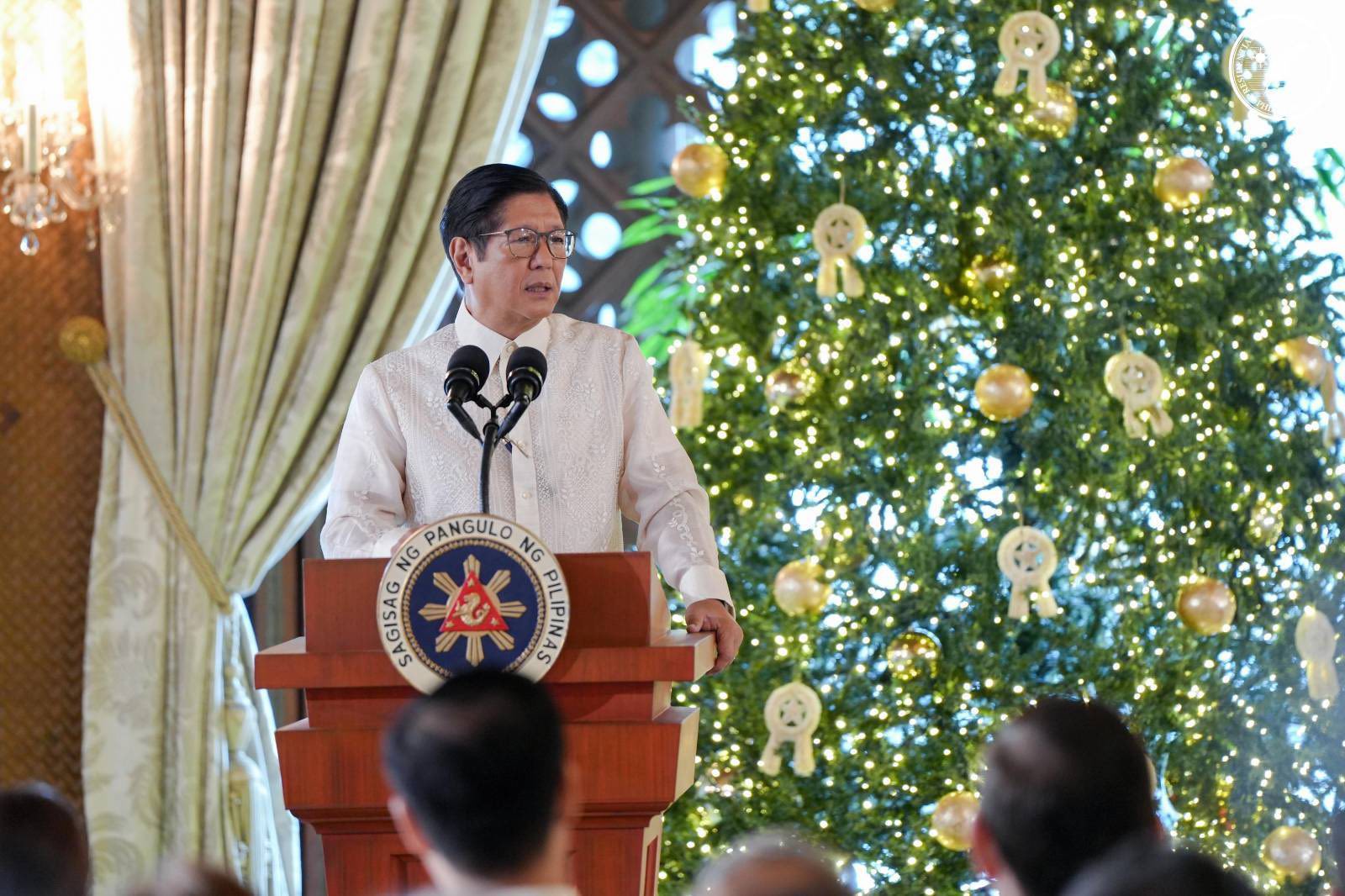

President Ferdinand Marcos Jr. cut almost P92.5 billion worth of unprogrammed appropriations from the 2026 national budget, framing the move as a step to tighten fiscal discipline and narrow the use of funds that are not immediately tied to guaranteed revenue sources.

Speaking after signing the P6.7-trillion spending measure at Malacañang on Monday, Marcos said he ordered deeper reductions to unprogrammed appropriations than what lawmakers initially proposed, bringing the level to its lowest point since 2019. He stressed that the goal was to confine such funds strictly to essential and clearly justified needs.
The president explained that the veto covered multiple unprogrammed items and their accompanying special provisions, which he said lacked sufficient justification under the standards of national interest. He also instructed government departments and agencies to exercise caution in managing public resources to ensure that public services are not disrupted despite the cuts.
Marcos rejected assertions that unprogrammed appropriations function as unchecked spending authority, saying their use would remain subject to safeguards. He added that releases would only be allowed once specific conditions are met and after thorough validation, warning against treating the remaining funds as a substitute for discretionary allocations.

He further committed to public disclosure of releases charged to unprogrammed appropriations, including details on funding sources and the intended purposes, and said these would be aligned with the administration’s development priorities.
Following the veto, Executive Secretary Ralph Recto told reporters that only three items remain under unprogrammed appropriations: P97.305 billion for support to foreign-assisted projects, P50 billion for the Revised Armed Forces of the Philippines Modernization Program, and P3.6 billion for the Risk Management Program.
Recto said the veto removed funding for a wide range of items, including budgetary support to government-owned and controlled corporations, fiscal support for automotive industry programs such as CARS and RACE, insurance for government assets, prior-year local government unit shares, personnel services requirements already covered elsewhere in the budget, and the government counterpart for foreign-assisted projects. He also identified the removal of allocations for the SAGIP program, the Nampedai property, public health emergency benefits, and compensation for victims of the Marawi siege.
The nearly P92.5-billion vetoed amount represents less than half of the P319 billion that budget watchdog Social Watch Philippines had urged the president to strike out from the ratified measure, citing what it described as highly questionable items. The group flagged large increases in infrastructure programs under the Department of Public Works and Highways, confidential funds across several agencies, and sizable allocations for social protection and assistance programs, including medical aid under the Department of Health and livelihood assistance under the labor department.
