




Instead of long queues and paper clearances, nearly half a million overseas Filipino workers moved through digital channels in 2025, a shift the Department of Migrant Workers (DMW) described as a cornerstone of its protection strategy for Filipinos abroad.

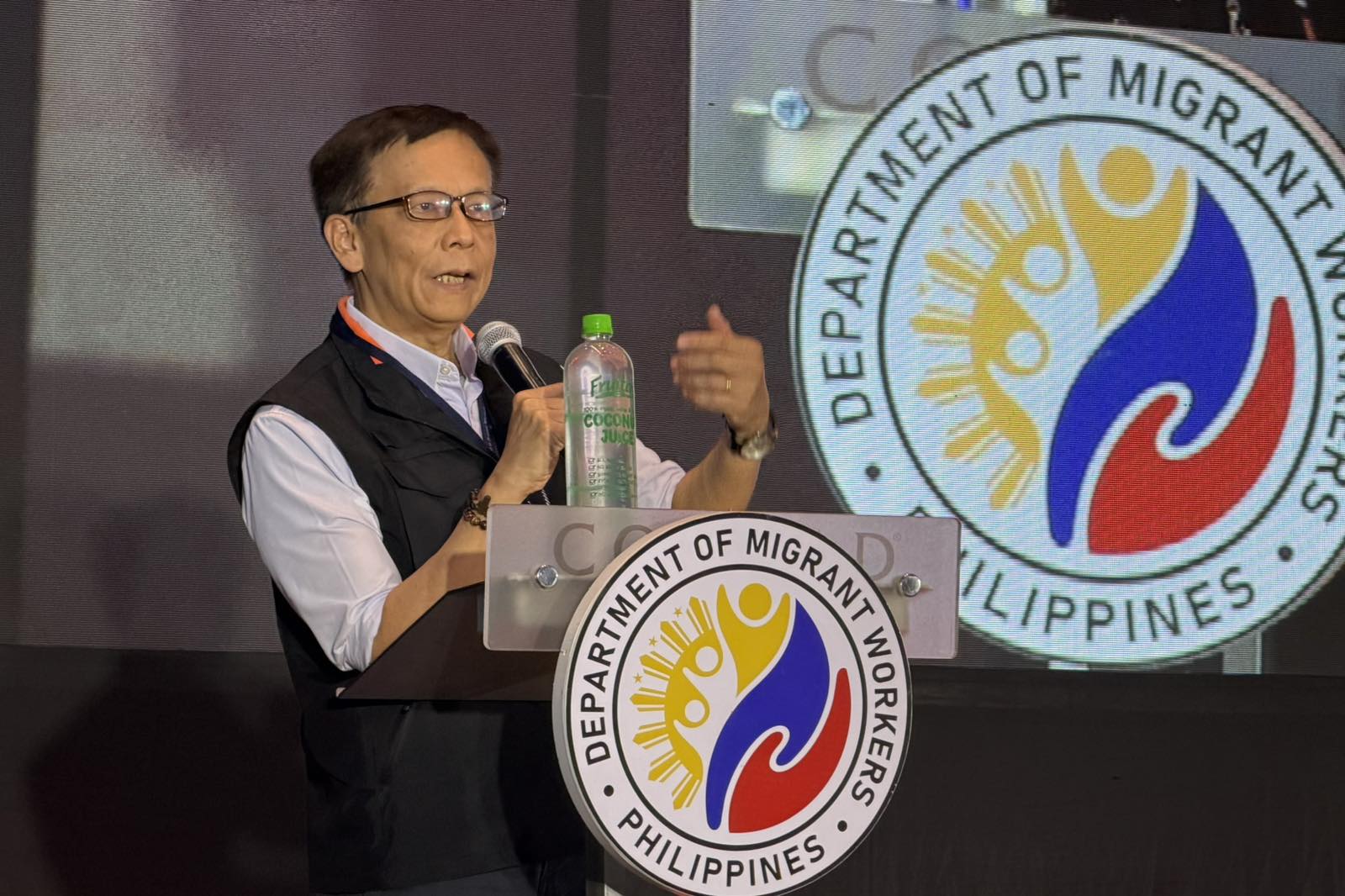
Migrant Workers Secretary Hans Leo Cacdac said the department’s direction throughout the year followed President Ferdinand R. Marcos Jr.’s instruction to prioritize ease of access for workers, summarizing the approach as “red carpet, not red tape.” Central to that effort was the processing of 514,966 e-Travel and OFW Pass transactions, significantly reducing dependence on the decades-old Overseas Employment Certificate system.
“The system allows workers to travel faster while ensuring proper documentation and compliance,” Cacdac said, adding that airlines are expected to fully recognize digital travel documents by 2026.
Beyond digital services, the department expanded its labor diplomacy footprint. In 2025, the Philippines entered into 10 new bilateral labor agreements, raising the total to 72—now the highest number held by any labor-sending country. According to Cacdac, these agreements serve as the legal foundation for workplace protections, access to justice, and improved safety standards for Filipinos overseas.
“These agreements are the backbone of our labor diplomacy,” he said, emphasizing their role in translating policy commitments into enforceable worker safeguards.
On the ground, DMW reported a sharp increase in the use of its physical facilities. OFW lounges at Ninoy Aquino International Airport Terminals 1 and 3 recorded 856,551 users, while seafarers’ hubs served 184,844 maritime workers. An additional 179,450 OFWs accessed services through 23 Migrants’ Brews facilities nationwide.
Healthcare services also expanded during the year. The OFW Hospital in San Fernando, Pampanga was upgraded from a Level 1 to a Level 2 facility, adding an intensive care unit and MRI capabilities. The hospital assisted more than 115,000 beneficiaries and carried out over 237,000 medical procedures and diagnostic tests. “This shows our commitment to safeguarding the health and welfare of our workers abroad and their families,” Cacdac said.
Emergency assistance remained a major focus, with the Aksyon (Agarang Kalinga at Saklolo para sa mga OFWs na Nangangailangan) Fund reaching 98 percent utilization. The fund supported 160,769 OFWs and family members through financial aid, medical care, legal assistance, and repatriation.
“Aksyon Fund was a lot better in terms of utilization for 2025. We were at 49 percent Aksyon Fund utilization in 2023, 59 percent in 2024, and the good news is, yung na-carry over na fund from 2024, two years kasi yan (the fund that was carried over from 2024, that’s two years), the 2024 unutilized fund, and the 2025 budget for the Aksyon Fund combined, 98 percent of it. So, we hit our stride with the action plan,” Cacdac said.

“Our goal is 100 percent utilization next year. Every worker in need should get help immediately,” he added.
The fund was mobilized in response to multiple international emergencies, including conflicts involving Hamas and Israel, Israel and Iran, and Sudan; earthquakes in Turkiye, Taiwan, Myanmar, and Thailand; flooding in the UAE; mass layoffs affecting Filipino workers in New Zealand; arrests of OFWs during political rallies in Qatar; cases involving illegal recruitment in Myanmar scam hubs; and a fatal fire in Hong Kong’s Tai Po district.
Enforcement efforts also intensified. The department shut down 32 illegal recruitment establishments in 2025, more than double the number recorded the previous year. Six convictions were secured, while 25 individuals linked to scam hubs were arrested or prosecuted.
“This is a record-breaking year for enforcement. Illegal recruiters and traffickers will face justice,” Cacdac said, describing the strategy as a balance between victim assistance and criminal accountability.
Legal support overseas was strengthened through the deployment of 25 DMW-engaged lawyers who handled active cases throughout the year. Their work included securing the commutation of two death sentences in Saudi Arabia, monitoring high-profile cases in Jordan and Kuwait, and pursuing civil claims for the families of slain OFWs, including those of Mary Grace Santos in Amman, Jordan, and Jullebee Ranara in Kuwait.
For household service workers, new protective measures were introduced. Minimum monthly salaries were raised from USD 400 to USD 500, and a “know-your-employer” video interview system is scheduled for full implementation in 2026 to ensure workers are informed about their employers prior to deployment. The department also expanded its “Kamusta Kabayan” platform, which enables OFWs to report concerns and access assistance in real time from anywhere in the world.
“Hindi nag-iisa ang OFW (Our OFWs are not alone). Our mandate is to ensure every worker abroad is protected, supported, and treated with dignity,” Cacdac said.
Reintegration support rounded out the department’s 2025 initiatives. As of October, DMW recorded 52,745 OFWs benefiting from various reintegration programs, including livelihood assistance, financial literacy and business training, and job placement initiatives. Among these, 656 returning teachers secured plantilla positions in the education sector through the “Sa ‘Pinas, Ikaw ang Ma’am/Sir” program.
