



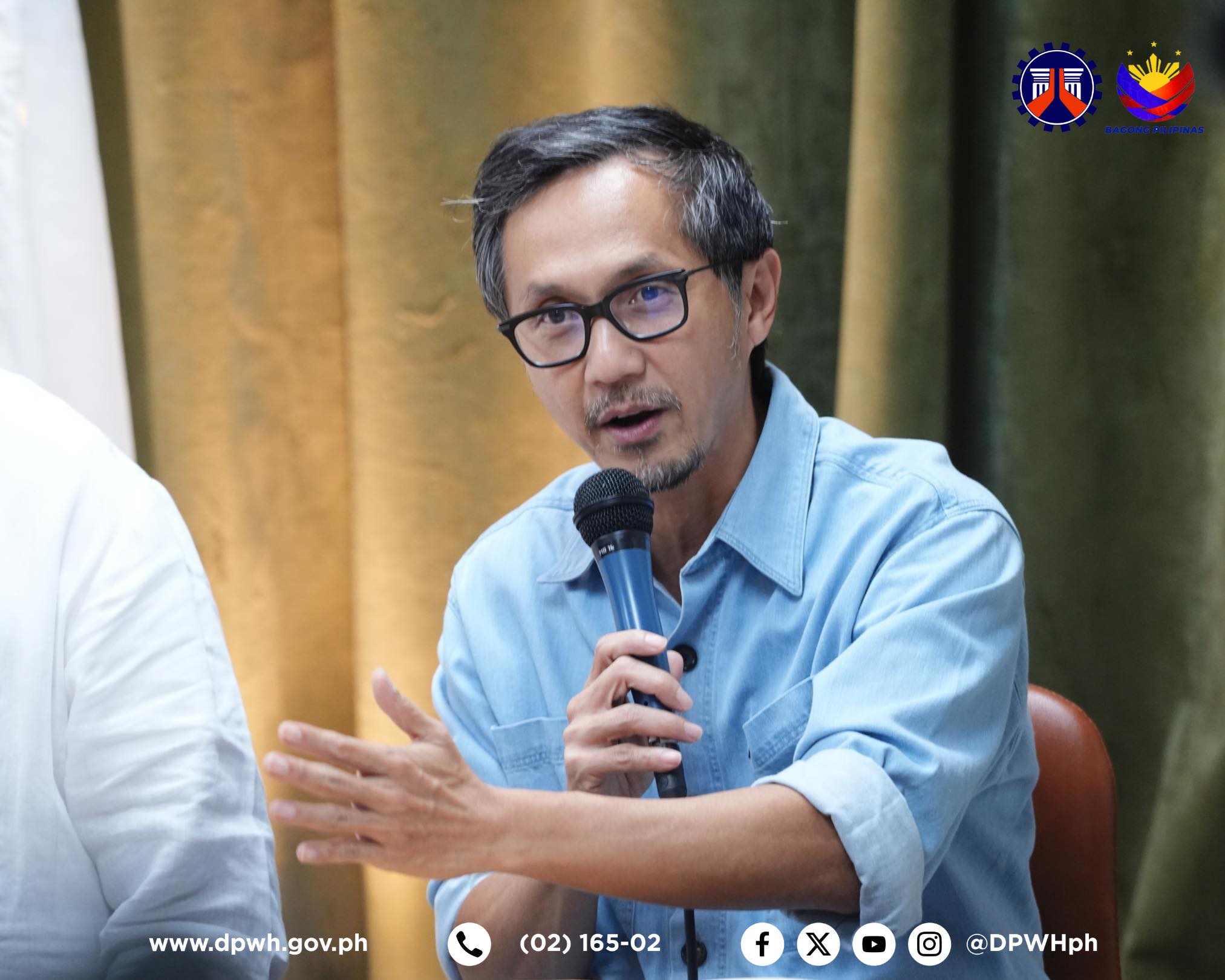

Public Works Secretary Vince Dizon on Tuesday pushed back against accusations that he was involved in alleged budget insertions for flood control projects, dismissing the claims as unfounded and malicious.

In a statement issued by the Department of Public Works and Highways (DPWH), the agency said Dizon “categorically denies the baseless and malicious allegations” raised by Batangas Rep. Leandro Leviste, who has publicly linked the secretary to supposed “insertions” or “allocables” in the national budget.
Leviste earlier alleged that Dizon had a hand in questionable infrastructure funding coursed through the Bases Conversion and Development Authority (BCDA), the state-owned firm that Dizon previously led from 2016 to 2021 during the Duterte administration. The lawmaker claimed the projects were connected to irregular budget practices.
The BCDA separately rejected the accusations, stating that it has no discretionary funds and does not engage in budget insertions. The agency said claims that such funds exist within BCDA projects are false and unsupported by evidence. It added that its undertakings are funded only through approved government programs, released via the National Treasury, implemented under the General Appropriations Act, and subject to procurement laws and Commission on Audit regulations.
According to the BCDA, it welcomes any investigation and has opened its records to oversight bodies.
The DPWH, meanwhile, questioned the timing of Leviste’s allegations, noting that agency staff reported the lawmaker had “forcefully and illegally” taken documents from the office of the late Public Works Undersecretary Maria Catalina Cabral. The files allegedly contain information on infrastructure allocations.
Dizon has denied authenticating the documents now in Leviste’s possession, saying he had never seen them. Following this, Malacañang called for an investigation into how the lawmaker obtained the so-called Cabral files.

The Office of the Ombudsman has since moved to examine the documents held by Leviste.
Leviste began publicly releasing information from the files on Dec. 24, days after Cabral died following a fall into a ravine along Kennon Road in Tuba, Benguet. By Dec. 25, he had disclosed data purportedly showing DPWH budget allocations from 2023 to 2026 totaling about P3.5 trillion.
The released summaries indicated that Central Luzon received the largest regional allocation at P406.9 billion, followed by Calabarzon with P341.8 billion and Bicol with P272.3 billion. The same data also showed unprogrammed appropriations for 2023 and 2024 amounting to P213.8 billion.
An anti-corruption coalition later urged Leviste to make the complete set of Cabral files public so they could be evaluated for possible legal action against officials and contractors implicated in alleged anomalies involving flood control and other infrastructure projects.
David San Juan, convener of the Taumbayan Ayaw sa Magnanakaw at Abusado Network Alliance (Tama Na), said any documents related to corruption should be fully disclosed if they are to serve as credible evidence for filing cases. He also called on the government to secure Cabral’s records, particularly those that could substantiate corruption claims.
Separately, the DPWH confirmed that on Dec. 23 it turned over Cabral’s office computer and numerous documents to the Office of the Ombudsman, including records spanning a decade that contained requests linked to the programming of the National Expenditure Program.
The Ombudsman has taken steps to safeguard the materials, which include documents connected to budget preparation and infrastructure project requests, as part of its ongoing review.
