



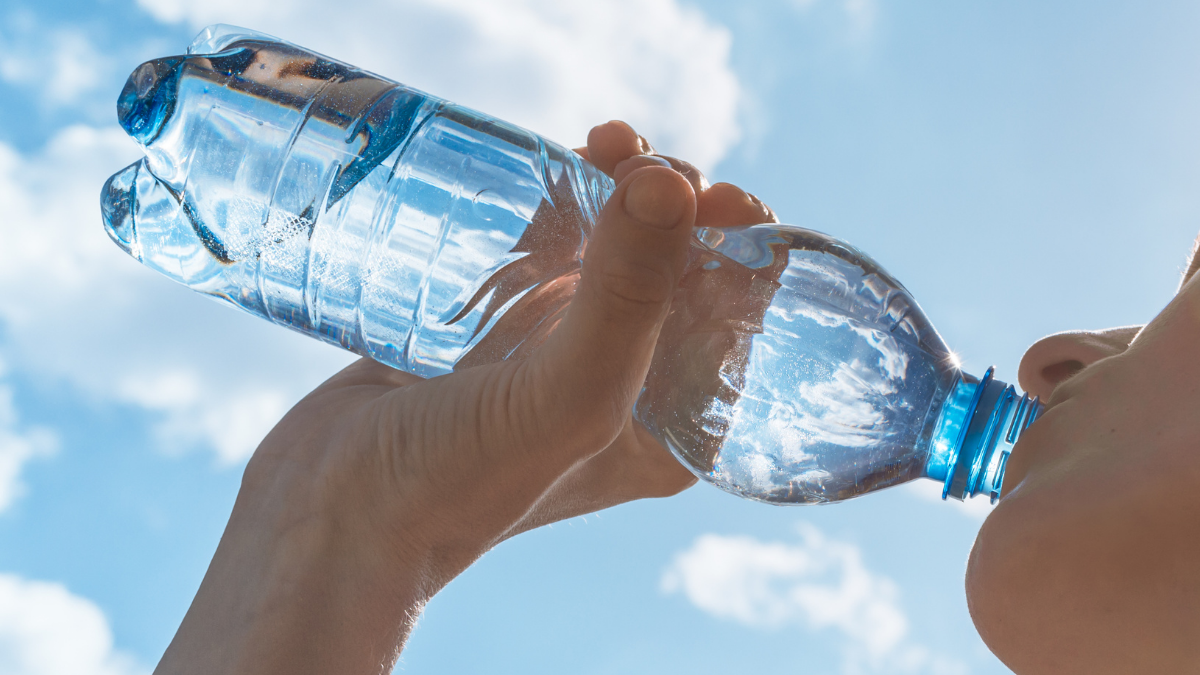

Efforts to curb plastic pollution are accelerating worldwide as scientists continue to document how microscopic plastic fragments are entering the human body through everyday exposure, including drinking water. A new academic review suggests that bottled water is a major contributor to this growing intake.

Researchers from Concordia University in Montreal examined more than 140 existing scientific studies to estimate how many microplastic particles people consume each year. Their analysis indicates that the average person ingests between 39,000 and 52,000 microplastic particles annually, depending on diet and environment. For individuals who primarily drink bottled water, that number rises sharply, with an estimated additional 90,000 particles consumed every year compared with those who rely on tap water.
Microplastics are defined as plastic fragments ranging from one micron to five millimetres in size, while even smaller nanoplastics measure less than one micron. Most of these particles are invisible to the naked eye, making them difficult to detect without specialised equipment.
According to the review, bottled water becomes contaminated at multiple points long before it is consumed. Plastic particles can be released during bottle production, repeated handling, long-term storage, transportation, and gradual degradation over time. Many bottles are made from lower-grade plastics that shed particles easily, a process that is intensified by exposure to sunlight and temperature fluctuations.
Unlike plastics that enter the body indirectly through seafood or other foods, microplastics in bottled water are consumed straight from the source, without passing through the food chain.
The review also revisited a widely cited 2018 investigation by researchers from the State University of New York at Fredonia, which analysed bottled water sold across 16 countries. That study reported large differences between brands, with some samples containing hundreds or even thousands of microplastic particles per litre. Among the highest recorded averages were Nestlé Pure Life and India-based Bisleri, with concentrations ranging from 826 to 2,277 particles per litre.

Health concerns linked to microplastic exposure remain an active area of research. Existing evidence suggests that once inside the body, micro- and nanoplastics can cross biological barriers, circulate in the bloodstream, and reach organs. Scientists have associated this exposure with inflammation, cellular stress, hormonal disruption, reproductive issues, neurological effects, and increased cancer risk, though they caution that definitive long-term conclusions are limited by gaps in data.
One of the major challenges identified in the review is measurement itself. Different detection methods vary widely in capability. Some techniques can identify extremely small particles but cannot determine what they are made of, while others can analyse chemical composition but fail to capture the smallest plastics. The most precise tools are costly and not widely available, slowing progress toward standardised testing.
The researchers emphasise that bottled water is not inherently dangerous in the short term but raise concerns about long-term, repeated exposure. “Drinking water from plastic bottles is fine in an emergency, but it is not something that should be used in daily life. People need to understand that the issue is not acute toxicity, it is chronic toxicity,” said Sarah Sajedi, lead author of the review published in the Journal of Hazardous Materials, in remarks shared by Concordia University.
As scientific understanding continues to evolve, governments are moving ahead with broader environmental controls. In the UAE, authorities have announced an expanded ban on single-use plastics beginning January 1, 2026. The measures will prohibit the import, manufacture, and trade of items such as beverage cups and lids, plastic cutlery and chopsticks, plates, straws, drink stirrers, and food containers made from Styrofoam.
Dubai Municipality will roll out the final phase of its single-use plastic restrictions on the same date, extending earlier bans that already cover plastic bags, cups, plates, containers, stirrers, cotton buds, table covers, and straws.
