



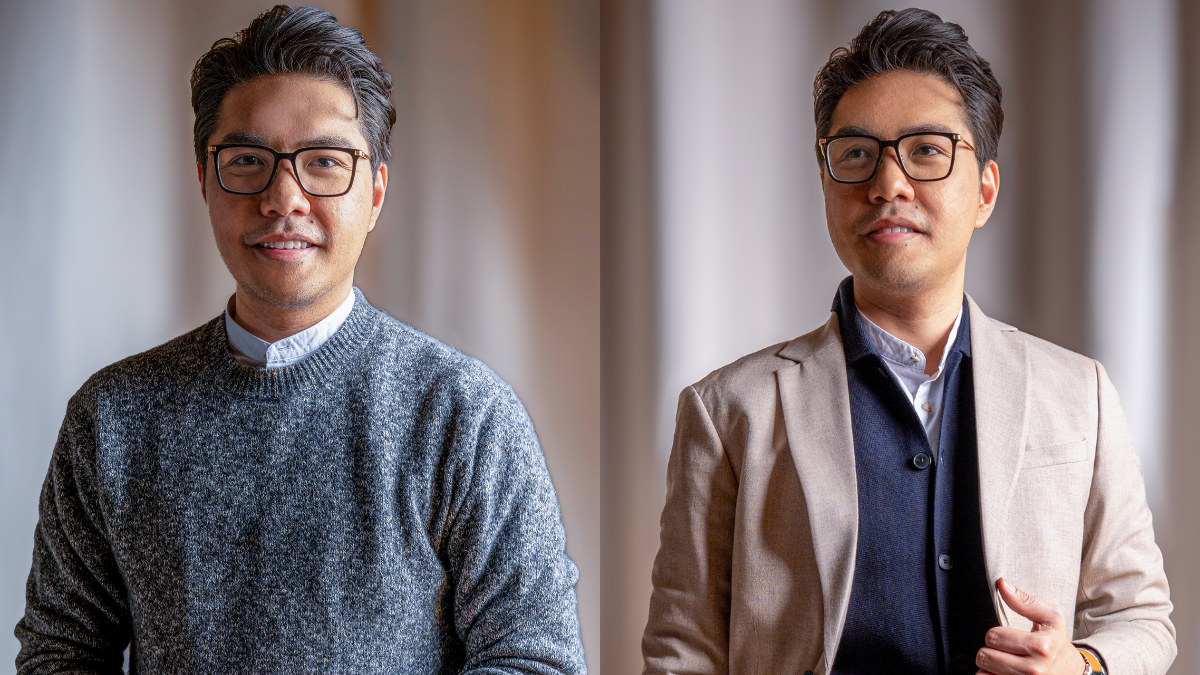

There was a moment when everything he had built seemed to disappear at once, leaving only the decision of whether to stand up again or stop altogether. Mike Quilao Panghulan would later find himself standing on a stage in Riyadh, recognized among global technology leaders—but that scene only makes sense when viewed against the years of doubt, loss, and quiet persistence that came before it.

A few weeks ago, we reported on Panghulan being named among the Tech 100 – Pioneers of the Digital Age (Saudi Arabia Edition), a distinction that made him the only Filipino honoree at the Intelligent Data, AI & Automation Summit organized by Capstone. The recognition marked a professional peak, but it also opened a deeper question: how does someone arrive at that point after nearly losing everything along the way?
Finding direction by confronting weakness
Long before project management became his field, Panghulan was already drawn to the idea of seeing things through—from start to finish, with intention and structure. “I’ve always loved taking a task from start to finish,” he shared, noting that the same satisfaction he once felt assembling a simple IKEA cabinet would later echo in his role leading complex IT projects across the GCC.

The path to technology, however, was not straightforward. His mother hoped he would pursue nursing, a more traditional and stable route. Panghulan chose IT instead, driven by curiosity rather than certainty. That decision quickly tested him. “When I pursued IT, I realized I wasn’t good at programming,” he shared with TGFM. He struggled, leaned on classmates for help, and quietly questioned whether he had made the wrong choice.
Instead of ending his journey, that limitation redirected it. Panghulan began to notice where he naturally excelled—not in writing code, but in leading people, organizing workflows, and understanding how systems fit together. “I realized that my strength wasn’t writing codes, it was in leading people, organizing work, understanding the bigger picture, and turning ideas into reality,” he explained. Project management did not emerge as a backup plan; it became clarity. “Sometimes your weakness doesn’t stop you,” he reflected. “It redirects you to your true strength.”
The harsh reality of starting over abroad
By 2014, after five years in a corporate role in Makati, Panghulan made a decision familiar to many Filipinos: to try his luck overseas. Encouraged by a close friend, he moved to Dubai carrying optimism shaped by success stories he had heard so often back home.
What followed was far from that narrative.
“In my second year in the UAE, I became seriously ill and was partially paralyzed,” he recalled. He spent time in intensive care, lost his job, and soon faced legal complications tied to unemployment. For nearly a year, he was without stable work. At his lowest, he had no permanent place to stay and depended on the kindness of colleagues who opened their homes to him.
What made the experience heavier was the silence he chose to keep. Panghulan did not tell his family what was happening. “I didn’t want them to see me as a failure,” he said. The isolation took an emotional toll, pushing him into one of the darkest periods of his life—one marked by depression, fear, and the feeling that everything he had worked for had slipped away.
When he finally secured another job, the margin between survival and collapse was painfully thin. “I only had ten dirhams left in my pocket,” he said. Still, he showed up. The people who supported him during that time, he considers family to this day.
Rebuilding from the ground up
Looking back, Panghulan describes that chapter not as something that broke him, but as something that reshaped him. “That period became one of the strongest foundations of who I am today,” he said. The memory of how close he came to losing everything now drives his discipline and consistency.

Fear, once paralyzing, became fuel. “The fear of ever returning to that kind of hardship pushed me to give my best in everything I do,” he shared. Challenges stopped being signals to quit and became markers of growth instead. It was not an overnight recovery, but a steady rebuilding—professionally, emotionally, and personally.
“As long as you refuse to give up, progress will always come,” Panghulan said, a statement grounded less in optimism than in lived experience.
A milestone that carried more weight than a title
That long road gave new meaning to the moment when Panghulan’s name was called among global technology leaders in Saudi Arabia. Being recognized as the sole Filipino honoree was not just a professional validation—it was a reckoning with distance traveled.

“At 37, being acknowledged as an Assistant Vice President made it even more meaningful,” he said. The title itself mattered less than what it represented: years of perseverance that were invisible to most people in the room. “It reminded me that every struggle, every sacrifice, and every small step forward truly had a purpose.”
The milestone reaffirmed something he had come to believe deeply—that Filipinos can thrive, lead, and make a measurable impact on global stages traditionally dominated by others.
Staying in motion in an industry that never stops
Despite the recognition, Panghulan does not frame success as a destination. If anything, the pace of the technology sector reinforces the need to keep moving. “What I truly love about technology is that it never stays the same,” he said. Continuous learning, for him, is not optional—it is survival.
In his apartment, a framed reminder reads Keep Moving Forward. “It’s the first thing I see when I wake up and the last thing before I sleep,” he shared. The phrase took on meaning after everything he endured abroad, becoming a personal anchor in moments of doubt or fatigue.
“In this industry, the moment you become too comfortable, you risk being left behind,” he added. Curiosity and discipline, not accolades, are what keep him grounded.
A message shaped by experience, not theory
When asked what advice he would offer fellow Filipinos hoping to advance their careers in technology across the GCC, Panghulan kept it direct. “Do not settle for less than the growth and opportunities you know you deserve,” he said. Self-doubt, he believes, often limits people long before external barriers do.
For those in tech, his message is practical: stay ahead, keep learning, and apply what you know with confidence. Complacency, he warned, is the quiet enemy of progress. Beyond skills and strategy, he emphasized faith—not as an abstract idea, but as a stabilizing force during uncertainty. “I still believe that through everything I went through—the trials and the successes—none of this would have been possible without God’s grace and intervention,” Panghulan said.
“Trust that a higher being will guide your journey,” he added, “and lead you to the path you manifested.”
