



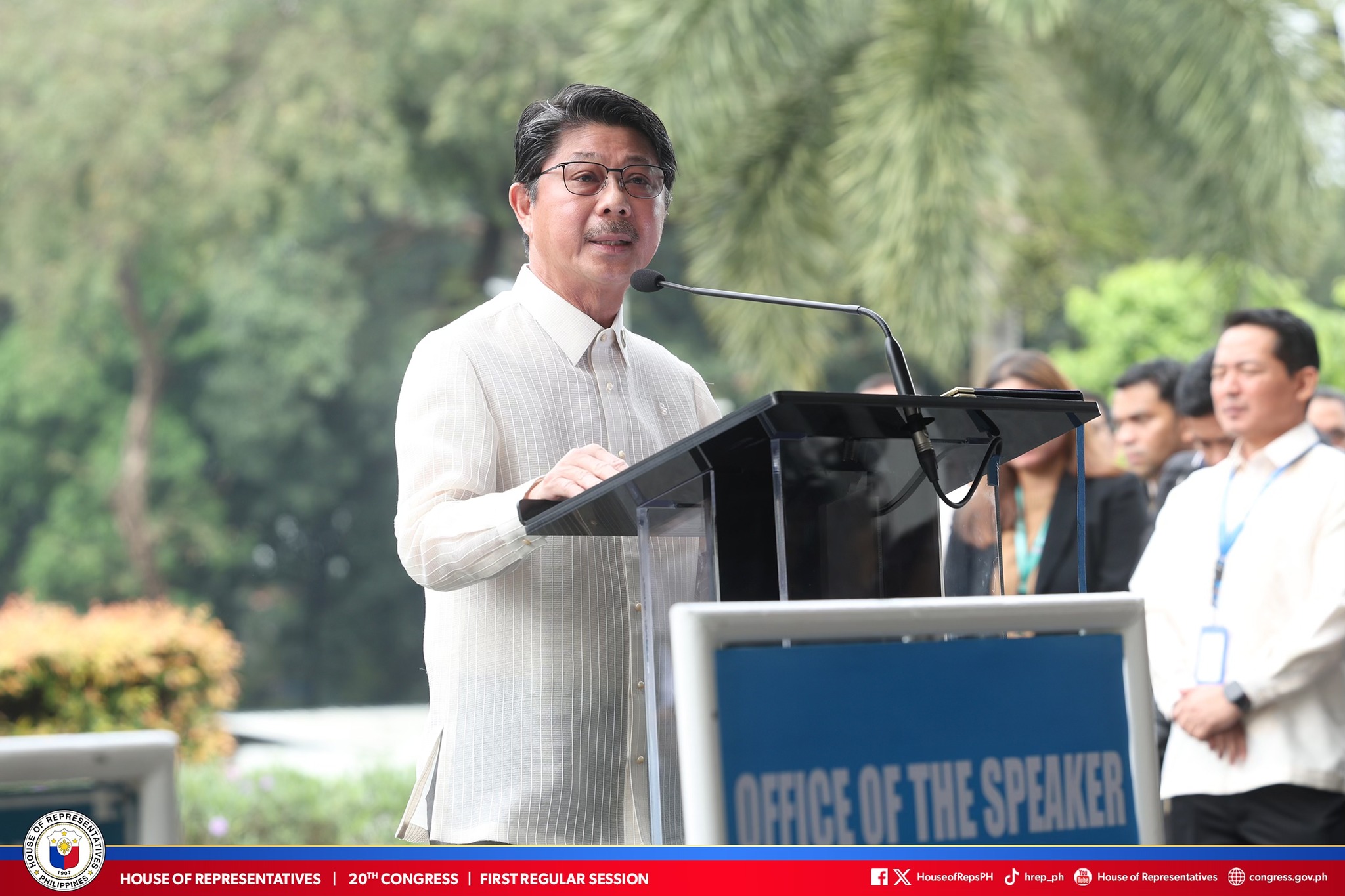

Amid renewed scrutiny of the proposed 2026 national budget, House Speaker Bojie Dy rejected allegations that lawmakers secretly padded billions of pesos into the Department of Public Works and Highways (DPWH) spending plan, calling such claims “inaccurate and misleading.”

The denial came after reports circulated alleging sharp increases in DPWH funding for several congressional districts once the House of Representatives approved its version of the 2026 General Appropriations Bill (GAB). One report highlighted that funding for Isabela’s 6th District, which Dy represents, rose from P1.1 billion to P3.8 billion in the House-approved measure, a jump of P2.7 billion that placed the district at the top of the list of alleged increases.
Without directly naming the report, Dy addressed the controversy by disputing the notion that lawmakers inserted new allocations during the budget process. He suggested that the narrative incorrectly focused on the House stage rather than the bicameral deliberations that follow.
“I just want to correct the circulating speculations. There is no insertion or secret addition of funds or provisions to the Bicameral Conference Committee,” Dy said in Filipino. “The truth is there is nothing illegal, nothing secret, and nothing deceptive going on on our side.”
Under established procedure, once the House approves its version of the GAB, the measure is transmitted to the Senate for review. The Senate then passes its own version, after which a Bicameral Conference Committee—made up of select members from both chambers—meets to reconcile differences between the two bills.
Dy argued that the bicameral process has a narrowly defined mandate and does not allow lawmakers to introduce new spending items that were not previously approved. He also pushed back against suggestions that House members manipulated allocations behind closed doors, insisting that the chamber’s budget work underwent collective scrutiny before reaching the bicam stage.

Reports cited by the Philippine Center for Investigative Journalism also pointed to other districts with substantial increases in DPWH funding. Nueva Ecija’s 1st District, represented by House appropriations committee chair Mikaela Suansing, reportedly saw its allocation rise from P1.6 billion to P3.4 billion in the House version, following an additional P1.8 billion. Sultan Kudarat’s 2nd District, represented by Suansing’s sister, Bella, was listed third, with funding reaching P3.9 billion after an alleged P1.6 billion increase.
All of these figures remain provisional, as the bicameral panel has yet to finalize the 2026 budget. Deliberations have been complicated by disagreements over whether to reinstate P45 billion in DPWH funds that the Senate removed from its version of the GAB.
Senate finance committee chair Win Gatchalian has indicated that the DPWH could face further reductions during bicameral talks, citing public backlash linked to a multi-billion-peso flood control controversy.
For 2026, the DPWH was initially proposed to receive P881.3 billion. The House reduced this by P255 billion by cutting locally funded flood control projects and reallocating the money to sectors such as education, health, and agriculture, bringing the department’s budget down to P625.7 billion. The Senate later approved an even lower figure of P568 billion.
Final authority over which allocations will stand rests with the bicameral committee, whose members may choose to reconcile the two versions through compromise or opt to impose additional cuts on the House-approved DPWH budget.
