



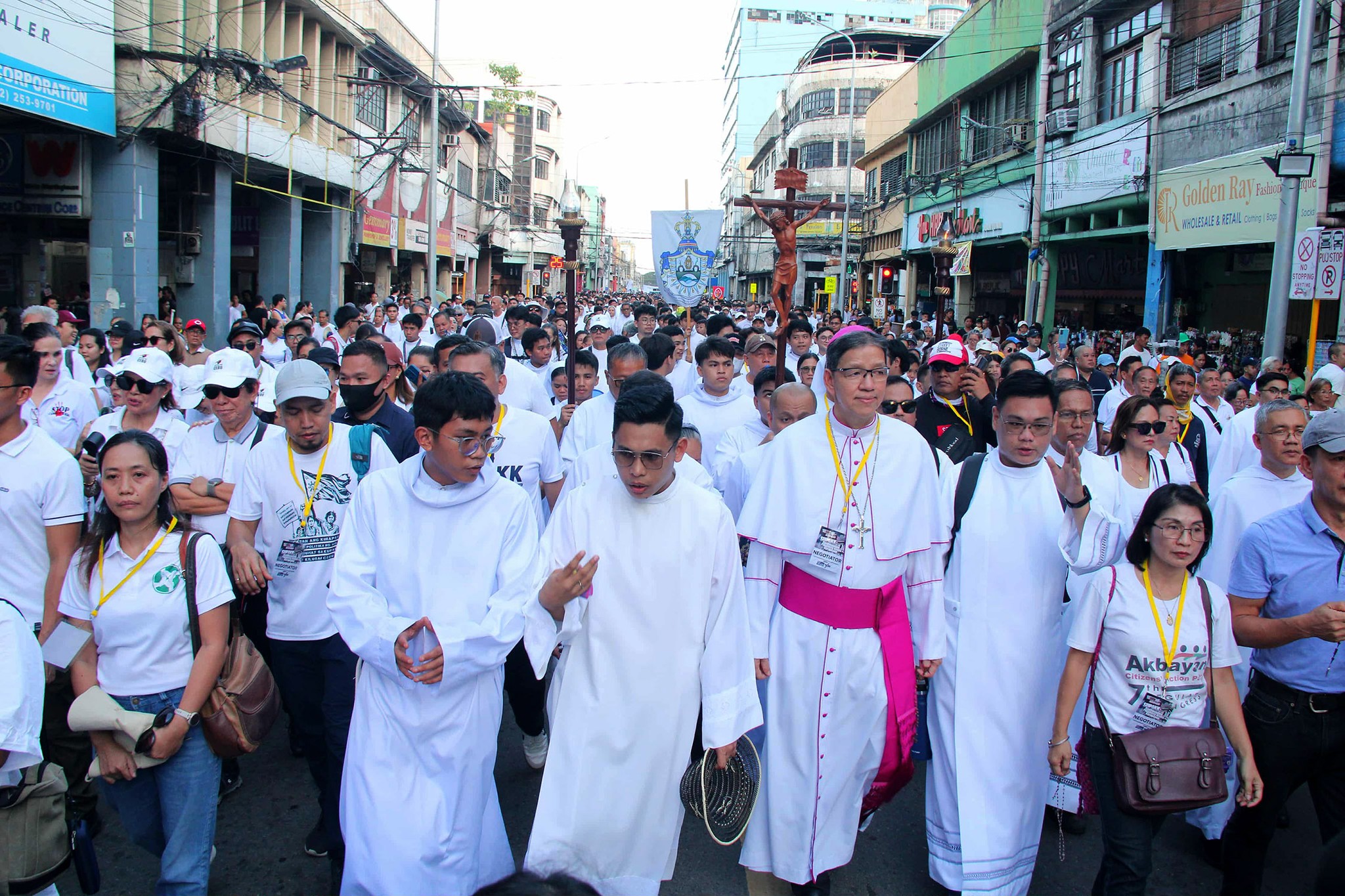

Concerns tied to politics and governance have consistently shaped the public voice of the Catholic Bishops’ Conference of the Philippines (CBCP) for more than eight decades, based on a comprehensive thematic review of its official statements.

The findings come from the Thematic and Statistical Study on CBCP reports and statements, released as Archbishop Gilbert A. Garcera assumed leadership of the bishops’ conference. The study examined 425 pastoral letters and statements issued between 1940 and 2025, including documents released by the Catholic Welfare Organization, the CBCP’s predecessor.
According to the analysis, issues categorized under “Political and Governance Issues” accounted for the largest share of CBCP communications, comprising 23.3 percent, or 99 letters, of the total reviewed. Matters related to “Social Justice and Human Rights” followed closely at 21.9 percent, or 93 statements.
“The prominence of these themes suggests that the CBCP has consistently engaged with the moral dimensions of public life, especially during periods of political instability or transition like the Martial Law era and elections during which the volume of statements in the category Political & Governance Issues have their peak,” the study stated.
“The CBCP has also shown a constant solidarity with marginalized communities, especially when debates on agrarian reform raged and when there are human rights crises,” it added.
Church officials said the research was circulated among bishops, clergy, religious communities, and lay members to illustrate how episcopal statements have addressed both ecclesial concerns and national issues. The document explained that the project “aims to show how the country’s bishops have guided both ecclesial identity and the national conscience, balancing the timeless doctrine of the Church with timely engagement with the world.”
In a circular dated December 15, 2025, Fr. Carmelo Arada Jr., chancellor of the Archdiocese of Manila, cited Archbishop Garcera’s message at the start of his term, saying, “In Archbishop Garcera’s letter, he mentioned that he seeks support, counsel, and collaboration as he begins the leadership ministry entrusted to him by his brother bishops.”
Beyond politics and human rights, the study found that “Pastoral & Spiritual Life” ranked third among recurring themes at 18.6 percent, or 79 letters, followed by “Moral Theology & Life Issues” at 16.9 percent, equivalent to 72 statements. Researchers noted that moral theology-related pronouncements tended to rise during contentious national debates.
“It is notable that an increase in the statements issued related to Moral Theology & Life Issues coincides with controversies like that on the reproductive health bill and the divorce bill,” the study stated.
“This may suggest that statements of this sort emerge reactively in response to what could be seen as threats to the upholding of Catholic morality in society,” it added.

Other areas appeared less frequently across the decades. “Faith & Doctrine” comprised 6.8 percent, or 29 letters, often aligning with major Church events. “Ecology & Creation,” accounting for 4.7 percent or 20 statements, first emerged in 1988 during the presidency of Archbishop Leonardo Legaspi.
“After this, there have only been little consideration of this theme until about 2025 when statements of this category relatively increased perhaps with the release of Pope Francis’ encyclical Laudato Si,” the study said.
Education and formation-related messages represented 3.8 percent, or 16 letters, while sacramental theology appeared in nine statements. Crisis-related communications numbered seven, which the study attributed to their situational nature rather than diminished pastoral concern. Ecumenical and interreligious dialogue was represented by a single document—the 1954 “Joint Statement on the YMCA” issued during the tenure of Cardinal Rufino Santos.
Researchers also assessed the thematic focus of 20 CBCP presidents, beginning with Archbishop Gabriel Reyes and ending with Cardinal Pablo Virgilio David. Early leaders such as Reyes emphasized spiritual guidance and doctrine, while later presidents reflected the social and political contexts of their times, from nationalism and modernization to elections, human rights, and public health crises.
Archbishop Socrates Villegas recorded the highest number of statements at 91 between 2013 and 2017, covering social justice, governance, and moral issues. Cardinal David, who served from 2021 to 2025, released 18 statements addressing political concerns, human dignity, pastoral care, and environmental issues.
“This survey of the thematic emphasis of the different CBCP Presidents suggests that while the CBCP operates as a collegial body, its public statements, to some degree, bear the imprint of the sitting president’s leadership style and the historical context of their tenure,” the study read.
Reflecting on the broader pattern of engagement, the study noted, “The CBCP’s engagement with the political life of the country, advocacy of human rights, and the call to address poverty and inequality are a constant feature of its history, reaching peaks during politically volatile periods like the Martial Law Era and when particular issues have been brought to the fore of the national consciousness.”
