




At just 43, a Dubai-based logistics manager was living with constant chest pain and breathlessness, struggling even with mild activity as severe heart disease silently tightened its grip. Diagnosed with advanced coronary artery blockages that stretched across the full length of his major heart vessels, Mr. Jijil Chira was told elsewhere that treatment options were limited because of the complexity of his condition.

Chira, an Indian national living in the UAE, was found to have diffuse disease in all three major coronary arteries following a treadmill test and coronary angiogram. Two of the most critical vessels — the Left Anterior Descending artery and the Right Coronary Artery — were completely obstructed, cutting off blood supply to large areas of his heart. Years of poorly controlled diabetes further increased the risks of surgery and complicated his prognosis.
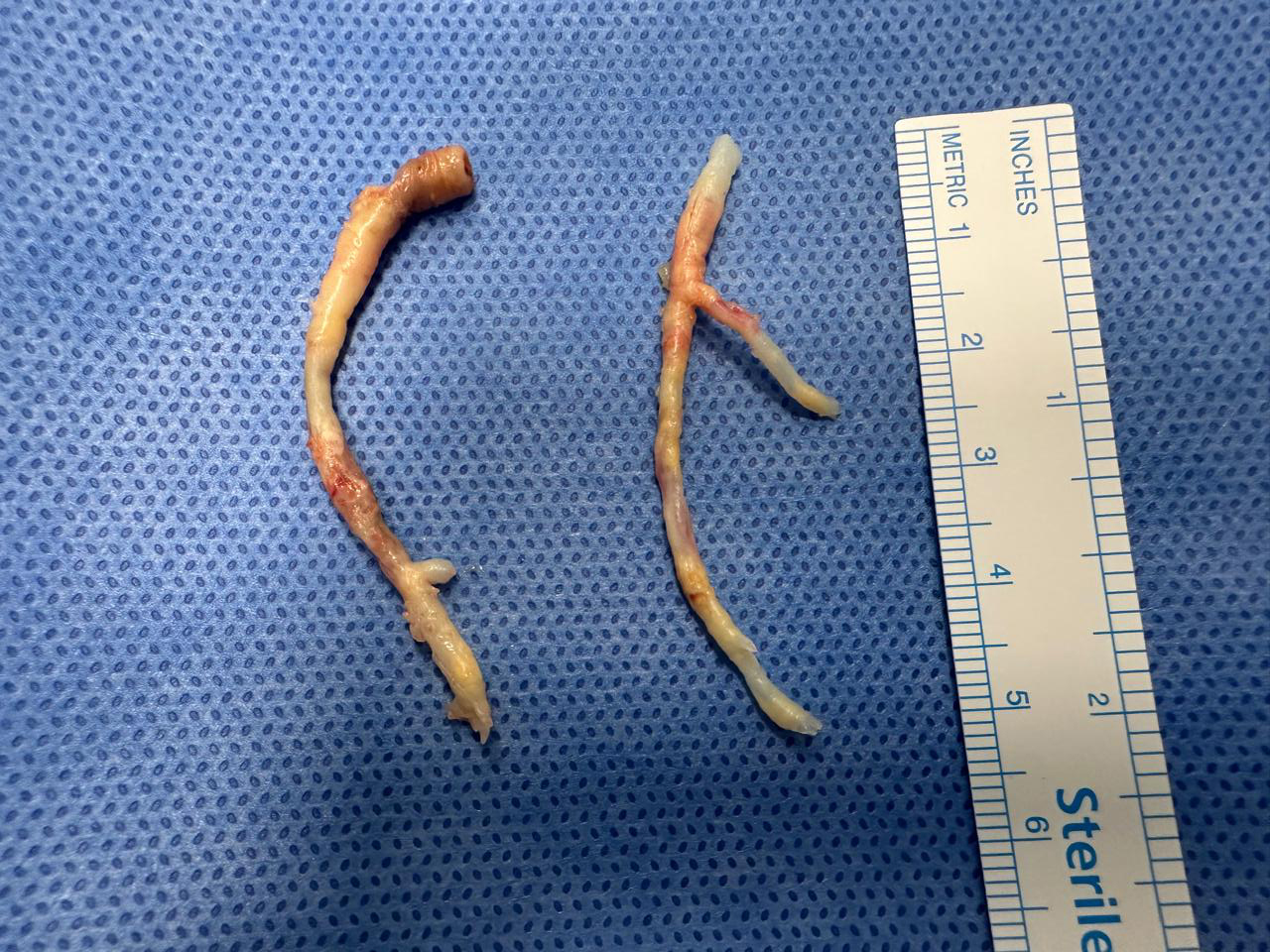
Faced with an aggressive and uncommon pattern of disease typically seen in much older patients, surgeons at Aster Hospital, Al Qusais opted for a highly specialized approach. Rather than performing a standard bypass, the team chose complete coronary endarterectomy — a demanding procedure that involves removing hardened plaque from inside the arteries along their entire length before restoring circulation.
The operation was carried out on a beating heart, without the use of a heart-lung machine. Surgeons meticulously opened the blocked vessels, clearing dense deposits of fat and cholesterol that had turned rigid over time. In sections where the artery walls were severely affected, additional repair was required to ensure uninterrupted blood flow before bypass grafts were placed using the patient’s own arteries and a vein.
“This was a very complex case because both the LAD and RCA were completely blocked (100%) from end to end. There was no part of the arteries suitable for a regular bypass. By carefully removing the plaque from both arteries, and in some areas performing an extra repair with a patch, we were able to restore full blood flow and give the patient the best chance for long-term health, even in cases that might be considered untreatable elsewhere,” said Dr. Sandeep Shrivastava, Consultant Cardiothoracic Surgeon at Aster Hospital, Al Qusais.

Dr. Shipra Shrivastava, who co-led the surgery, said the goal was full functional recovery rather than partial relief. “At Aster, we have special expertise in performing this kind of surgery on multiple arteries. Our focus is always on fully restoring blood flow and helping patients recover completely, so they can regain full heart function and enjoy a better quality of life,” she said.
Although only a fraction of coronary artery bypass surgeries worldwide are performed on a beating heart, the Al Qusais facility conducts all its bypass procedures using this method, which is associated with faster recovery and fewer complications in experienced hands. Chira was discharged by the fourth postoperative day and has since reported complete relief from symptoms.
“I was refused treatment elsewhere because my blockages were too complex. But the cardiac team at Aster Hospital gave me hope and a second chance at life. I feel like I have been given a new lease on life and am deeply thankful for their care and expertise,” Chira said.
Aster Hospital, Al Qusais has performed more than 50 coronary endarterectomy procedures, including multi-vessel cases, and completed over 184 bypass surgeries in the past year alone. The hospital has also been named among Newsweek’s World’s Best Smart Hospitals 2026 and ranked No. 14 in the UAE on Newsweek’s World’s Best Hospitals list.
